The short version
- Malawi secured a spot in the Wafcon final by defeating Algeria 3-1 in Rabat, Morocco.
- Tabitha and Temwa Chawinga scored three of the four goals, highlighting their critical role in the team's historic run.
- The match featured two red cards for each side after video assistant referee reviews, creating a chaotic but decisive contest.
Malawi has advanced to the final of the 2026 Women's Africa Cup of Nations, completing a remarkable tournament debut that defies conventional expectations. The Scorchers defeated Algeria 3-1 in Rabat, Morocco, on Tuesday night, cementing their status as the lowest-ranked nation ever to reach the championship match. This victory marks only the second time a debutant team has reached the final since the competition began in 1998, excluding the inaugural edition. The result underscores a shifting landscape in African women's football, where traditional powerhouses are no longer guaranteed dominance.
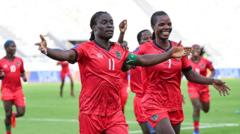
The Chawinga sisters were instrumental in securing this milestone. Tabitha Chawinga, playing for OL Lyonnes, and her sister Temwa, who recently earned MVP honors with Kansas City Current, combined to score three of the four goals in the match. Throughout the tournament, the duo has accounted for eight of Malawi's twelve total goals, demonstrating a level of pace and technical ability that opposition defenses have struggled to contain. Their performance has validated the pre-tournament hype surrounding their individual club successes and translated it into national team triumph.
The match itself was characterized by high intensity and significant disciplinary issues. Two red cards were issued in the first half following video assistant referee interventions, drastically altering the dynamics of the game. Algeria defender Morgane Belkhiter was dismissed for denying Tabitha Chawinga a clear goal-scoring opportunity. Although replays showed contact with the heel, some observers noted the challenge occurred at distance from the goal and involved a simultaneous attempt by another Algerian player to reach the ball. The decision proved pivotal, as it reduced Algeria to ten players just before Malawi took the lead.
Tabitha Chawinga capitalized on the numerical advantage shortly after the dismissal. In the 33rd minute, she executed an acrobatic overhead kick that struck the crossbar and ricocheted into the net due to backspin. The goal was a testament to her composure and technical skill under pressure. Temwa Chawinga added a second goal in the first minute of stoppage time before halftime, rounding the goalkeeper to extend Malawi's lead. However, Malawi also faced disciplinary consequences when midfielder Rose Kadzere received a red card for a studs-up challenge inside the penalty area, giving Algeria hope of a comeback.
The second half saw Algeria attempt to mount a response despite playing with fewer players. Ikram Adjabi scored in the 60th minute after capitalizing on defensive errors from Malawi during a free-kick situation. Her volley reduced the deficit to one goal, injecting urgency into the match. Both sides missed several opportunities in the opening stages of the half, indicating that fatigue and the physical toll of the earlier incidents were beginning to affect performance levels. The game remained end-to-end but lacked the clarity of the first half.
Tabitha Chawinga sealed the victory with her second goal of the match, driving into the penalty area almost unchallenged before side-footing the ball past the goalkeeper from close range. This goal effectively ended any realistic chance of an Algerian comeback and secured Malawi's place in the final. The performance highlighted the team's resilience and ability to manage a game that featured significant disruptions due to red cards on both sides.
Malawi will face Cameroon in the final, scheduled for Sunday at 19:00 GMT. Cameroon advanced by defeating the host nation, Morocco, in a penalty shootout. For Malawi, this final represents more than just a trophy opportunity; it is a chance to complete an underdog story that has captivated fans across the continent. Having already qualified for next year's FIFA Women's World Cup in Brazil by reaching the semifinals, the Scorchers are now positioned to make history as the fourth nation to lift the Wafcon trophy.
The tournament's expansion to 16 teams has provided a platform for emerging nations to showcase their talent. Malawi's success suggests that women's football in Africa is growing beyond its traditional centers of excellence. The team's journey from being ranked 153rd in the world to reaching the final demonstrates the potential for broader participation and competitive balance. As they prepare for the final, the focus remains on maintaining the momentum generated by the Chawinga sisters and the collective effort that has carried them this far.
Sources behind this briefing
Go to the original reporting
- BBC Sport↗Chawinga sisters fire Malawi into Wafcon final

