The short version
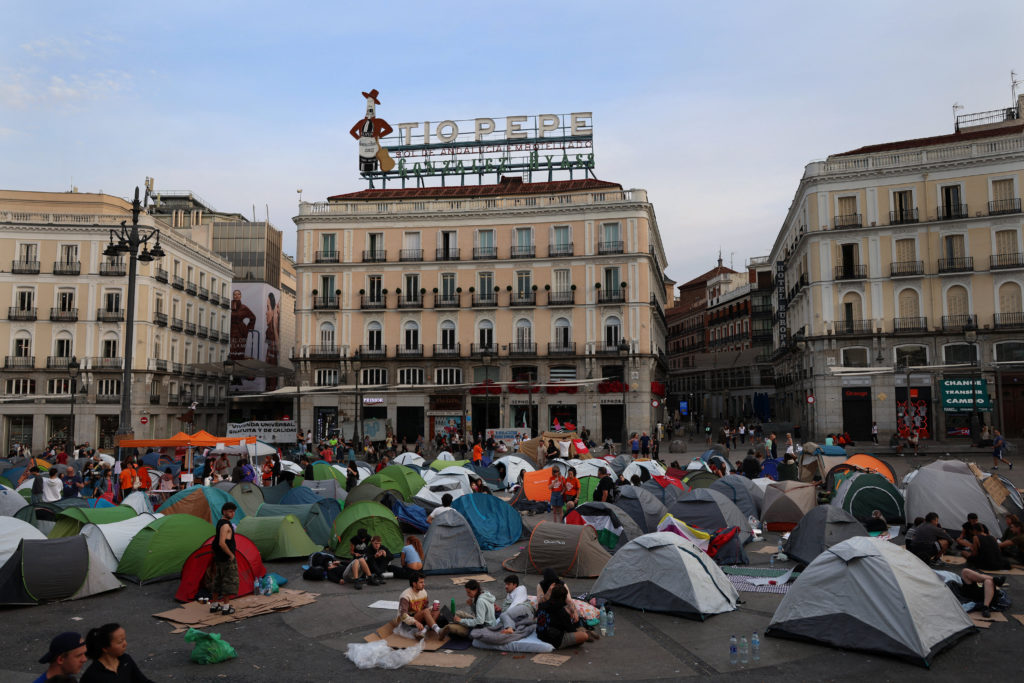
- Thousands marched in Madrid to protest the eviction of María del Carmen Abascal, with many remaining overnight in a symbolic plaza camp.
- Activists are demanding indefinite rental contracts and a ban on evictions without alternative housing as part of broader tenant protections.
- The government plans to introduce new housing legislation next week amid reports of a significant national shortage of available homes.
A sustained wave of demonstrations has erupted in Madrid, centered around the historic Puerta del Sol plaza, following the controversial removal of an elderly resident from her apartment. The protests were triggered by the eviction of María del Carmen Abascal, who had occupied the unit in the upscale Retiro district for more than seventy years. Tens of thousands of people participated in marches on Saturday, expressing outrage over what they view as a systemic failure to protect vulnerable tenants. Many demonstrators refused to disperse after the initial march, choosing instead to pitch tents and remain in the plaza overnight, signaling a commitment to prolonged civil action.
The visual spectacle of Abascal being carried out on a stretcher while supporters chanted her nickname has galvanized public anger across Spain. Images of the incident circulated widely, fueling criticism of both public authorities and private investment firms accused of exploiting housing shortages. Protesters have framed the event as a breaking point in an ongoing struggle against rising living costs. The presence of multigenerational families among the demonstrators underscores the broad demographic impact of the crisis, with participants ranging from young professionals to retirees united by concerns over housing stability.
Abascal’s case illustrates the complex legal and financial pressures facing long-term tenants. Her father originally rented the apartment in 1956, and she remained under rent-controlled terms after his death. The building changed hands in 2018, leading to a significant increase in monthly costs. An investment fund known as Urbagestión initially raised the rent from five hundred euros to two thousand six hundred fifty euros. Although the amount was later reduced to one thousand six hundred fifty euros, it remained unaffordable for Abascal on her pension. She declined an offer to purchase the unit when it became available, citing financial constraints.
Demonstrators are calling for specific legislative changes to address these disparities. Key demands include the implementation of indefinite rental contracts and a prohibition on evictions unless alternative housing is provided. Activists also seek stronger measures to combat fraud in the rental market. A spokesperson for the Madrid Tenants' Union stated that the group would maintain their presence in the plaza until the government enacted new laws. The union leader described the current mood as an unstoppable wave of indignation, reflecting widespread frustration with the status quo.
The political response has been swift, with Prime Minister Pedro Sánchez addressing the situation directly. Speaking at a rally, he acknowledged Abascal by name and promised that the cabinet would announce a royal decree on housing during its weekly meeting next Tuesday. He urged parliamentary groups to support the validation of these measures in the National Parliament. However, Abascal herself has criticized the prime minister, questioning whether his administration is aware of or indifferent to the daily reality of evictions. Her comments highlight a disconnect between political promises and the lived experiences of affected residents.
The broader context of Spain’s housing market reveals significant structural challenges. Despite strong economic growth in Europe’s fourth-largest economy, incomes have not kept pace with escalating housing costs. Analysts point to tourism and immigration-driven population growth as factors placing additional pressure on limited supply. The Bank of Spain estimated a shortage of approximately five hundred fifty thousand homes last year, with major cities like Madrid, Barcelona, and Valencia bearing a substantial share of this deficit. These statistics provide a backdrop for the current unrest, suggesting that individual cases like Abascal’s are symptomatic of a larger national issue.
The current protests draw parallels to the indignados movement of 2011, which also began with encampments in Puerta del Sol. That earlier wave of activism was driven by unemployment, austerity measures, and corruption following the global financial crisis. While the economic triggers have shifted, the method of protest remains similar, with citizens using public spaces to demand accountability. Political scientists note that the stakes of popular frustration are growing, as housing insecurity affects a wider segment of the population than in previous years. The comparison suggests a deepening cycle of civic engagement in response to perceived governmental inadequacy.
As the standoff continues, attention turns to the upcoming cabinet meeting where new measures are expected to be unveiled. The success of these proposals will likely depend on their ability to address both immediate tenant protections and long-term supply issues. Critics argue that without substantial intervention, the cycle of displacement will persist. The outcome of this legislative effort may determine whether the current unrest subsides or escalates into further widespread mobilization. For now, the tents in Puerta del Sol remain a stark reminder of the urgency felt by those on the front lines of Spain’s housing crisis.
Sources behind this briefing
Go to the original reporting
- PBS NewsHour↗Eviction of 87-year-old sparks encampment protest in Madrid over housing crisis

