The short version
- Approximately 85 million pounds of rotting food remain at a warehouse site in Los Angeles following a June fire, creating severe public health concerns.
- City officials have cited the operator for violations and criticized the company's lack of transparency regarding cleanup progress and environmental monitoring.
- Local businesses report significant revenue losses due to customer avoidance driven by foul odors, swarming flies, and rat sightings in the neighborhood.
A massive industrial fire that destroyed a cold-storage facility in Los Angeles two months ago has left behind an environmental and public health crisis that shows no signs of immediate resolution. The blaze on June 17 incinerated structures containing roughly 85 million pounds of perishable goods, including beef, pork, poultry, and seafood. While the flames were extinguished quickly, the subsequent decomposition of this vast quantity of organic matter has created a persistent and potent stench that permeates the Boyle Heights neighborhood.
Residents describe the conditions as unbearable, with odors strong enough to induce nausea. The sensory assault is compounded by a severe infestation of pests. Flies of various species swarm the area, landing on outdoor seating and pedestrians alike. Reports also indicate the presence of large rats that exceed the capacity of standard municipal traps placed along sidewalks. These conditions have transformed a typically bustling commercial corridor into an empty zone where foot traffic has dwindled significantly.
Local business owners are bearing the brunt of this disruption. Alexis Sicairos, who operates a coffee stand nearby, noted that his establishment closed for two weeks immediately following the fire. Although it has since reopened, demand has not returned to previous levels. He attributes this decline to both the loss of warehouse employees as customers and the general aversion of patrons to the smell, smoke, and insects. The economic strain is palpable among small operators who must continue paying overhead costs despite the sharp drop in revenue.
Public health risks extend beyond discomfort. An inspection report commissioned by the city highlighted that the combination of decaying waste and high ambient temperatures creates an ideal breeding ground for flies capable of transmitting diseases to humans and animals with open wounds. The presence of these vectors has raised alarms among community members and health officials alike, prompting concerns about potential outbreaks or infections in a densely populated area.
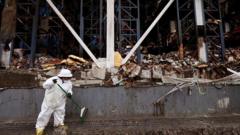
The operator of the facility, Lineage Logistics, states that it has removed approximately 80 percent of the food waste as of early August, up from 60 percent at the end of July. The company projects that bulk removal will be completed next week and estimates cleanup costs between $80 million and $100 million. Dozens of workers in protective gear are visible on site, working alongside officials from the air quality authority and sheriff’s office to manage the remediation process.
Despite these claims of progress, city leadership has expressed deep dissatisfaction with the company’s performance. Los Angeles Mayor Karen Bass issued a letter to Lineage shareholders stating that the firm’s response has fallen short of expectations. She criticized the lack of timely information regarding cleanup status, environmental monitoring, and recovery efforts. The mayor emphasized that requests for transparency have often been met with delayed communication and insufficient engagement with the public.
In response to the ongoing issues, the county public health department has levied fines against Lineage for unsanitary and nuisance conditions, imposing daily citations of $500. Mayor Bass has set a firm deadline of August 13 for the completion of cleanup operations. She has also directed city departments to halt any plans for rebuilding the warehouse until the site is fully remediated and safe. Executive orders have been issued to mobilize additional resources, including mobile health clinics and thousands of air purifiers distributed to residents.
The political stakes are high as Mayor Bass faces re-election this year. She has acknowledged resident frustration and pledged to ensure that community voices guide the response. However, many locals blame the city for an inadequate reaction and a lack of transparency. The situation underscores the challenges of managing large-scale industrial accidents in urban environments, where the intersection of corporate responsibility, public health, and political accountability creates a complex and volatile landscape.
As the deadline approaches, the focus remains on whether Lineage can meet the city’s demands and restore normalcy to Boyle Heights. The incident serves as a stark reminder of the vulnerabilities inherent in dense urban supply chains and the long-term impacts of industrial disasters on local communities. Until the waste is fully removed and the area decontaminated, residents will continue to endure the health risks and economic hardships associated with the rotting remains of the warehouse fire.
Sources behind this briefing
Go to the original reporting
- BBC News↗Tonnes of rotting food from vast LA warehouse fire creates unbearable stench

