The short version
- Surgeons at University College London hospitals successfully removed an 11mm brain tumor using AI to map critical nerves and blood vessels in real time.
- The patient, a 48-year-old man who faced potential blindness, recovered his vision and returned to work within weeks of the May procedure.
- Health officials describe the operation as a milestone in clinical trials for AI support systems, though the technology remains experimental and limited to specific cases.
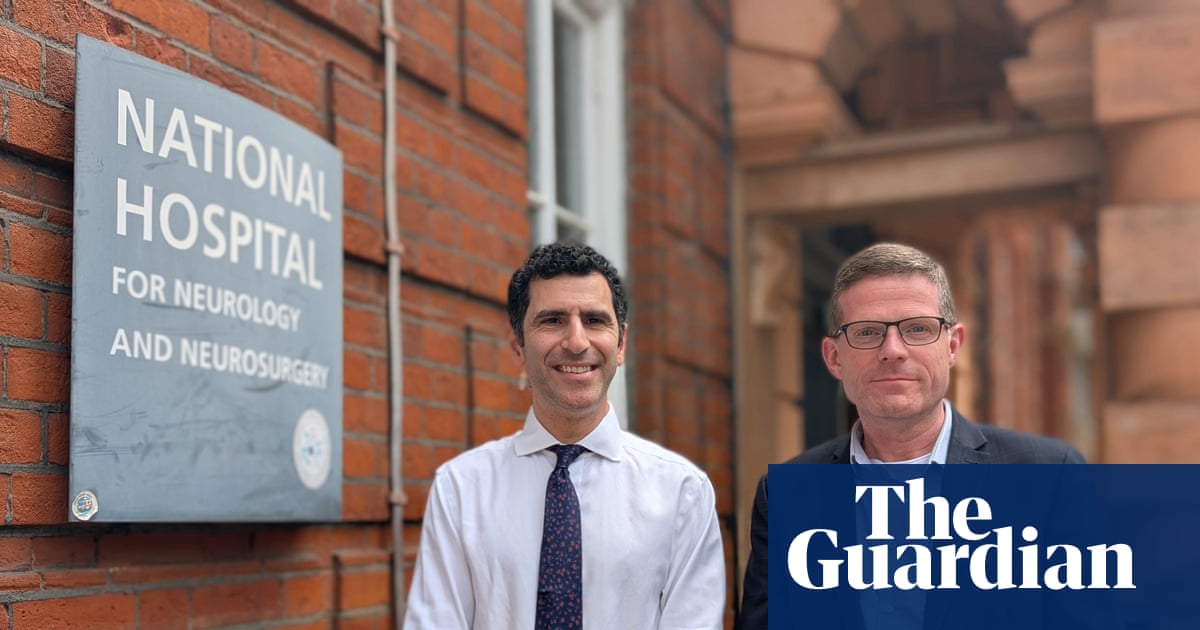
Neurosurgeons in London have completed what health authorities describe as the world’s first successful operation to remove a brain tumor with the aid of artificial intelligence. The procedure took place in May at the National Hospital for Neurology and Neurosurgery, a facility affiliated with University College London hospitals NHS foundation trust. Details of the surgery were withheld until late August to allow the patient, Rhys Hibbert, adequate time for recovery and to ensure the integrity of the ongoing clinical trial funded by the National Institute for Health and Care Research.
Hibbert, a 48-year-old customer service manager from Bedfordshire, was diagnosed with an 11-millimeter tumor on his pituitary gland in 2024. Initially managed without surgical intervention, his condition deteriorated over time, resulting in severe hormone imbalances and significant vision problems. Medical officials warned that without the operation, Hibbert faced a high risk of permanent blindness. The anatomical location of the tumor presented extreme challenges; the pituitary gland is situated in close proximity to vital blood vessels and nerves that control vision, meaning even a millimeter of error could result in stroke, death, or loss of sight.
During the surgery, the medical team maintained full control over all surgical decisions and actions. However, they were supported by an AI system that analyzed live camera footage from inside the operating field. This technology was designed to identify and color-code critical structures such as nerves and blood vessels, helping surgeons distinguish between tissue that needed to be removed and anatomy that must be preserved. The system had previously been used only as a research tool at the hospital, making this operation its first application on a human patient.
Dr. Sophia Bano, an associate professor in robotics and AI at University College London and the technical lead for the system, explained that the AI was trained on hundreds of surgical videos. This extensive dataset exposed the algorithm to a breadth of surgical examples that would typically take a surgeon many years to encounter personally. The system is engineered to recognize critical anatomy, surgical instruments, and tissue interactions in real time, providing support during highly delicate procedures where precision is paramount.
The outcome for Hibbert has been described as successful. Upon waking from the anesthesia, he reported that he could see everything in the room clearly. Within a week of the surgery, he was able to walk independently without the need for glasses or walking sticks. He has since returned to his job, describing his restored vision as providing a 360-degree panoramic view of his surroundings. The rapid recovery and preservation of sight stand in contrast to the severe visual impairment he experienced prior to the intervention.
Prof Mike Lewis, the scientific director for innovation at the National Institute for Health and Care Research, characterized the surgery as pioneering. He noted that the procedure highlights the potential for advanced AI to support surgeons and improve patient care outcomes. The funding from the NIHR indicates that this operation was part of a structured clinical trial rather than an isolated experimental attempt, suggesting a formal evaluation process is underway to assess the safety and efficacy of such technologies.
The National Hospital for Neurology and Neurosurgery holds historical significance in the field of medical science. Founded in 1859, it was the world’s first dedicated neurosurgical hospital. Hibbert remarked that it seemed fitting for the same institution to also be the first to carry out an AI-assisted neurosurgery. This connection between historical precedent and modern innovation underscores the hospital’s ongoing role in advancing neurological treatment methods.
While this case marks a significant milestone, the broader implications of AI-assisted surgery remain under investigation. The technology is not yet widely available or standard practice, having been used here only once on a patient after prior use as a research tool. The success of this specific operation does not guarantee similar outcomes for all patients or tumor types. Further clinical trials and data collection will be necessary to determine how broadly these AI support systems can be applied across different surgical contexts and patient populations.
The integration of artificial intelligence into the operating room represents a shift in how surgeons approach complex anatomical challenges. By providing real-time analysis and visual aids, the technology aims to reduce human error in high-stakes environments. However, the ultimate authority remains with the human surgeon, who interprets the AI’s suggestions and executes the physical procedure. This collaborative model seeks to enhance precision without replacing professional medical judgment.
As more data becomes available from this and similar trials, healthcare providers will need to evaluate the long-term benefits and potential risks of relying on algorithmic assistance. The case of Rhys Hibbert offers a compelling example of how such technology can preserve critical functions like vision, but it also serves as a single data point in a larger scientific inquiry. The medical community will likely scrutinize these results carefully before considering wider adoption of AI-assisted surgical tools.
Sources behind this briefing
Go to the original reporting
- The Guardian US↗London neurosurgeons perform first successful AI-assisted operation to remove brain tumour

