The short version
- High Court decisions have oscillated between blocking and permitting the Orange Order march on Garvaghy Road after decades of bans.
- The dispute highlights shifting political demographics, with Sinn Féin now leading the executive and unionists feeling increasingly marginalized post-Brexit.
- Political leaders from both communities are urging de-escalation to prevent violence in a region still sensitive to sectarian conflict.
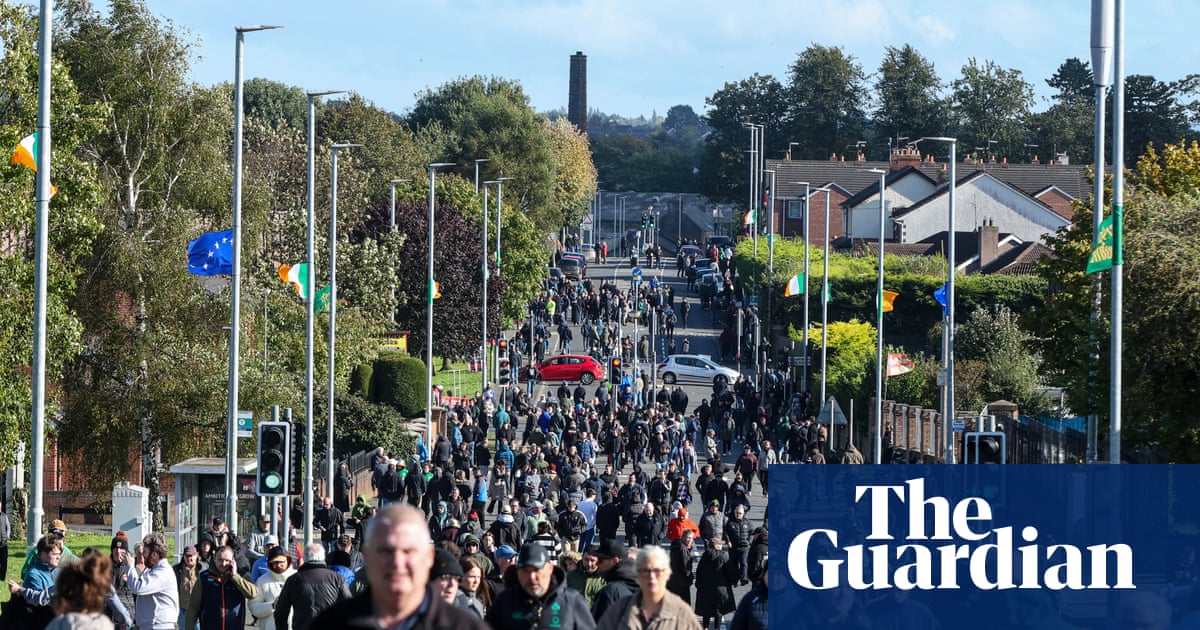
A contentious dispute over a planned parade in Northern Ireland has reignited fears that historical sectarian tensions could destabilize the region’s fragile peace. The conflict centers on an application by the Orange Order to march down Garvaghy Road, a route that has been banned for nearly three decades due to opposition from predominantly nationalist residents. What began as a routine administrative decision has spiraled into a complex legal battle, revealing deep divisions within the current political landscape and raising questions about the durability of the peace process established in the late 1990s.
The Parades Commission, created in 1998 to regulate controversial marches and reduce community friction, had consistently prohibited the Drumcree parade since its inception. However, in August, the High Court overturned a recent ban, ruling that the commission had failed to adhere to its own procedural rules. This judicial intervention allowed the Orange Order to resubmit its application with the required statutory notice. The decision drew sharp criticism from Irish Taoiseach Micheál Martin, who characterized the court’s reasoning as fundamentally flawed and incomprehensible, signaling high-level concern over the precedent set by the ruling.
As the deadline for the march approached, legal challenges intensified. On Saturday, Justice Patricia Smyth issued an injunction blocking the commission’s actions, citing the potential for the long-standing dispute to escalate into widespread violence across Northern Ireland. She urged all parties involved to exercise restraint and avoid a return to the violent confrontations that characterized the region three decades ago. The Orange Order’s legal representatives condemned this move as an attempt to rewrite history, arguing that their right to march was being unjustly suppressed by judicial overreach.
The legal uncertainty continued into Sunday morning when the High Court reversed Justice Smyth’s injunction. Lady Chief Justice Siobhan Keegan described the previous ruling as a legal error, emphasizing that the initial decision to allow the march must be respected under the law. This rapid succession of contradictory rulings has created a chaotic environment where neither side feels their position is secure. Residents and their supporters, who have opposed the parade for years, expressed frustration at what they perceive as a disregard for community safety and historical context.
The backdrop to this standoff is a Northern Ireland that looks markedly different from the era of the original Drumcree conflicts. The political balance has shifted significantly, with Sinn Féin’s Michelle O’Neill serving as First Minister, marking the end of unionist majority rule. Irish nationalism has grown more confident in the post-Brexit landscape, with some advocates pushing for preparations toward a border poll on Irish unity. These demographic and political changes have left many unionists feeling uneasy about their future status within the region.
Brexit has further complicated relations by introducing a sea border for trade between Great Britain and Northern Ireland, exacerbating economic and political anxieties among unionist communities. The Stormont executive, which operates on a multi-party power-sharing agreement, is currently functioning at a reduced capacity ahead of upcoming Assembly and local elections next year. This political instability provides fertile ground for disputes like the Drumcree march to gain traction, as both sides seek to assert their influence and protect their interests in a changing political climate.
The current standoff has produced a paradoxical situation where unionists, who historically opposed the Parades Commission, are now accusing nationalists of failing to respect legal rulings. Conversely, nationalists, who previously called for strict adherence to commission decisions, are resisting compliance with the latest court orders. This reversal of positions underscores the deep mistrust that persists between communities and highlights the difficulty of maintaining stability when legal frameworks are perceived as biased or inconsistently applied.
Governments in both London and Dublin are hoping to defuse the situation before it escalates into violence. The Drumcree dispute serves as a stark reminder of how easily historical grievances can undermine present-day stability, even after thirty years of relative peace. As the region navigates these challenges, the outcome of this specific conflict may signal broader trends in Northern Ireland’s political future, particularly regarding the balance of power between unionist and nationalist communities.
Looking ahead, the resolution of the Drumcree standoff will likely depend on whether local leaders can find a way to de-escalate tensions without compromising their core principles. The legal precedents set by these recent court rulings may have lasting implications for how future disputes are handled in Northern Ireland. For now, the focus remains on preventing any outbreak of violence and ensuring that the peace process continues to evolve in a manner that respects the diverse perspectives within the region.
Sources behind this briefing
Go to the original reporting
- The Guardian World↗Drumcree standoff shows Northern Ireland’s troubled past still threatens its peace

