The short version
- An amateur archaeologist found 934 Roman silver coins in a field south of Cologne, marking the largest such treasure from the era of Emperor Hadrian ever discovered in Germany.
- Experts believe the hoard was deliberately buried in the second century AD for safekeeping, likely never to be recovered by its original owner.
- The collection represents approximately six years of disposable income for a Roman legionary at the time, highlighting significant wealth accumulation among military personnel.
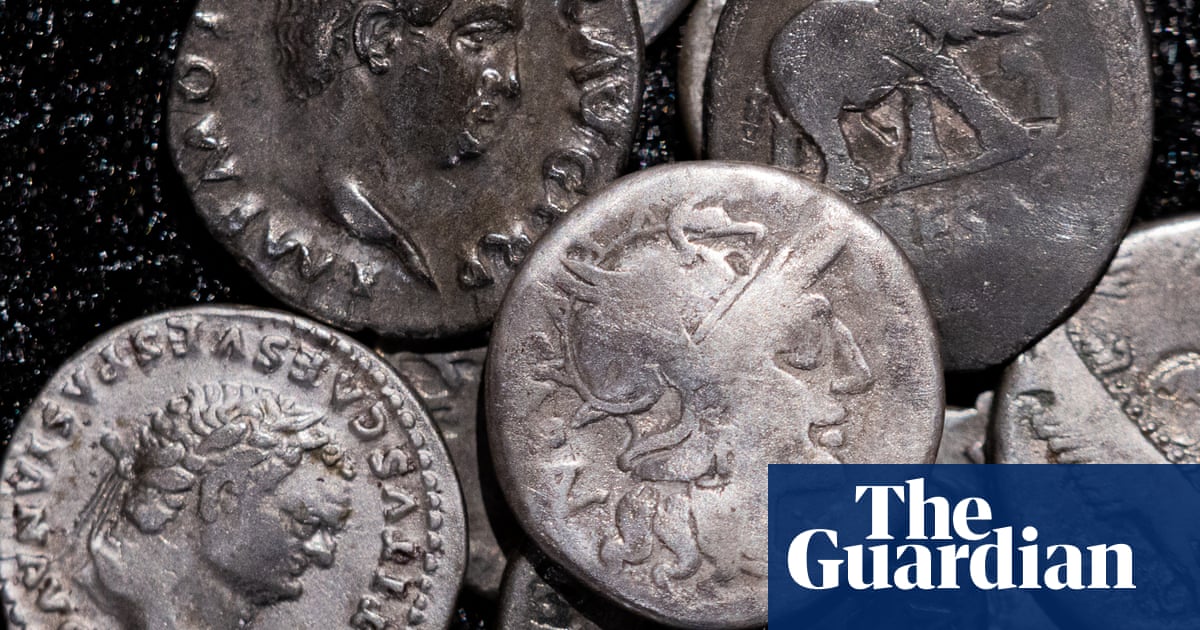
A significant archaeological discovery has emerged from a field in western Germany, where an amateur enthusiast uncovered what officials describe as the largest coin hoard from the reign of Emperor Hadrian ever found in the country. The find consists of 934 silver denarii, totaling 3.1 kilograms, and was located near Wesseling, south of Cologne. The discovery underscores the enduring historical richness of the Rhineland region, which served as a critical border zone for the Roman Empire for centuries.
The initial detection occurred when Oliver Riedl, using a metal detector, began receiving persistent signals after retrieving several individual coins. Recognizing that the device continued to indicate substantial metallic presence beneath the soil, he contacted authorities rather than attempting further excavation himself. This decision allowed professional archaeologists to intervene immediately, ensuring the site was processed with appropriate care and documentation standards required for such significant historical artifacts.
State archaeologists from the LVR Office for the Preservation of Archaeological Monuments in the Rhineland led the subsequent dig. Their work revealed the full extent of the cache, confirming it as a deliberate burial rather than accidental loss or scattered debris. The coins have since been transferred to the LVR-LandesMuseum Bonn, where they were made public on Tuesday. This display allows researchers and the public to examine the physical condition and inscriptions on the silver pieces, which provide tangible links to the economic systems of the second century AD.
Dating analysis suggests the hoard was buried during the second quarter of the second century AD. Erich Classen, director of the archaeological office, noted that while specific motives remain speculative, the most plausible explanation is that an individual sought to protect their wealth in an era without modern banking institutions. The failure to retrieve the coins implies a tragic interruption in the owner's plans, possibly due to death or displacement, which prevented them from passing on the location of the hidden fortune to heirs or associates.
The financial significance of the hoard is substantial when viewed through the lens of contemporary Roman military compensation. Research associate Rahel Otte explained that a standard legionary earned 300 denarii annually, though roughly half of this income was deducted for food and equipment costs. Consequently, accumulating 934 coins would have required a soldier to save their entire disposable income for approximately six years. This calculation suggests the hoard represented a considerable lifetime savings or a specialized accumulation by someone with higher-than-average earnings.
The identity of the person who amassed this wealth remains unknown. While the value aligns with military savings, it could also belong to a civilian merchant, an official, or another individual operating within the Roman economic sphere in the region. The lack of accompanying personal items or records at the burial site limits the ability to pinpoint the owner's social status or profession definitively. Archaeologists must rely on the coins themselves and the broader historical context of the area to infer the likely background of the depositor.
The Cologne area has a deep Roman heritage, having been under imperial control from approximately 39 BC to AD 459. General Marcus Vipsanius Agrippa established a military outpost in the region to secure the Rhine River border, which eventually developed into Colonia Agrippina, the precursor to modern-day Cologne. The presence of such a large hoard reinforces the understanding that this area was not merely a military frontier but also a hub of economic activity and settlement where significant wealth circulated among both soldiers and civilians.
While treasure troves from ancient periods are occasionally discovered, few from the second century match the scale and preservation quality of the Wesseling find. The rarity of such extensive collections provides valuable data for historians studying inflation, currency circulation, and burial customs during Hadrian's reign. As researchers continue to analyze the coins, they may uncover further details about trade networks and local economic conditions in Roman Germany.
The next phase involves detailed conservation and cataloging of each coin to determine mint origins and dates of issue. This process will help refine the timeline of the burial and potentially identify patterns in how the money was accumulated. The museum plans to keep the collection on display, serving as an educational resource that illustrates the daily realities and economic structures of life along the Roman frontier nearly two millennia ago.
Sources behind this briefing
Go to the original reporting
- The Guardian World↗Amateur archaeologist finds 934 Roman silver denarii in German field