The short version
- At least thirty-one people died and twenty-two were injured after a landfill collapsed in Conakry, Guinea, following overnight heavy rainfall.
- Government officials deployed significant resources, including military personnel, to assist rescue teams searching through the debris for trapped survivors.
- The incident has reignited concerns about safety at the site, which previously caused fatalities in 2017 and was scheduled for closure despite recent evacuation orders.
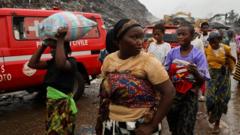
A catastrophic collapse of a major waste disposal site in Conakry, the capital of Guinea, has resulted in significant loss of life and widespread destruction. Government authorities confirmed that at least thirty-one individuals have perished after a large mound of refuse slid onto nearby residential structures early Monday morning. The disaster occurred around 2:00 a.m. local time, shortly after intense rainfall saturated the ground throughout the night. In addition to the fatalities, twenty-two people sustained injuries, six of whom are in serious condition.
The incident unfolded in the Dar-es-Salam district, where informal settlements border the landfill. Eyewitness accounts describe a chaotic sequence of events involving multiple stages of collapse. Robert Kamano Sâa, an observer at the scene, reported that after an initial section of the waste pile gave way, residents attempted to assist those potentially trapped by climbing onto the unstable debris. This activity appears to have triggered a secondary failure, causing three successive waves of refuse to cascade down and bury more people who had gathered in response to the first slide.
Rescue operations are currently underway with substantial government support. Prime Minister Mamadou Oury Bah visited the site to coordinate efforts and assess the scale of the damage. Significant resources have been mobilized, including military personnel and heavy machinery such as excavators, which are being used to carefully comb through the scattered waste in search of survivors. The complexity of the terrain and the volume of debris make the recovery process difficult and dangerous for emergency responders.
The human toll is evident in the accounts of those affected. One woman shared with local media outlets that five of her children were among the victims. Mamadouba Bangoura, a resident whose home was destroyed, described being awakened by the loud noise of the initial slide. He noted that while the first wave did not reach his house, a subsequent surge pushed the structure over, leading to its collapse. He expressed deep distress at the loss of life and the difficulty of processing such a traumatic event.
Local community leaders have begun the grim task of recovering bodies. Lancine Sylla, a neighborhood official, stated that eighteen corpses had already been transported to the morgue, though he warned that the final death toll could be much higher. Fears persist that more individuals remain trapped beneath the shifting mounds of garbage. The Health Minister, Khaïté Sall, visited injured patients in hospitals to assure them of free medical care and promised broader government support for affected families.
This disaster is not an isolated incident at this location. The same landfill site was responsible for a previous tragedy in 2017 that claimed ten lives. Despite these historical risks, many residents continued to live in close proximity to the dump. Government authorities had recently issued orders for people living near the site to relocate, but compliance was incomplete, leaving many vulnerable to another collapse. The failure of evacuation measures raises questions about enforcement and urban planning in the area.
Political figures have also weighed in on the catastrophe. Cellou Dalein Diallo, a former Prime Minister currently in exile, described the event as a profound tragedy that causes dismay across the nation. He highlighted a specific concern regarding the timing of the disaster, noting that the landfill was officially scheduled to close on Sunday, August 23. The collapse occurred just after this planned closure date, adding a layer of urgency and scrutiny to the government's management of the site.
As rescue teams continue their work, the immediate focus remains on locating any remaining survivors and providing aid to the displaced and injured. The incident underscores the ongoing challenges faced by urban areas in Guinea regarding waste management and housing safety. With heavy rains still a possibility in the region, authorities must balance rapid recovery efforts with the need to prevent further instability at the site. The coming days will likely bring more clarity on the total number of casualties and the long-term plans for the area.
Sources behind this briefing
Go to the original reporting
- BBC World↗Guinea rubbish landfill collapse kills 31

