The short version
- Jared Kushner met with Hamas officials in Egypt and then traveled to Jerusalem to discuss implementation of a US-backed ceasefire roadmap.
- Israeli Prime Minister Benjamin Netanyahu has rejected the plan, insisting on full Hamas disarmament before any troop withdrawal, defying his closest ally.
- Eight Muslim-majority nations issued a joint statement condemning Israel’s stance, warning that obstruction threatens broader regional stability and peace efforts.
Diplomatic efforts to stabilize Gaza have intensified this week as Jared Kushner, President Donald Trump’s Middle East envoy, engaged in high-level talks with both Hamas representatives and Israeli leadership. The sequence of meetings began in Egypt on Sunday, where Kushner met with Khalil al-Hayya, the political chief of Hamas, alongside officials from mediating nations including Qatar and Turkey. This engagement marks a significant diplomatic push to revive a 15-point peace roadmap that has stalled since Israel’s recent public rejection of its terms.
The central objective of these discussions is to secure concrete commitments regarding the disarmament of Hamas and the subsequent withdrawal of Israeli forces from Gaza. According to sources familiar with the negotiations, the talks in Egypt focused on ensuring Hamas’s adherence to the roadmap, particularly concerning the surrender of weapons. A Palestinian official indicated that Hamas remains committed to the process and is awaiting the start of a 14-day negotiation period to establish an implementation timetable. However, the group has conditioned its cooperation on Israel halting attacks and retreating to the so-called Yellow Line, a boundary that Israeli forces have largely exceeded.
Following the meeting in Cairo, Kushner traveled to Jerusalem to meet with Prime Minister Benjamin Netanyahu. He was joined by Tony Blair, former UK Prime Minister, and Nickolay Mladenov, the high representative for Gaza to the US-led Board of Peace. The trio aims to persuade Netanyahu to accept the roadmap, which envisions a gradual transfer of governing responsibilities to a Palestinian technocratic committee while an international stabilizing force deploys to the region. No official statement has been released detailing the outcomes of these closed-door discussions, but reports suggest the focus remains on decommissioning Hamas’s arsenal and facilitating Israeli troop withdrawals.
Netanyahu’s resistance to the plan stems from deep-seated security concerns and domestic political pressures. The Prime Minister has explicitly stated that Israel will not withdraw any troops until Hamas is genuinely and completely disarmed. From Jerusalem’s perspective, there are significant gaps in the proposed terms, particularly regarding the destruction of surrendered weapons rather than their storage by a Palestinian committee. Additionally, Israel opposes the involvement of Turkey and Qatar in verifying compliance with disarmament requirements. These positions reflect broader skepticism within Israeli society about Hamas’s willingness to relinquish power permanently.
The diplomatic standoff has drawn sharp criticism from regional partners. On Sunday, eight Muslim-majority countries, including Saudi Arabia, the United Arab Emirates, Jordan, Pakistan, Indonesia, Egypt, Qatar, and Turkey, issued a joint statement condemning Israel’s rejection of the US-backed plan. The signatories argued that Israel now bears responsibility for obstructing peace efforts and called on the Board of Peace and the United States to take immediate measures to prevent further delays. The inclusion of the UAE is particularly notable, given its normalized relations with Israel established five years ago.
Domestic politics in Israel play a crucial role in shaping Netanyahu’s stance. With a general election scheduled for October 27, the Prime Minister faces pressure from his coalition partners, who advocate for a harder line on Gaza. National Security Minister Itamar Ben Gvir recently dismissed the draft roadmap as unacceptable and expressed disagreement with Netanyahu’s approach, calling for intensified targeted operations against Hamas members. The upcoming anniversary of the October 7 attacks further complicates the political landscape, making it difficult for the government to appear conciliatory toward a group responsible for those assaults.
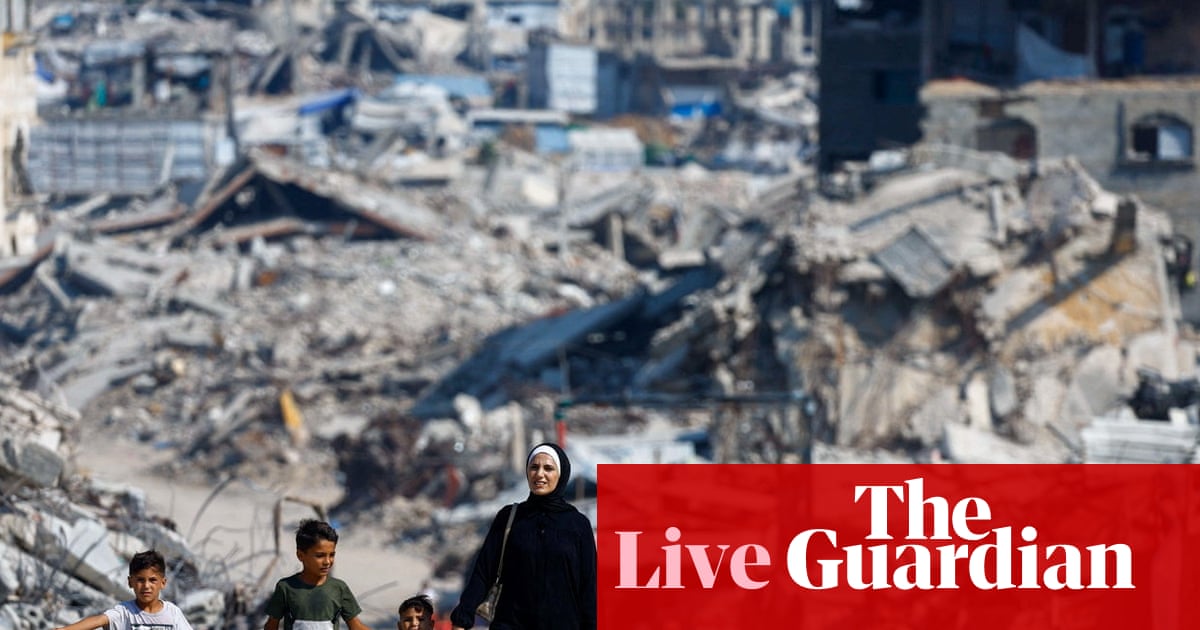
The humanitarian situation in Gaza remains dire, with approximately two million people living under Israeli control more than ten months after major military operations ceased. Since the ceasefire took effect on October 10, 2025, Israeli forces have conducted airstrikes resulting in over 1,200 Palestinian deaths and thousands of injuries, according to local health authorities. The roadmap aims to address these issues by facilitating humanitarian aid and reconstruction efforts, but progress has been halted due to the dispute over disarmament sequences.
Uncertainty looms over the next steps as mediators attempt to bridge the divide between Tel Aviv and Gaza. While Hamas insists on Israeli withdrawal before full disarmament, Israel demands the opposite sequence. The Board of Peace, originally created to bring stability to Gaza but later expanded to address global conflicts, faces a critical test in its ability to enforce compliance. Without a breakthrough in these negotiations, the risk of renewed large-scale violence persists, threatening to undermine the fragile truce that has held since last year.
International observers remain cautious about the prospects for immediate resolution. The involvement of high-profile figures like Blair and Mladenov underscores the global significance of this conflict, yet the fundamental disagreements over security guarantees and governance structures remain unresolved. As Kushner continues his shuttle diplomacy, the coming days will likely reveal whether the US-backed roadmap can survive the political realities on the ground or if it will collapse under the weight of mutual distrust.
The broader implications extend beyond Gaza, affecting regional stability and global perceptions of American diplomatic efficacy. The failure to implement the plan could embolden hardliners on all sides and delay reconstruction efforts indefinitely. Conversely, a successful compromise could pave the way for a new political arrangement in Gaza, potentially involving a technocratic administration and international security presence. For now, the world watches closely as these delicate negotiations unfold against a backdrop of escalating tensions and humanitarian need.
Sources behind this briefing
Go to the original reporting
- The Guardian World↗Kushner meets Netanyahu in Jerusalem following Hamas talks – Middle East crisis live
- BBC World↗Trump envoy Kushner meets Netanyahu after Hamas talks on peace plan
- The Guardian US Politics↗Jared Kushner meets with Hamas ahead of talks with Netanyahu on Gaza

