The short version
- Jared Kushner and Hakeem Jeffries held private discussions in New York regarding housing, immigration, and economic concerns.
- The meeting suggests the White House is preparing for a scenario where Democrats regain control of the House of Representatives.
- House Speaker Mike Johnson dismissed Kushner's influence while expressing confidence that Republicans will retain their majority.
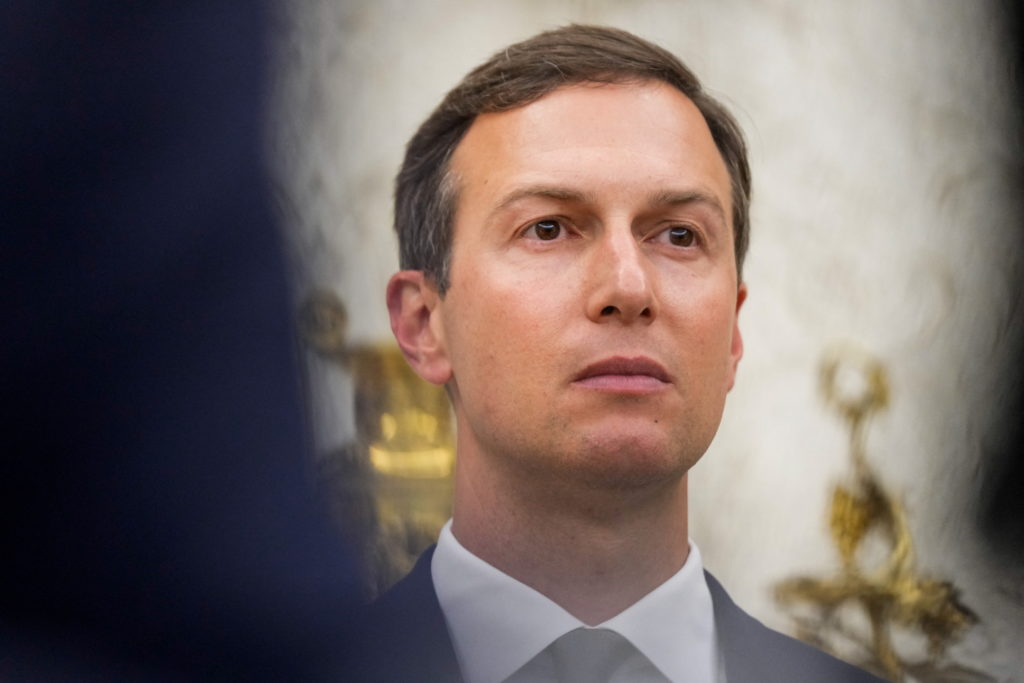
A private meeting between Jared Kushner, an outside adviser to President Donald Trump, and Hakeem Jeffries, the House Democratic leader, has emerged as a significant indicator of shifting political strategies ahead of the November midterm elections. The two New Yorkers met recently in New York City, engaging in discussions that covered a range of pressing domestic issues including housing affordability, immigration policy, and the persistent high costs of living affecting American households. This interaction, first reported by The New York Times, signals that elements within the White House are actively exploring avenues for cooperation with Democrats, particularly in anticipation of the possibility that the opposition party may wrest majority control from Republicans in Congress.
The context of these talks is defined by the intense pressure on both parties as they approach a critical electoral juncture. For the Republican administration, the meeting reflects a strategic calculation to mitigate potential political fallout should Democrats regain power. If the opposition succeeds in taking control of the House, the White House could face an aggressive oversight agenda. Jeffries has previously characterized certain members of the current administration as "crooks," suggesting that impeachment and other investigative tools are among the measures Democrats might employ if they hold the gavel. The prospect of such scrutiny appears to be driving the White House's interest in establishing lines of communication with the Democratic leadership.
Kushner, who holds no formal position within the executive branch but serves as an outside adviser and envoy, suggested that Jeffries follow up on their conversation by meeting with Susie Wiles, the White House chief of staff. This recommendation points to a structured effort to maintain dialogue across party lines, even as public rhetoric remains sharply divided. The two men have a history of collaboration dating back to the first Trump administration, where they worked together on legislation aimed at providing sentencing flexibility for certain drug offenses to reduce lengthy federal prison terms. Despite the personal attacks often exchanged between Trump and Jeffries, the two leaders have maintained a working relationship, allowing for these behind-the-scenes engagements.
Jeffries responded to the news of the meeting with a statement that did not explicitly reference the private conversation but instead criticized the Republican administration's governing style. He argued that the GOP's approach has failed the American people and called for an end to what he described as a "my-way-or-the-highway" strategy. The New York congressman emphasized that extremist tactics would be met with forceful opposition, posing the question of whether Republicans would choose to collaborate rather than confront. His comments underscore the deep ideological rifts that persist between the parties, even as practical governance issues demand attention.
Within the Republican Party, reactions to the meeting have been mixed and somewhat defensive. House Speaker Mike Johnson, a close ally of President Trump, expressed skepticism about Kushner's role in the administration during an interview on Fox News Channel. Johnson minimized the adviser's influence, stating that Kushner is not directly involved in day-to-day White House operations and suggesting that he "hedges his bets." Despite this dismissal, Johnson remained confident in the Republican majority, urging observers not to bet against House Republicans. His stance reflects a broader party strategy that relies on Trump's popularity among core voters to defy historical trends that typically punish the party in power during midterm elections.
The White House and Kushner's representatives did not respond to requests for comment regarding the meeting or its implications. This silence leaves the exact nature and scope of the discussions open to interpretation, though the involvement of high-level figures like Wiles suggests a serious intent to explore potential compromises. The current political landscape is characterized by a slim Republican majority in the House, meaning that control could be decided by a handful of battleground districts. Democrats are hoping to replicate their success from 2018, when they swept to power in significant numbers, while Republicans are counting on voter enthusiasm for Trump to hold onto their seats.
The broader implications of these talks extend beyond immediate policy disagreements. If Democrats retake control of either chamber of Congress, the balance of power would shift dramatically. Lawmakers eager to assert the authority of the legislative branch would likely move to check the executive's use of unilateral power. Currently, Trump has been able to implement priorities through executive action or by pressuring Republican lawmakers to fall in line, particularly regarding controversial Cabinet nominations. A Democratic majority would challenge this dynamic, forcing a more traditional negotiation process and potentially slowing the administration's agenda.
As the election approaches, the meeting between Kushner and Jeffries highlights the complex interplay of personal relationships, political strategy, and institutional power. While public posturing remains fierce, with Trump previously mocking Democratic leaders through social media posts and symbolic gestures, private channels of communication appear to be open. The outcome of the November elections will determine whether these tentative steps toward cooperation lead to substantive policy changes or remain isolated incidents in a deeply polarized political environment. The coming months will reveal whether the White House's outreach is a genuine effort at bipartisanship or a tactical maneuver to manage potential losses.
Sources behind this briefing
Go to the original reporting
- PBS NewsHour↗Report: Jared Kushner and Democratic leader Jeffries meet with House control at stake in November

