The short version
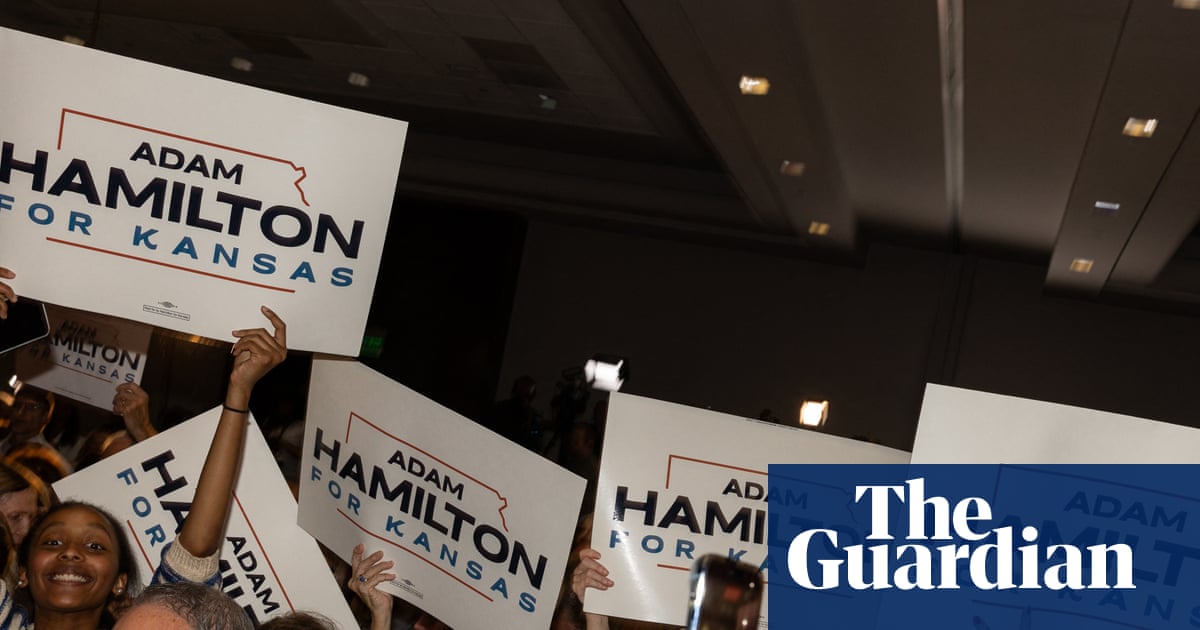
- Adam Hamilton won the U.S. Senate seat in Kansas, marking the first Democratic victory in the chamber for nearly one hundred years.
- Economic pressures including high grocery bills, fuel costs, and tariff-related strains on agriculture contributed to voter dissatisfaction with the Republican party.
- Hamilton’s campaign emphasized moderate collaboration, aiming to bridge partisan divides while addressing local economic concerns.
Kansas voters delivered a historic political shift this week by electing Democrat Adam Hamilton to the United States Senate. The victory marks the first time in nearly a century that a Democratic candidate has secured the chamber’s top seat in the state, which has long been considered a reliable stronghold for the Republican Party. The upset reflects a growing impatience among constituents who feel that economic realities have deteriorated despite previous support for national Republican leadership.
The election results indicate a significant realignment in rural and suburban areas that previously backed Donald Trump in 2024 and Senator Roger Marshall in 2020. Hamilton flipped six counties that had consistently voted Republican, signaling that frustration with the current administration’s economic policies is penetrating deep into conservative strongholds. Political analysts suggest that this shift does not necessarily represent a wholesale rejection of conservative values, but rather a specific dissatisfaction with how those values are being implemented under current leadership.
Economic anxiety appears to be the primary driver behind the change in voter behavior. Residents in agricultural communities and rural towns report facing steep increases in the cost of living. Fuel prices have risen by approximately one dollar per gallon compared to the previous year, adding strain on household budgets. Grocery bills have also surged, forcing many families to make difficult choices about what they can afford to purchase. These financial pressures are affecting not only farmers but also service workers and small business owners who depend on local spending.
The impact of tariffs and international conflicts, including tensions involving Iran, has further complicated the economic landscape for Kansans. The state’s economy is heavily reliant on agriculture, with nearly 45 million acres of farmland employing one in five residents. While farmers themselves remain largely Republican, neighboring communities that support the agricultural sector have felt the ripple effects of market instability. Local businesses report a domino effect when customers cut back on spending, leading to reduced hours and income for service industry employees.
Individual stories from across the state illustrate the depth of this economic frustration. In Junction City, a resident who previously supported Trump expressed regret over her 2024 vote, citing rising medication costs and unaffordable grocery prices as reasons for switching allegiance. She noted that she felt the former president was prioritizing personal wealth over helping ordinary citizens. Similarly, independent voters reported feeling priced out of basic necessities, with simple shopping trips resulting in unexpectedly high totals.
Hamilton’s campaign strategy focused on positioning himself as a moderate alternative to both national Democratic figures and the current Republican leadership. His slogan, “leading from the middle,” resonated with voters seeking pragmatic solutions rather than ideological battles. In his victory speech, Hamilton emphasized a desire to collaborate across party lines, specifically mentioning his intention to work closely with Republican Senator Jerry Moran. He framed his approach as a return to problem-solving politics, aiming to model cooperation in a deeply red state.
Political scientists note that the election results reveal a nuance in Kansas politics that had been overlooked. While some voters remain firmly aligned with Trump’s brand of conservatism, others are willing to break ranks when economic conditions worsen. The defeat of Senator Marshall suggests that personal loyalty to national figures is no longer sufficient to secure victory in local elections. Voters are increasingly evaluating candidates based on their ability to address immediate financial concerns rather than abstract political identities.
Looking ahead, Hamilton faces the challenge of governing in a state where his party holds little power. His promise to collaborate with Republicans will be tested as he navigates legislative priorities and federal policy debates. The election serves as a warning sign for Republican leaders nationwide that economic dissatisfaction can erode even the most entrenched political bases. As other states prepare for future elections, Kansas offers a case study in how cost-of-living issues can drive historic political change.
The broader implications of this upset extend beyond Kansas. It demonstrates that rural voters are not monolithic and that economic hardship can transcend traditional party lines. For Democrats, the victory provides a blueprint for winning in conservative areas by focusing on moderate messaging and local economic concerns. For Republicans, it highlights the risks of ignoring the financial struggles of their base in favor of national political narratives.
As Hamilton prepares to take office, the focus will shift to whether his collaborative approach can yield tangible results for Kansans. The election has already reshaped the political landscape, proving that even in the heartland, voter patience has limits when economic conditions fail to improve. The coming months will reveal if this shift is a temporary reaction to specific grievances or a more permanent realignment of Kansas politics.
Sources behind this briefing
Go to the original reporting
- The Guardian US↗Deep-red Kansas votes for change as patience wears thin with Trump: ‘The economy is really taking a beating’


