The short version
- Harry Kane is the first English player since 2001 to receive the Ballon d’Or, ending a long drought for the nation.
- Downing Street praised the achievement and hinted at future honors without confirming a knighthood, citing the formal process.
- Bayern Munich and the Bundesliga celebrated the win as validation of their league’s global standing and Kane’s impact.
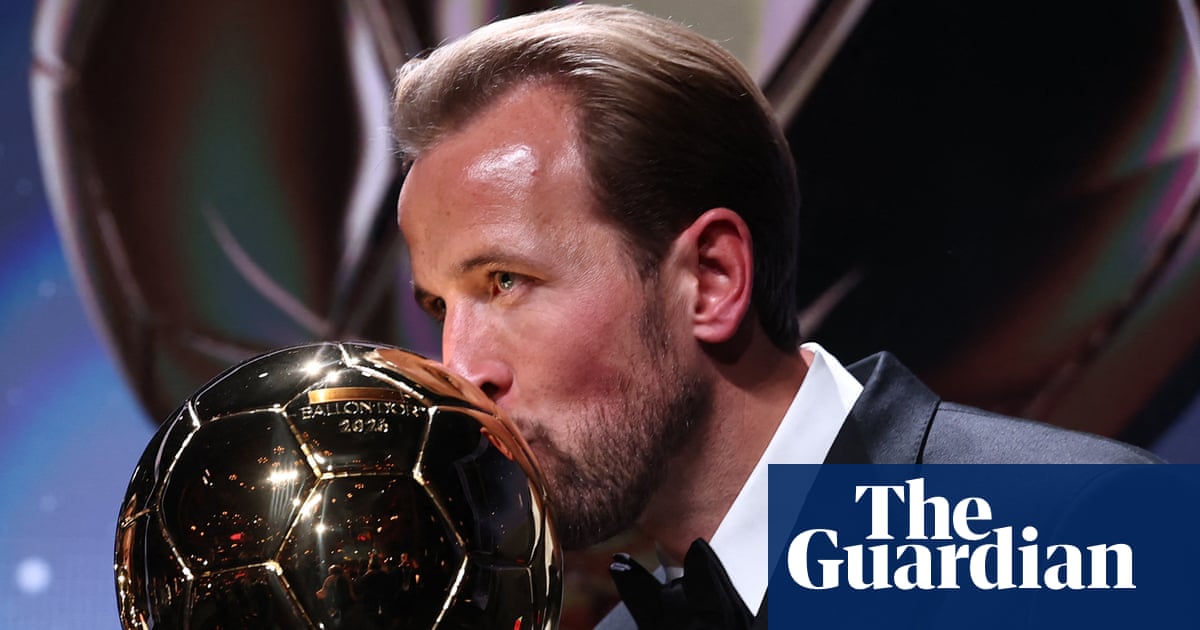
Harry Kane has been named the winner of the Ballon d’Or, marking a significant milestone for English football. The Bayern Munich striker is the first player from England to receive the award in twenty-five years, surpassing Michael Owen’s victory in 2001. This achievement places him among an elite group of English winners that includes Kevin Keegan and Sir Bobby Charlton. The announcement was made during a ceremony at the London Palladium on Monday night, where Kane defeated Kylian Mbappé and Lamine Yamal to claim the title.
The reaction from the British government has been notably warm, with Downing Street issuing statements of congratulations through Prime Minister Andy Burnham’s spokesperson. Officials described the win as an extraordinary achievement, particularly given that it occurred while Kane plays for a club abroad but represents his home nation. The statement noted that seventy years have passed since Sir Stanley Matthews won the inaugural award, framing Kane’s success as a capstone to a remarkable season and a source of national pride.
Speculation regarding a potential knighthood has emerged following the victory. While the Prime Minister’s office declined to pre-empt the formal honours process, they acknowledged that Kane has contributed enormously to English football. The spokesperson suggested that such an honor would be appropriate given the special nature of the moment for both the player and the country. However, historical precedent shows that active players are rarely knighted immediately; former England captain David Beckham and manager Gareth Southgate received their honors after stepping away from top-level competition.
Kane currently holds a Member of the British Empire (MBE) award, which was granted following England’s run to the semi-finals of the 2018 World Cup. The decision on whether to elevate his status lies with the honours committee, which receives recommendations from various ministers, departments, and private individuals. The sports committee includes figures such as Sue Barker and Robert Sullivan, who may weigh in on the recommendation. Past winners like Michael Owen and Kevin Keegan have not received knighthoods, suggesting that the path to a title is not automatic even for prestigious award winners.
Beyond the political implications, the victory has resonated strongly within Germany. Kane’s win ends a thirty-year drought for the Bundesliga, with the last German league player to win being Matthias Sammer in 1996. For Bayern Munich specifically, it marks the first time a club player has won the award since Karl-Heinz Rummenigge forty-five years ago. League officials and club executives have framed this as a validation of the Bundesliga’s status as a top-tier destination for global talent.
Lothar Matthäus, a former Ballon d’Or winner himself, emphasized the mutual benefit between Kane and his new environment. He argued that Kane likely would not have won the award at any other club, citing the striker’s development and maturity at Bayern. The German media has echoed this sentiment, with Bild describing Kane as the biggest star the league could wish for. His presence is seen as providing international validation that the club and league have sought for decades.
The Bundesliga responded to the news by projecting images of Kane onto landmarks across London, including Tate Modern and The Strand. These projections featured slogans celebrating him as both an England hero and a Bundesliga legend. Marc Lenz, the league’s chief executive, stated that the award underscores the league’s ability to host players performing at the highest level. He highlighted Kane’s professionalism and commitment as traits that inspire young athletes worldwide.
Bayern Munich plans to honor Kane upon his return to Munich. The club has announced a special welcome before their upcoming DFB Cup match against Magdeburg, followed by further recognition during a top-of-the-table clash with Borussia Dortmund. Club president Herbert Hainer placed Kane in the same historical lineage as Franz Beckenbauer and Gerd Müller, indicating the high regard in which he is held within the club’s hierarchy.
Looking ahead, Downing Street expressed hope that this individual success could serve as a prelude to future team trophies. The spokesperson alluded to England’s co-hosting of the European Championship in 2028 alongside Scotland, Wales, and the Republic of Ireland, suggesting that national victory remains a key objective. For now, Kane celebrates with family and friends in London, having secured a lifelong dream while elevating the profile of his club and league.
The broader context of this win includes the ongoing debate about English football’s global competitiveness. While Premier League stars often dominate these awards, Kane’s success in Germany challenges the narrative that only players in England can reach the pinnacle of individual recognition. His achievement may encourage other top talents to consider the Bundesliga as a viable path to world-class acclaim, potentially shifting recruitment strategies and player perceptions in the coming years.
Sources behind this briefing
Go to the original reporting
- The Guardian US↗Arise, Sir Harry? Downing Street hints at Kane knighthood after Ballon d’Or win
- BBC Sport↗How Kane's Ballon d'Or win could boost the Bundesliga


