The short version
- Justin Verlander retired after 21 seasons, leaving with a career total of 3,560 strikeouts and a 3.33 earned run average.
- His final appearance was cut short in the sixth inning by an emotional on-field moment involving his daughter and manager AJ Hinch.
- The veteran pitcher faced a young Pittsburgh roster, including players who were not yet born when he made his major league debut.
Justin Verlander officially concluded his twenty-one-year career in Major League Baseball on Saturday, marking the end of an era for one of the sport’s most decorated right-handers. The forty-three-year-old pitcher took the mound for the Detroit Tigers against the Pittsburgh Pirates at Comerica Park, delivering a performance that was as much about sentiment as it was about competition. While the game itself provided a backdrop for his departure, the defining moment occurred not through a pitch or a play, but through an unexpected and deeply personal interaction on the field.
Verlander’s final outing was physically demanding yet statistically modest compared to his peak years. He pitched five and a third innings, allowing two runs and five hits while striking out six batters. The runs came via solo home runs in the fourth and fifth innings from Pittsburgh’s Brandon Lowe and Nick Gonzales. Verlander worked through ninety-one pitches before being removed from the game, a decision that was accelerated by an unplanned emotional sequence rather than tactical necessity or physical failure.
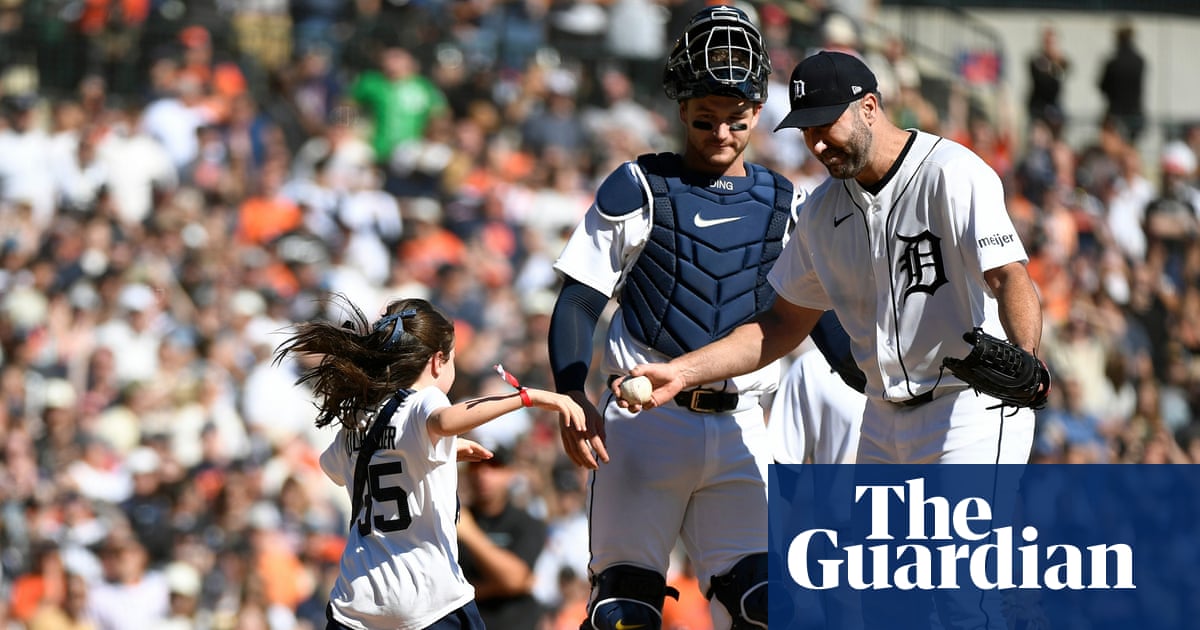
The pivotal moment arrived during the sixth inning after Lowe hit a foul popup. Tigers manager AJ Hinch walked from the dugout toward home plate and signaled toward the stands. Genevieve Verlander, the pitcher’s seven-year-old daughter, sprinted onto the field wearing a jersey bearing her father’s name and number. She embraced him on the mound, triggering an immediate and visible emotional response from Verlander, who began shaking and sobbing as he held his daughter.
Hinch joined the pair on the mound approximately twenty-five seconds later for a group hug, followed quickly by teammates who surrounded the veteran pitcher. The scene paused the game for five and a half minutes before reliever Tyler Kinley threw his first pitch. Verlander left the field holding Genevieve’s hand, receiving a standing ovation from the crowd. His wife, Kate Upton, joined them on the warning track with their one-year-old son, Bellamy, for a final family embrace before Verlander descended into the dugout.
The statistical legacy Verlander leaves behind is substantial. He finishes his career with a record of 266 wins and 159 losses, maintaining a 3.33 earned run average. Most notably, he recorded 3,560 career strikeouts, placing him eighth on the all-time list. His accolades include three Cy Young Awards and ten All-Star selections, cementing his status as one of the most dominant pitchers of his generation. The sheer length of his career spans decades of baseball history, bridging eras with a consistency that few peers have matched.
The contrast between Verlander’s longevity and the youth of his final opponents underscored the passage of time in the sport. Pittsburgh’s starting shortstop, Konnor Griffin, was twenty years old at the time of the game. Griffin had not yet been born when Verlander made his major league debut for the Tigers on July 4, 2005. This generational gap highlighted the unique position Verlander held as a veteran facing a new wave of talent in his final professional appearance.
The atmosphere at Comerica Park reflected the significance of the occasion. Academy Award winner J.K. Simmons, a noted Tigers fan, announced Verlander as part of the starting lineup. The crowd offered standing ovations when Verlander headed to the bullpen to warm up and again before he threw his first pitch. During the first inning, teammates remained in the dugout to allow Verlander the spotlight on the field alone, emphasizing the ceremonial nature of the event.
Verlander’s 2026 season was limited by injury, with a sore hip and hamstring issues derailing his availability. This final start was only his second of the year and his first since March 30. Despite these physical setbacks, he managed to complete his final outing with a degree of effectiveness, walking only one batter in nearly six innings. The injuries served as a reminder of the physical toll exacted by two decades at the highest level of professional sports.
The departure of Verlander marks the end of a chapter for the Detroit Tigers and baseball fans nationwide. His career trajectory, from a dominant young ace to a seasoned veteran navigating injury and age, provides a comprehensive narrative of modern pitching excellence. The emotional farewell, characterized by family involvement and public appreciation, offered a fitting conclusion to a career defined by both statistical dominance and personal resilience.
What comes next for Verlander remains open, though his retirement is definitive. The Tigers must now look toward the future without one of their most recognizable figures. For fans, the memory of his final moments on the mound—shaking with emotion while holding his daughter’s hand—will likely endure as a poignant symbol of the human element within professional athletics. His place in the history books is secure, anchored by strikeout totals and awards that reflect a lifetime of competitive success.
Sources behind this briefing
Go to the original reporting
- The Guardian US↗Justin Verlander leaves field in tears with daughter after final start of 21-year career

