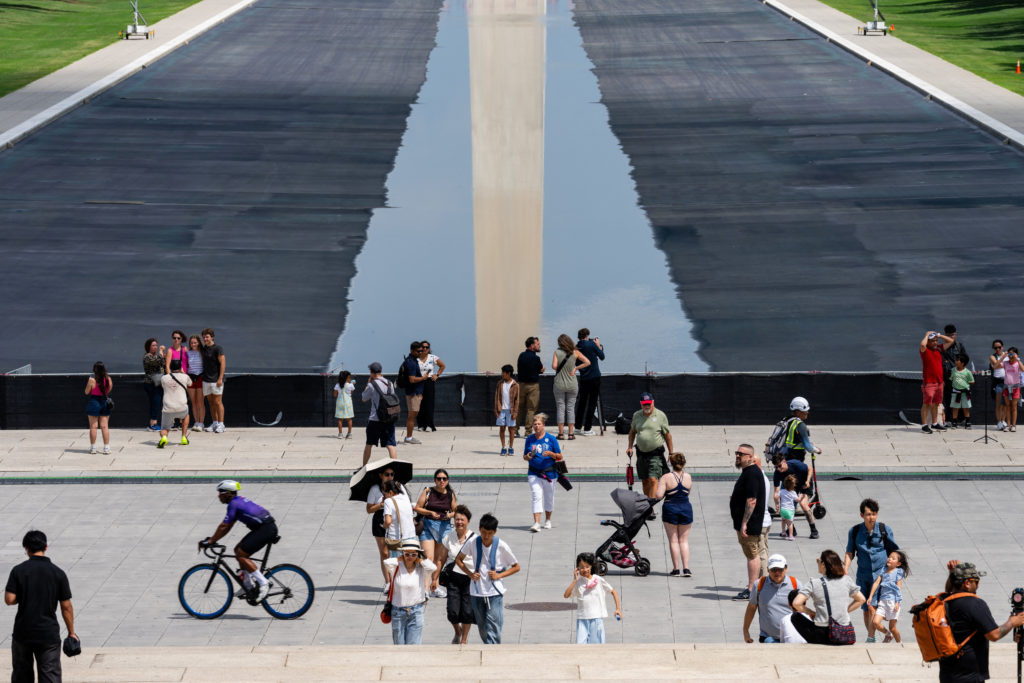
The short version
- The Justice Department dismissed felony charges against former Olympian David Hearn, citing evidence that pool damage stemmed from installation errors rather than vandalism.
- Defense attorneys argue the government ignored readily available information about the pool's poor condition before proceeding with the indictment.
- President Trump and Interior Secretary Doug Burgum continue to defend the original narrative of vandalism, creating a public rift with federal prosecutors.
The Justice Department has formally dismissed felony charges against David Hearn, a former Olympic canoeist accused of damaging the Lincoln Memorial Reflecting Pool. U.S. Attorney Jeanine Pirro moved to drop the case on Friday, concluding that newly produced evidence from the Interior Department demonstrated Hearn was not responsible for the structural issues at the landmark. The decision marks a significant reversal in a high-profile case that had drawn intense political scrutiny and raised questions about the thoroughness of the initial investigation.
Pirro’s office attributed the damage to a botched installation by a contractor and cited a rushed timeline to complete repairs before the America 250 celebration events surrounding July 4. The filing indicated that these directives came from President Donald Trump, suggesting that political pressure may have influenced the speed of the project. This explanation stands in stark contrast to the initial allegations that Hearn intentionally vandalized the site during a bike ride on June 19.
Defense lawyers for Hearn argued that the Justice Department knew or should have known for weeks that its case was fundamentally flawed. In a motion filed Tuesday, they urged a judge to permanently dismiss the charges to prevent any possibility of the Trump administration reviving them later. The legal team contended that the government disregarded readily available evidence showing the pool liner was already failing due to installation flaws long before Hearn’s alleged actions.
The defense emphasized that the poor condition of the pool was plainly visible for weeks and had been publicly documented through photographs, video footage, and news reports. They argued that proceeding with an indictment without evaluating this information defied decency and common sense. According to the lawyers, the government failed to establish a good-faith basis for the charge before bringing it forward, despite clear indicators that the damage was pre-existing.
Key witnesses in the prosecution’s case also undermined the validity of the charges. Defense attorneys noted that the government’s primary eyewitness was never presented to the grand jury. Furthermore, a crucial witness regarding the extent of damages stated that the repairs would have been necessary regardless of Hearn’s conduct and could not identify any additional costs caused by his actions. This testimony suggests that the alleged vandalism did not result in unique or incremental financial harm.
The contractor involved, Virginia-based Atlantic Industrial Coatings, had publicly acknowledged before Hearn was indicted that portions of the project required repair. The firm had been awarded a $14.7 million no-bid contract to repaint and waterproof the pool’s concrete floor. Defense lawyers pointed out that this admission further contradicted the narrative that Hearn was solely responsible for the damage, indicating that structural issues were known to those involved in the maintenance work.
Despite the dismissal, President Trump continued to insist on Tuesday night that the pool had been vandalized and defended the contractors’ work. He criticized Pirro’s decision, calling her wrong and suggesting she made a mistake. Interior Secretary Doug Burgum also backed Trump’s claims, maintaining that vandals were responsible for the damage. This public disagreement highlights a rare moment of open defiance by a political appointee against the president during his second term.
Hearn has maintained that he was merely examining the pool’s newly peeled coating when he briefly touched a chunk attached to the side. He stated that he obeyed a park worker who instructed him to let go of it. The felony charges, which carried a potential ten-year prison sentence, were brought without a meaningful investigation into whether Hearn could have caused any damage. The dismissal serves as an embarrassing setback for the Justice Department and underscores the disconnect between political assertions and court records.
The case has drawn attention to the broader implications of using legal mechanisms for politically charged disputes. While the immediate legal threat against Hearn has been removed, the controversy continues to fuel debate about accountability and the integrity of federal investigations. The outcome may influence how future cases involving public figures and government properties are handled, particularly when political timelines intersect with judicial processes.
As the legal proceedings conclude, the focus shifts to the physical restoration of the Reflecting Pool and the long-term maintenance strategies for the landmark. The incident has exposed vulnerabilities in the oversight of high-profile infrastructure projects and the potential for rushed decisions to compromise quality. Stakeholders are now likely to scrutinize future contracts and timelines more closely to prevent similar controversies from arising.
Sources behind this briefing
Go to the original reporting
- PBS NewsHour↗Lawyers in Reflecting Pool case say Justice Department knew case was flawed

