The short version
- The novel was first published in October 1726 under a pseudonym, quickly gaining acclaim for its sharp political satire.
- A new exhibition at Trinity College Dublin displays over 100 editions and artworks, highlighting the book's cultural impact across three centuries.
- Scholars debate Swift’s true views on humanity, while modern readers find resonance in his critique of rationality and progress.
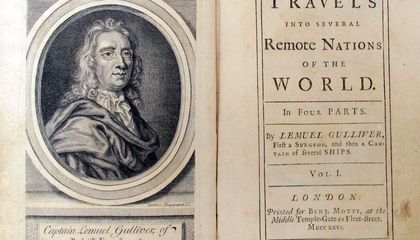
Three centuries have passed since Jonathan Swift’s seminal work first appeared in print, yet its sharp critique of human nature remains strikingly relevant. The novel, originally titled Travels Into Several Remote Nations of the World, was published on October 28, 1726, by London bookseller Benjamin Motte. At the time, the authorship was concealed; a mysterious figure delivered the manuscript to Motte in the spring of that year, presenting it as the account of a sea captain named Lemuel Gulliver. The text described voyages to distant lands, including Lilliput, inhabited by tiny people, and served as a biting satire of British societal norms and political oddities.
Motte acquired the rights without knowing the true identity of the writer, drawn by the narrative’s immediate appeal. It was not long after publication that Swift, a Dublin-born Anglican clergyman and established essayist, was revealed as the author behind the Gulliver pseudonym. The book achieved instant acclaim, establishing itself as a cornerstone of political satire. Its exploration of class divisions, morality, and societal structures has proven timeless, leading to translations in dozens of languages and ensuring it has never gone out of print since its debut.
To mark this tricentennial, Trinity College Dublin, Swift’s alma mater, is hosting an exhibition titled Gulliver at 300. The showcase brings together more than 100 versions of the story, ranging from early editions to contemporary adaptations and the artworks they inspired. Stephanie Breen, co-curator of the exhibition, noted that the collection spans from the original 1726 edition to twenty-first-century interpretations. The display highlights the contributions of printers, engravers, and illustrators who have engaged with Swift’s work over the last three hundred years.
Among the exhibition’s highlights is the only known surviving copy of an abridged version titled The Travels of Lemuel Gulliver, printed in Dublin in 1761. The collection also features several eighteenth-century publications that expanded upon Swift’s world, functioning as early forms of fan fiction. These unauthorized sequels and spin-offs demonstrate the immediate cultural footprint of the novel. Additionally, the exhibition includes comic adaptations, pop-up books, ephemeral booklets, and other deluxe editions, illustrating the diverse ways in which readers have interacted with the text across generations.
The term Swiftian has become synonymous with bitter satire, reflecting the harsh tone often attributed to the author. Swift once wrote to fellow satirist Alexander Pope that his work was erected upon a foundation of misanthropy. However, scholars continue to debate whether Swift genuinely held such pessimistic views of humanity or if he amplified these sentiments through his fictional characters. This ambiguity adds depth to the literary analysis of the novel, inviting readers to question the extent to which the author’s personal beliefs are embedded in the narrative.
Some experts suggest that Swift’s position as a member of Ireland’s elite Protestant minority influenced his critical perspective on English authority. Clíona Ó Gallchoir, a literary scholar at University College Cork, argues that Swift’s dual perspective within the power structures of his time allowed him to recognize the folly of assuming any single frame of reference is absolute. This unique vantage point enabled him to craft a satire that challenged prevailing norms and exposed the absurdities of political and social hierarchies.
The novel has also left a lasting linguistic legacy, introducing several colorful terms into the English language. Words such as yahoo, referring to a crass person, and lilliputian, describing something or someone very small, originated from Swift’s descriptions of the characters and places in his voyages. These terms have endured for centuries, further cementing the novel’s place in cultural history. The exhibition organizers believe that modern audiences, particularly younger generations, will continue to find relevance in Swift’s messages.
Aileen Douglas, a literature scholar at Trinity College Dublin and co-curator of the exhibition, noted that early readers were captivated by the satire of prominent political figures and the machinations of power. She suggests that contemporary readers, who may feel anxious about displacement by artificial intelligence, will find strong resonance in Swift’s profound satire of human nature. Specifically, his critique of pride in rationality and progress offers a timely reflection on modern technological advancements and their societal implications.
The Gulliver at 300 exhibition is currently on view at Trinity College Dublin’s Old Library and is also accessible online. The showcase will remain open through December 2026, providing an extended opportunity for scholars and the public to explore the enduring impact of Swift’s work. As the literary world celebrates this milestone, the novel continues to serve as a mirror to human folly, inviting new interpretations with each passing generation.
Sources behind this briefing
Go to the original reporting
- Smithsonian Magazine↗'Gulliver's Travels' Turns 300 This Week. Jonathan Swift's 'Profound Satire of Human Nature' Is Still Just as Bitingly Relevant

