The short version
- The annual Ulchi Freedom Shield exercise will end six days earlier than planned, with a partial reduction in field training components.
- President Trump publicly connected the decision to South Korea's refusal to participate in potential military operations against Iran.
- Diplomatic channels remain opaque, as officials from both nations stated they were unaware of the President's intentions prior to his public announcements.
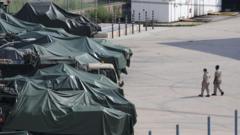
The United States and South Korea have agreed to shorten their annual joint military exercises by six days, a move initiated at the request of Washington. The defense ministry in Seoul confirmed that the period and scope of the 2026 Ulchi Freedom Shield drill would be adjusted based on a proposal from American counterparts. Consequently, the training operations are now scheduled to conclude on August 21, rather than the originally planned date of August 27. This adjustment marks a significant deviation from standard protocol for these long-standing bilateral defense activities.
The reduction in scale extends beyond just the timeline. Seoul indicated that the combined field training exercise component would also be partially reduced, though specific details regarding the extent of this scaling back remain under discussion between the two militaries. Previously, military leaders had announced that the event would mirror previous years in magnitude, involving approximately 18,000 South Korean soldiers alongside the roughly 28,500 American personnel stationed in the region. The sudden contraction of these plans signals a shift in strategic posture or diplomatic priority.
President Donald Trump has explicitly linked this decision to broader geopolitical frustrations, particularly regarding Iran. In public statements and social media posts, he criticized the exercises as costly and hostile, noting that the United States typically bears much of the financial burden. He further argued that South Korea’s refusal to assist in potential military operations against Iran justified a reduction in support for their defense against North Korea. Trump characterized the situation as strange, pointing out that US troops guard Seoul from Pyongyang while Seoul declines to help with what he described as an easy operation elsewhere.
Despite the public linkage between the drill reductions and Iranian policy, diplomatic insiders suggest a lack of prior coordination on this specific issue. South Korean Foreign Minister Cho Hyun testified before parliament that neither his government nor US officials were aware in advance of Trump’s plans to curtail the exercises. This disconnect highlights a potential friction point in communication channels between the executive branch and defense departments in both nations. The surprise nature of the announcement has raised questions about how future security commitments will be negotiated.
Behind the scenes, reports indicate that Trump is pushing for a direct meeting with North Korean leader Kim Jong Un. Aides are reportedly working to arrange an in-person discussion during the President’s upcoming trip to Asia, likely scheduled for November for the Asia-Pacific Economic Cooperation summit in China. This push for dialogue aligns with Trump’s previous assertions about having a good relationship with Kim and suggests that the reduction in military posturing may be intended as a gesture to facilitate talks.
The timing of these developments coincides with heightened tensions on the Korean Peninsula. North Korea has condemned the joint drills as rehearsals for aggressive war, a stance reinforced by recent reports of Pyongyang deploying troops to support Russia’s war effort in Ukraine. US military spokesperson Ryan Donald acknowledged this threat, stating that training accounts for the possibility of North Korean soldiers returning from the battlefield with combat experience. The interplay between regional threats and diplomatic overtures creates a complex security environment.
The decision to scale back exercises occurs amidst broader uncertainties regarding US foreign policy direction. While the immediate impact is a shorter and smaller drill, the long-term implications for the alliance remain unclear. Seoul must balance its reliance on US military protection with the political demands of Washington. The partial reduction in field training suggests that while cooperation continues, it is now subject to more conditional terms dictated by broader American strategic interests.
As the revised exercise dates approach, both nations will need to manage domestic and international perceptions of this shift. For South Korea, the adjustment may be viewed as a concession to US political pressures rather than a mutual strategic decision. For the United States, it represents an attempt to leverage military assets for diplomatic gains in multiple theaters. The coming weeks will likely see further clarification on how these changes affect the broader framework of security cooperation between Washington and Seoul.
Sources behind this briefing
Go to the original reporting
- BBC World↗South Korea shortens war games with US citing Washington request