The short version
- Janeese Lewis George secured a decisive victory in the general election, positioning herself as the next mayor of Washington, D.C., after facing minimal opposition from independent and minor party candidates.
- Her tenure will be defined by navigating significant constraints imposed by Congress under the Home Rule Act, which allows federal lawmakers to veto local legislation and manipulate city budgets without municipal input.
- Lewis George has pledged to challenge President Trump’s policies, particularly regarding the deployment of National Guard troops and local police cooperation with federal immigration authorities.
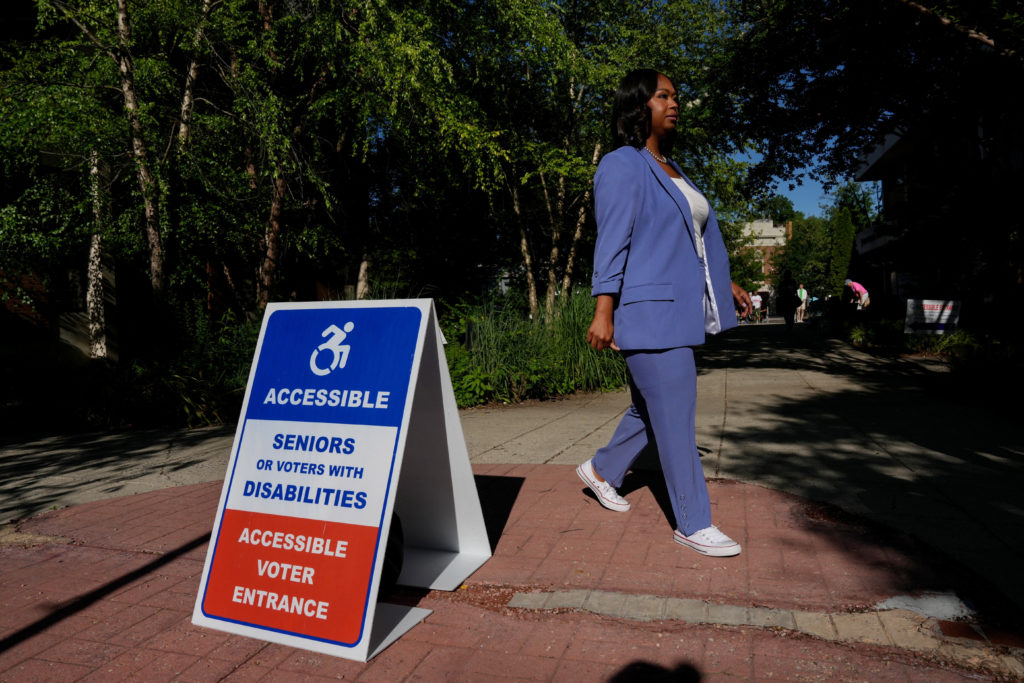
Janeese Lewis George is set to become the next mayor of Washington, D.C., following a decisive victory in Tuesday’s general election. The 38-year-old politician, who previously served five years on the city council, faced little resistance from opponents, easily surpassing an independent candidate, a Statehood Green Party nominee, and numerous write-in votes. Her win places her among a small group of democratic socialist municipal leaders, joining figures such as Zohran Mamdani in New York City and Katie Wilson in Seattle. She is scheduled to be sworn in on January 2, marking the first change in city leadership in twelve years.
While the electoral path was clear, the political landscape awaiting her inauguration is fraught with tension. President Donald Trump has already inserted himself into local affairs, publicly denouncing Lewis George as a threat to the capital. In social media posts following her primary victory, Trump characterized her as a communist adherent who opposes his agenda. Lewis George has responded by promising to collaborate on public safety but also vowed to stand firm against federal overreach. This dynamic establishes a confrontational tone before she even assumes office.
The core of the challenge lies in the structural limitations placed on D.C. governance. The Home Rule Act of 1973 granted residents the ability to elect local officials but preserved Congress’s ultimate authority over the district. Legal experts note that this framework allows federal lawmakers to veto any bill passed by the city council, manipulate the municipal budget without local input, and legislate directly for the district if they choose. These powers remain unchanged regardless of who holds the mayor’s office, creating a persistent hurdle for local autonomy.
Recent actions by the federal government have highlighted these vulnerabilities. During Trump’s first year back in the White House, Congress blocked the city from spending approximately one billion dollars of its own funds. This freeze maintained 2024 spending levels during the federal budget process, severely restricting the municipality’s financial flexibility. Advocacy groups describe this move as having significant impacts on daily life for residents, while also noting an exponential increase in bills introduced by Congress that specifically target the district’s policies and operations.
Lewis George has identified the affordability crisis as her top priority, arguing that federal actions have exacerbated economic hardships in the city. She has criticized the administration for mass firings of federal employees and the militarization of streets, claiming these measures worsen conditions for residents. With a population nearing 700,000, she will oversee standard municipal responsibilities including revenue generation, public safety, and ceremonial duties. However, her ability to address affordability is directly tied to how much control Congress exerts over the city’s purse strings.
The political composition of Congress will play a crucial role in determining Lewis George’s operational freedom. If Democrats retain or gain control of the House and Senate, the city may have a legislative backstop against Republican efforts to encroach on local authority. Historians suggest that even if Democrats only secure the House, they may provide some cover for the mayor against federal interference. Conversely, a unified Republican Congress could intensify pressure on the district, limiting the new administration’s policy options.
Specific points of contention include the deployment of National Guard troops and the cooperation of local law enforcement with federal agencies. Lewis George has promised to end local police collaboration with U.S. Immigration and Customs Enforcement (ICE), a stance that contrasts with the approach of outgoing Mayor Muriel Bowser. Bowser, who decided not to seek re-election after three terms, maintained a relatively quiet public posture regarding federal conflicts, focusing instead on educational gains and preserving existing home rule structures.
Lewis George’s strategy may involve balancing defiance with pragmatic engagement. Some observers suggest she could look to New York Mayor Zohran Mamdani as a model, noting that despite early tensions, Mamdani has occasionally sought support from the president for specific projects while criticizing broader policies. The question remains whether the coalition that propelled Lewis George to victory will allow her to adopt a lower-key approach or if they will demand consistent confrontation with the federal administration.
As she prepares to take office, Lewis George faces the dual task of managing municipal services and navigating a complex federal relationship. Her success will depend on her ability to secure resources for residents while resisting legislative overrides from Congress. The coming months will test whether local leadership can maintain meaningful autonomy in a district where federal power remains absolute.
The transition period offers little clarity on how these conflicts will unfold, but the stakes are high for both city governance and national political dynamics. Lewis George’s administration will be watched closely as a case study in municipal resilience against federal pressure. Her ability to deliver on affordability promises while standing up to executive branch initiatives will define her legacy from day one.
Sources behind this briefing
Go to the original reporting
- PBS NewsHour↗Democratic socialist Janeese Lewis George wins D.C. mayoral election