The short version
- President Isaac Herzog accepted the certified election results as legally binding, initiating formal consultations to determine which leader will attempt to form a new government.
- The elections commission found no evidence of irregularities that compromised the vote's integrity, despite ongoing Shin Bet investigations into alleged foreign funding and interference.
- With neither Benjamin Netanyahu nor Gadi Eisenkot securing a majority, the path to power remains uncertain, potentially leading to a new election early next year if coalition talks fail.
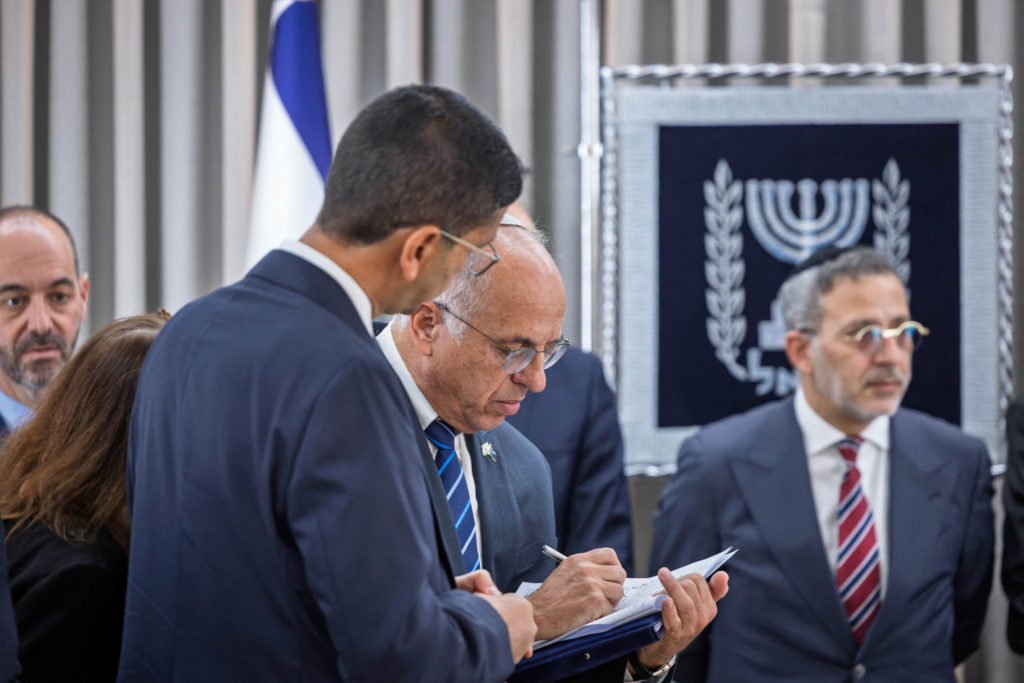
Israeli President Isaac Herzog has officially accepted the certified results of last week’s parliamentary elections as legally binding, marking a decisive shift away from efforts to discredit the vote. On Wednesday, Herzog began consultations with party representatives to determine who will be tasked with forming a new government. This move undermines Prime Minister Benjamin Netanyahu’s campaign to delegitimize the election, in which his bloc lost its majority in the Knesset while Arab-led parties achieved historic gains.
The elections commission concluded its review by stating that a thorough investigation found no evidence of irregularities that compromised the integrity of the election or affected its outcome. Commission head Supreme Court Justice Noam Sohlberg emphasized that casting doubt on the results is dangerous and warned that public trust in the electoral process is fragile. He noted that even if suspicions of foreign interference were substantiated, their potential impact on the final tally would be limited.
Despite the commission’s findings, tensions remain high regarding allegations of foreign involvement. The Shin Bet intelligence service, led by David Zini, a Netanyahu appointee, provided an assessment to the elections committee suggesting a widespread phenomenon of substantial funds flowing into Israel from hostile foreign states. However, the agency offered no evidence to support this assertion, and the commission maintained that such interference did not alter the election results.
The political landscape is now defined by gridlock, as neither Netanyahu’s bloc nor the coalition led by opposition figure Gadi Eisenkot secured a parliamentary majority. Herzog’s consultations involve meeting with various party leaders to gauge who has the best chance of assembling a governing coalition. Three factions aligned with Netanyahu’s religious-nationalist base recommended he be given the mandate, while a fourth faction, led by a former ally turned rival, suggested Eisenkot.
Eight additional parties, including two Arab-led factions, are scheduled to meet with Herzog on Thursday. Eisenkot’s Yashar party and Netanyahu’s Likud will speak last in this series of sit-downs. After these consultations, the president will designate a candidate, most likely either Netanyahu or Eisenkot, to attempt to form a government. This decision sets the stage for weeks of complex negotiations.
The possibility of an alliance between the two rivals or between Eisenkot and some Arab-led parties exists, though such configurations face significant political hurdles. If neither designated leader can put together a stable government within the allotted time, Israel will be forced to hold another election early next year. This outcome would prolong the political uncertainty that has characterized the nation’s recent history.
Meanwhile, legal and security institutions are grappling with the fallout from the election disputes. The Shin Bet sought approval from Attorney General Gali Baharav-Miara to interrogate several elected officials, including Ra’am party leader Mansour Abbas and other senior Arab lawmakers, as part of its separate investigation into foreign interference.
Attorney General Baharav-Miara rejected the request, stating that it is not permissible to interrogate citizens or elected officials without evidence to justify such action. The Joint List of Arab parties condemned the Shin Bet’s request as a campaign of incitement designed to delegitimize the Arab vote. National Security Minister Itamar Ben-Gvir, a far-right ally of Netanyahu, called for the arrest of Arab political leaders, further inflaming tensions despite having no authority over the intelligence agency.
As Herzog proceeds with his duties, the focus shifts from allegations of fraud to the practical challenges of governance. The president’s stance reinforces the rule of law and the finality of the electoral process. However, the deep divisions within Israeli society and the lack of a clear majority mean that the path to a functioning government remains fraught with difficulty.
The coming days will be critical in determining whether a coalition can be formed or if the country faces another round of elections. The outcome will have significant implications for Israel’s domestic stability and its ability to address ongoing security and political challenges. All eyes are now on Herzog’s final decision, which will set the tone for the next phase of Israeli politics.
Sources behind this briefing
Go to the original reporting
- PBS NewsHour↗Israel's president takes first steps on building new government after accepting election results


