The short version
- President Isaac Herzog selected Gadi Eisenkot to form a government after consultations indicated he had the best chance of success.
- The October election resulted in a deadlock, with Netanyahu’s bloc securing 53 seats and Eisenkot’s opposition bloc winning 48, leaving neither with the 61 needed for a majority.
- Eisenkot faces uncertainty regarding whether his coalition can incorporate support from Arab-majority lists, despite receiving their endorsements.
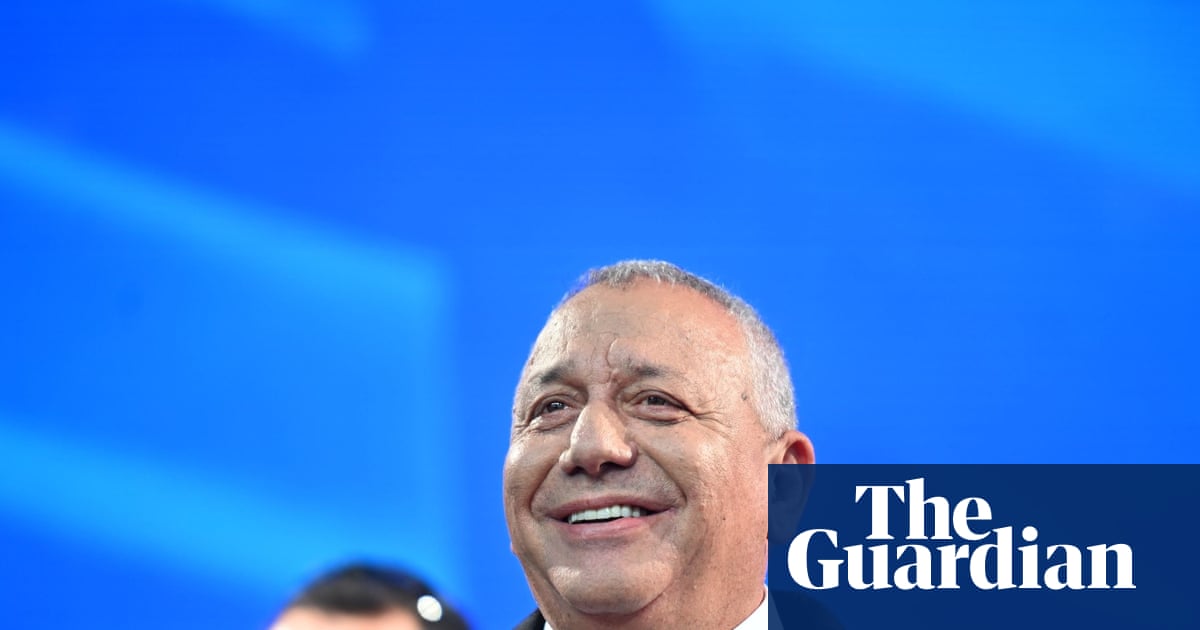
Israel’s President Isaac Herzog has selected Gadi Eisenkot, the leader of the Yashar party, to attempt to form a new government. This decision marks a significant potential shift in Israeli leadership, as Eisenkot is Prime Minister Benjamin Netanyahu’s most prominent challenger. The mandate comes after a period of political deadlock following last month’s elections, which failed to produce a clear winner capable of immediately assembling a majority coalition.
The election held on October 27 resulted in a fragmented parliament that left both major political camps short of the 61 seats required to govern alone. Benjamin Netanyahu’s religious-nationalist coalition emerged as the largest bloc with 53 seats, but this fell short of a majority. Eisenkot’s wide-ranging opposition bloc secured 48 seats. Because neither side could claim an outright victory, President Herzog engaged in consultations with party leaders to determine who had the best prospects for forming a stable government.
During these consultations, Eisenkot received endorsements from both Arab-majority lists. These parties made unprecedented gains in the recent vote and are now positioned as potential kingmakers in the coalition-building process. However, it remains unclear whether Eisenkot’s bloc would be willing to accept formal support from Arab lists in constructing a governing coalition, a decision that could complicate his path to power.
Herzog’s office announced on Saturday night that it had informed Eisenkot of the intention to task him with forming a government. The formal appointment is scheduled to take place during an official ceremony on Sunday at the president’s residence in Jerusalem. If Eisenkot succeeds in building a coalition, he would replace Netanyahu, who has served as Israel’s longest-serving premier.
Eisenkot, 66, has positioned himself as a unifying figure following what he describes as a divisive tenure under Netanyahu, during which Israeli politics moved sharply to the right. As the former military chief of staff from 2015 to 2019, Eisenkot has vowed to crack down on extremist West Bank settlers who have attacked Palestinians with impunity. He has characterized recent violent incidents by settlers as “Jewish terror” that was abetted by the previous government.
Despite his rhetoric on unity and domestic security, Eisenkot’s stance on foreign policy remains hardline. He is not a proponent of creating a Palestinian state. Instead, he has vowed to end Hamas’s rule in Gaza and destroy the Islamist movement’s military wing. His approach to conflict reflects his background as a military commander who devised the “Dahiya doctrine” during the 2006 war with Hezbollah.
The Dahiya doctrine, named after a Beirut suburb heavily damaged during that conflict, involves the use of massive force against civilian infrastructure in areas controlled by militant groups. This history underscores the complexity of Eisenkot’s political profile: a candidate seeking to heal domestic divisions while maintaining a robust, aggressive posture on national security and regional conflicts.
The coming weeks will test Eisenkot’s ability to navigate these competing pressures. He must balance the need for broad coalition support with his own political principles and the expectations of his base. The outcome of his efforts will determine whether Israel sees a change in leadership or faces further political instability.
Netanyahu, meanwhile, is fighting to hold onto office despite losing his majority. The resolution of this government formation process will have profound implications for Israel’s domestic policies and its approach to ongoing regional conflicts. All eyes are now on Eisenkot as he begins the delicate task of coalition building.
Sources behind this briefing
Go to the original reporting
- NPR↗Israel's president taps opposition candidate Eisenkot to form a government, in setback for Netanyahu
- The Guardian US↗Israel’s president picks Yashar leader Gadi Eisenkot to form government
- The Jerusalem Post↗Gadi Eisenkot set to receive mandate to from next Israeli government


