The short version
- Gadi Eisenkot campaigns on personal rectitude and working-class roots rather than a detailed ideological platform.
- The opposition leader supports ending ultra-Orthodox military exemptions but avoids committing to a two-state solution or halting settlement expansion.
- Critics argue his approach focuses on managing the conflict through better administration rather than resolving underlying political issues.
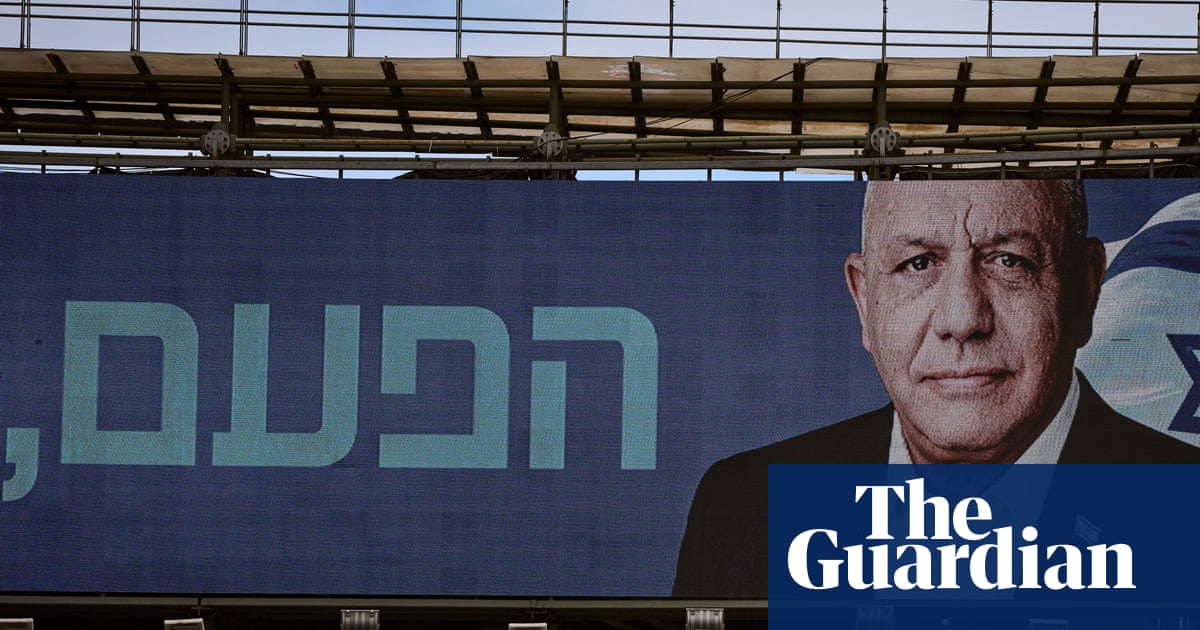
Gadi Eisenkot, the leading opposition candidate in Israel’s upcoming elections, presents himself as a direct counterpoint to Prime Minister Benjamin Netanyahu. Where the current prime minister is characterized by polished media management and slick presentation, Eisenkot projects an unvarnished, modest image. Described by commentators as decent yet unkempt, his crumpled appearance and straightforward demeanor stand in sharp relief against Netanyahu’s carefully controlled public persona. This contrast has positioned Eisenkot as a figure of rectitude in a political landscape often defined by internal strife and public smears.
Eisenkot entered politics only four years ago, founding the Yashar party, which translates to straight or honest. His appeal appears rooted less in specific policy prescriptions and more in the perception of his character. Analysts note that voters view him as empathetic and grounded, partly due to his background. Unlike Netanyahu, whose family has academic roots, Eisenkot comes from a Mizrahi Jewish family originally from Morocco. He began his military career as an infantryman before rising through the ranks to become Israel’s chief of staff.
Despite this strong personal branding, Eisenkot remains notably vague on several critical policy issues central to Israeli politics. He has not committed to supporting a two-state solution that would establish a Palestinian state. During campaign appearances, he stated that he has never endorsed such a framework, arguing that the deep religious and national conflict makes any immediate agreement unlikely. This ambiguity extends to his stance on Jewish settlements in the occupied West Bank.
While Eisenkot opposes the planned E1 settlement block, which many view as an obstacle to future Palestinian statehood, he generally supports settlement expansion. His primary point of differentiation from the current government concerns the administration of the West Bank. He has pledged to reverse Prime Minister Netanyahu’s decision to place Bezalel Smotrich, a far-right minister known for pro-settler views, in charge of the territory. Instead, Eisenkot proposes returning control to the military, aiming to curb the surge in settler violence that has drawn international condemnation.
On domestic issues, Eisenkot advocates for a comprehensive investigation into the intelligence failures that preceded the Hamas attacks on October 7, 2023. He also supports ending the military draft exemption for ultra-Orthodox Jews, a move that addresses a long-standing source of social friction in Israel. These positions reflect a desire to restore institutional integrity and address internal divisions, aligning with his party’s emphasis on honesty and straightforward governance.
However, skeptics argue that Eisenkot’s platform amounts to a return to failed strategies of conflict management rather than resolution. Critics suggest that he and his allies aim to mitigate international pressure by presenting Israel as better managed, without fundamentally altering the status quo regarding Palestinian rights or territorial control. This perspective views his candidacy as an attempt to improve administrative efficiency rather than pursue a transformative political direction.
Eisenkot’s military philosophy further complicates his image as a moderate alternative. As the northern front commander during the 2006 Lebanon War, he was instrumental in developing the Dahiya doctrine, which advocated for disproportionate force and significant destruction to deter adversaries. This approach has seen parallels in the current war in Gaza. While he has criticized Netanyahu’s rhetoric about creating a militarized state, Eisenkot remains firm on the use of military power.
Regarding the ongoing conflict in Gaza, Eisenkot has adopted a realist stance, suggesting that total victory over Hamas is unlikely. He has emphasized the importance of prioritizing the lives of hostages held by Hamas, a position underscored by personal tragedy; his son died from wounds sustained during a hostage recovery operation in late 2023. This blend of military pragmatism and personal loss informs his cautious approach to future strategy.
As the election approaches, Eisenkot’s campaign highlights a tension between personal integrity and policy clarity. While he offers a compelling alternative to Netanyahu’s style and addresses key domestic grievances, his reluctance to define clear positions on peace processes and territorial governance leaves significant questions unanswered. Voters must weigh his perceived honesty against the uncertainty of what an Eisenkot-led government would actually achieve in terms of long-term stability.
The outcome of this election will likely hinge on whether Israeli voters prioritize character over concrete policy shifts. Eisenkot’s ability to unify disparate factions while maintaining his ambiguous stance on core issues remains a critical factor. The coming weeks will reveal if his appeal as a decent, straightforward leader is sufficient to overcome the lack of a detailed roadmap for resolving Israel’s most enduring conflicts.
Sources behind this briefing
Go to the original reporting
- The Guardian US↗Unpolished, anti-Bibi, but evasive on peace: who is the Israeli opposition candidate Gadi Eisenkot?


