The short version
- Israeli soldiers evacuated Palestinian residents temporarily but failed to remove the settler group besieging their homes in Qusra.
- Former Prime Minister Ehud Olmert condemned the incident as ethnic cleansing, while domestic critics cited institutional impotence.
- Rights groups report a broader pattern of displacement, with over 1,100 Palestinians killed by Israeli civilians and soldiers since 2020.
Israeli military forces withdrew from the West Bank village of Qusra on Thursday without successfully removing the armed settlers who had besieged Palestinian residents for five days. The retreat occurred despite a public commitment made earlier in the week by Major General Avi Bluth, the commander of all Israeli troops in the occupied territory, to end the violent campaign against the trapped families. The failure to dislodge the militants has intensified scrutiny of the Israel Defense Forces’ ability or willingness to enforce order in the region.
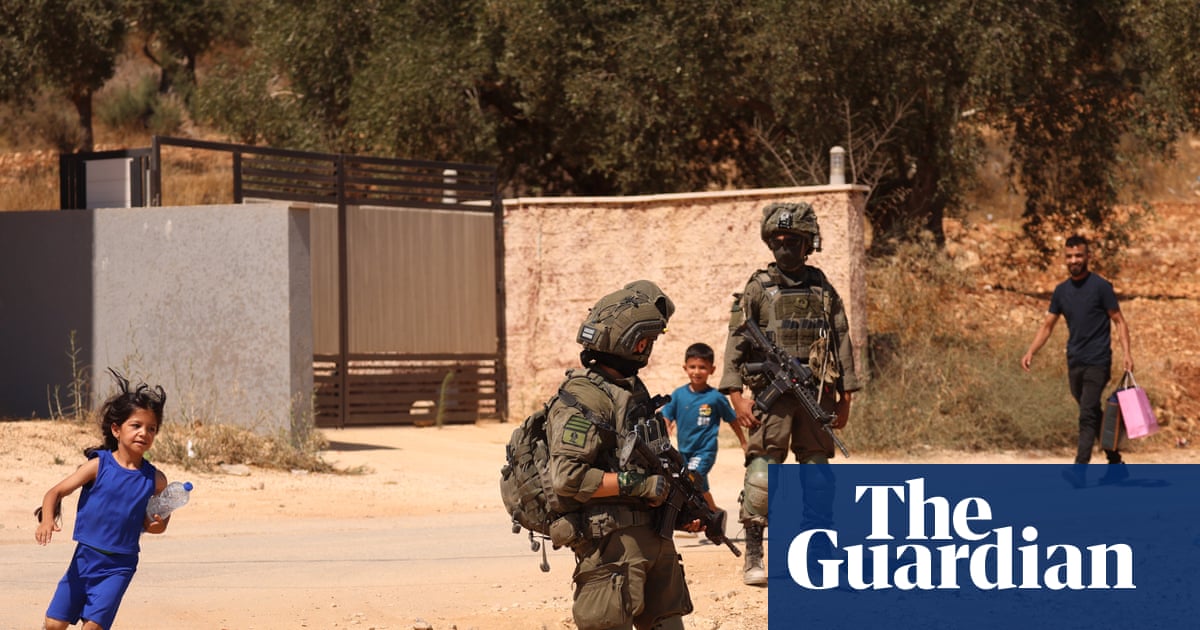
The crisis began on Sunday when settlers and soldiers established a blockade at the entrance to three homes on the village’s edge. They severed water and electricity supplies and prevented an ambulance from reaching a sick toddler inside one of the residences. By Wednesday, Bluth visited Qusra to meet with the affected Palestinians and pledged to evacuate the settler group. However, his troops only removed the tent used for the blockade, leaving the militants and their equipment behind.
On Thursday morning, soldiers entered eight homes in Qusra, informing Mayor Abdul Azim Wadi that the buildings were required for a multi-day operation to remove the settlers. Residents were ordered to evacuate, though some refused initially before being moved into a single house. Later that day, troops relinquished control of six of these homes. Upon returning, families discovered significant damage, including torn pages in a Qur’an and destroyed decorations. One resident reported that soldiers had damaged a security camera system and stolen equipment.
Despite the military’s presence, settlers continued to patrol the area outside the besieged homes. The location holds particular significance as it is near where 28-year-old Amir Moatasem Odeh was killed by a settler in March, an attack for which no arrests have been made. Another attacker had previously stabbed Odeh’s father. The ongoing presence of militants in the area has heightened fears among residents that the siege tactics are part of a sustained effort to drive them out permanently.
The incident has drawn sharp condemnation from within Israel. Former Prime Minister Ehud Olmert described the events as a concerted and meticulous attempt at ethnic cleansing, expressing disgust and shame at the actions. He characterized the violence as crimes against humanity actively supported by the government and facilitated by the inaction of security forces. Domestic commentators have echoed these sentiments, with Avi Ashkenazi writing in Ma’ariv that the situation illustrates the impotence of the IDF, police, and intelligence agencies in the face of settler aggression.
Critics argue that the military’s response reflects a lack of political will rather than a shortage of resources. Chief of Staff Eyal Zamir ordered a battalion of infantry reservists back from leave to reinforce West Bank troops, but observers note that security forces have attempted to negotiate with the settlers rather than arresting them. The Israeli military spokesperson stated that soldiers were instructed not to displace residents and would not operate inside besieged homes, yet declined to explain why those orders appeared to be violated during the temporary evacuations.
The siege in Qusra mirrors tactics used in July against a Palestinian family in the neighboring village of Jalud. In that case, soldiers and settlers were filmed playing football on the terrace of the displaced family’s home. Rights group B’Tselem reports that Israel has forcibly displaced 64 Palestinian communities over the past three years, with more than 4,800 people driven from their homes. Fifteen additional communities have lost residents, contributing to a broader pattern of demographic change in the West Bank.
International pressure has mounted regarding the violence, with U.S. Ambassador to Israel Mike Huckabee describing the siege as a horrific act of terror carried out by Israeli terrorists. This characterization stands in contrast to the general support for settlement projects often associated with his position. Since 2020, Israeli civilians and soldiers have killed more than 1,100 Palestinians in the West Bank, yet there has been only one indictment related to these deaths. The near-total impunity enjoyed by militants continues to fuel tensions and undermine confidence in legal protections for Palestinian residents.
As the immediate military operation concludes without the removal of the settlers, uncertainty remains regarding the long-term safety of Qusra’s residents. While some families have returned to their damaged homes, others remain displaced or staying with relatives. The failure to arrest those responsible for previous attacks, including the murder of Amir Moatasem Odeh, suggests that the underlying drivers of violence persist. The incident underscores the complex challenges facing Israeli security forces as they navigate between enforcing law and order and managing political pressures from settler groups.
The situation in Qusra highlights the broader instability in the West Bank, where legal frameworks appear increasingly disconnected on the ground. With no clear resolution to the settler presence or accountability for past violence, the risk of further escalation remains high. The international community continues to monitor the developments closely, particularly given the historical parallels to previous displacement campaigns and the explicit condemnations from former Israeli leadership.
Sources behind this briefing
Go to the original reporting
- The Guardian US↗Israeli troops force families from homes amid settler terror campaign in West Bank

