The short version
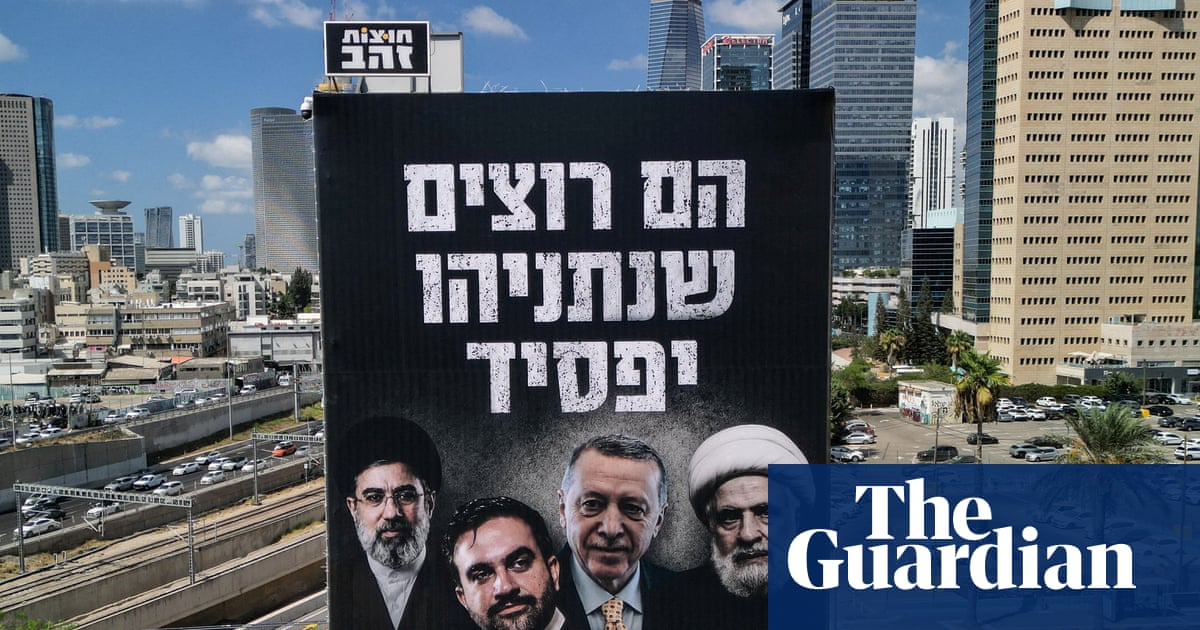
- The Likud party has deployed campaign imagery equating New York Mayor Zohran Mamdani with hostile foreign leaders to mobilize voters ahead of October elections.
- This escalation follows a public dispute in which Mamdani labeled Netanyahu a war criminal and urged US authorities to enforce international arrest warrants.
- Diplomatic progress on a Gaza ceasefire remains stalled as Israel insists on Hamas disarmament before withdrawing troops, complicating broader regional stability efforts.
Political tensions between Israel and New York City have intensified through aggressive campaign tactics employed by the Likud party. In central Tel Aviv, billboards sponsored by Prime Minister Benjamin Netanyahu’s political organization depict Mayor Zohran Mamdani alongside figures from nations and groups traditionally viewed as adversaries of Israel. The imagery places Mamdani next to Turkish President Recep Tayyip Erdoğan, Iran’s Supreme Leader Mojtaba Khamenei, and Naim Qassem, the chief of Hezbollah. This visual association is part of a broader strategy to frame domestic political opposition within the context of national security threats.
The messaging on these posters urges Israeli voters not to allow perceived enemies to succeed, explicitly linking Mamdani’s political influence to the potential loss of Netanyahu’s governing coalition. The Likud party, which leads the current far-right government, is preparing for elections scheduled for October. These polls will determine the composition of the Knesset following its dissolution in July. This marks the first electoral cycle since the Hamas-led attacks on October 7, 2023, making the stakes particularly high for maintaining political power and shaping post-conflict policy.
The confrontation between Netanyahu and Mamdani has evolved from policy disagreements into a personal feud. Mamdani has consistently criticized Israel’s military operations in Gaza throughout his mayoral campaign. The conflict escalated significantly last month when he publicly described the Israeli prime minister as a war criminal who should face justice at The Hague. Mamdani further challenged Netanyahu by calling on United States authorities to enforce an International Criminal Court arrest warrant if the Israeli leader travels to New York for the upcoming UN General Assembly in September.
Netanyahu has responded with sharp accusations, claiming that Mamdani is inciting hatred and driving wedges between different religious communities within New York City. He has also expressed concern regarding the shifting political landscape in the United States, suggesting that progressive Democrats aligned with Mamdani pose a risk to traditional bipartisan support for Israel. Despite these concerns, recent polling data indicates that Mamdani enjoys higher popularity among American Jewish voters than Netanyahu does, complicating the narrative of unified diaspora support.
This campaign move coincides with other controversial statements made by Netanyahu regarding international relations. In a recent podcast interview with Israel’s army radio, he characterized the United Kingdom as an Islamic republic and suggested it was the first such state to acquire nuclear weapons. These remarks align with far-right tropes concerning Muslim populations in Western nations. By posting images of the Mamdani billboard on social media alongside videos of the mayor’s criticisms, Netanyahu appears to be consolidating a narrative that frames both domestic critics and foreign governments as existential threats.
The political maneuvering occurs against a backdrop of stalled diplomatic efforts to secure a ceasefire in Gaza. Negotiations involving US envoys, including Jared Kushner, have not yielded breakthroughs despite extensive meetings. A recent three-hour discussion between Kushner and Netanyahu failed to produce an agreement. The primary obstacle remains Israel’s refusal to withdraw troops from the Gaza Strip until Hamas agrees to disarm first. This hardline stance contrasts with international pressure for a humanitarian pause and raises questions about the long-term viability of current peace initiatives.
As of now, Mayor Mamdani has not issued a public response to being featured in Likud’s election materials. The silence leaves open the question of how New York City will address the characterization of its leadership by a foreign government. Meanwhile, the Israeli ruling coalition continues to trail in opinion polls, suggesting that the aggressive rhetoric may be a defensive strategy rather than a reflection of dominant public sentiment. The intersection of local US politics and Israeli electoral dynamics highlights the increasingly globalized nature of political discourse.
The situation underscores the complex interplay between domestic politics and international diplomacy. With elections approaching in Israel and ongoing conflicts in the Middle East, the actions of political leaders have immediate repercussions beyond their borders. The Likud party’s decision to target a US mayor in its campaign materials signals a willingness to engage in transnational political warfare. This approach may resonate with certain voter bases while alienating others, particularly those who prioritize diplomatic solutions over confrontational rhetoric.
Future developments will likely depend on the outcome of the October elections and the progress of ceasefire negotiations. If Netanyahu’s coalition retains power, the current trajectory of hardline policies and aggressive political messaging may continue. Conversely, a shift in government could lead to different approaches in dealing with both domestic critics and international partners. The response from US authorities regarding Mamdani’s calls for enforcement of ICC warrants will also play a crucial role in shaping the diplomatic relationship between Washington and Jerusalem.
Observers note that the timing of these events is critical. As the UN General Assembly approaches, the presence or absence of Netanyahu in New York could become a flashpoint. The potential enforcement of arrest warrants would represent a significant breach in US-Israel relations. Until then, the public spat serves as a proxy for deeper ideological divides regarding accountability, security, and the role of international law in conflict resolution. The coming weeks will reveal whether these tensions de-escalate or further entrench the positions of both leaders.
Sources behind this briefing
Go to the original reporting
- The Guardian World↗Netanyahu party campaign billboard likens Mamdani to leaders of Iran and Hezbollah

