The short version
- Two Israeli soldiers were killed by an explosive device in southern Lebanon, prompting immediate military retaliation against Hezbollah targets.
- Israeli forces issued evacuation orders for Mansouri and conducted strikes in multiple towns, marking the first such actions since mid-June.
- Diplomatic efforts to maintain a ceasefire framework are ongoing in Rome, though Hezbollah has rejected disarmament terms linked to Israeli withdrawal.
Military hostilities have resumed in southern Lebanon after an explosion killed two Israeli soldiers and injured four others on Wednesday. The incident occurred in the town of Majdal Zoun within the Tyre district, where troops were engaged in operations to dismantle infrastructure associated with Hezbollah. In response, the Israeli military launched a series of strikes across the region, accusing the Iran-backed armed group of violating the existing ceasefire agreement. Hezbollah has not yet commented on the accusations or the specific incident that triggered the escalation.
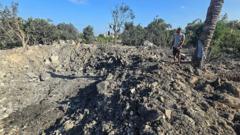
The retaliatory campaign included air and artillery attacks in several locations, including Tibnin, Mansouri, and Burj al-Shamal. In Tibnin, a strike hit a prayer hall at a local cemetery, resulting in one death and twelve injuries according to Lebanon’s health ministry. Additional strikes caused significant damage to buildings and villas in the Ghazaleh neighborhood of Mansouri. The violence has reignited fears of a broader conflict return, particularly as these attacks represent the first major Israeli military fatalities in the region since late June.
Israeli authorities issued an evacuation order for residents of Mansouri, marking the first such directive in over a month. Military sources indicated that the order was necessary because displaced civilians had returned to the area under the protection of the Lebanese army, which established a checkpoint there. Officials described this presence as a violation of security agreements and cited ongoing military activity within the declared security zone as a threat to civilian safety. The evacuation has led to renewed displacement, with families fleeing toward Tyre.
The incident occurs against a backdrop of fragile diplomatic efforts aimed at stabilizing the region. Israeli and Lebanese officials are currently participating in US-sponsored talks in Rome, designed to preserve the ceasefire that ended the intense conflict between Israel and Hezbollah. In late June, a trilateral framework was agreed upon, outlining a gradual Israeli withdrawal from occupied southern Lebanese territory in exchange for the disarmament of Hezbollah. However, implementation has been slow and contentious.
Progress on the ground has been minimal since the agreement. Two weeks ago, the Lebanese army was permitted to deploy to Zawtar al-Gharbiyeh, one of the first designated pilot zones, following an Israeli troop pullout. Despite this small step, Hezbollah has firmly rejected the overall agreement. The group argues that linking Israel’s withdrawal to its own disarmament crosses fundamental red lines, creating a significant obstacle to lasting peace. This disagreement remains a central point of contention in the ongoing negotiations.
The humanitarian situation in Lebanon remains precarious. While the United Nations reports that more than 820,000 displaced individuals have begun returning home due to reduced hostilities, approximately 360,000 people remain displaced across the country. Of these, 26,000 are living in government shelters. The recent strikes threaten to reverse this progress, forcing new waves of displacement and complicating relief efforts. Local officials note that while some families returned after the June ceasefire, numbers have dwindled as tensions persisted.
The conflict in Lebanon intensified significantly in early March when Hezbollah launched rockets into Israel following a strike that killed Iran’s supreme leader. Israel responded with a widespread bombing campaign and a ground invasion of southern Lebanon. The violence has resulted in at least 4,333 deaths, including hundreds of women and children, according to Lebanese health authorities. The current escalation underscores the volatility of the region and the challenges inherent in maintaining a ceasefire amidst deep-seated political and military disagreements.
Details regarding the initial explosion that killed the Israeli soldiers remain unclear. Initial investigations suggest an improvised explosive device detonated as troops entered a building, but it is not yet known when or how the device was planted. The lack of clarity surrounding the incident has fueled mutual accusations and heightened tensions. As diplomatic talks continue in Rome, the immediate priority for all parties remains preventing a full-scale resumption of war while addressing the security concerns raised by both sides.
Sources behind this briefing
Go to the original reporting
- BBC World↗Israel strikes south Lebanon after two soldiers killed by explosion

