The short version
- Voters are choosing parties rather than individual candidates, making it unlikely any single bloc will win the sixty-one seats needed for a majority in the Knesset.
- Intense bargaining among party leaders will follow the vote, with smaller factions holding significant leverage to determine which coalition can govern.
- If negotiations fail to produce a stable government within six weeks, another election may be called while the current administration remains as a caretaker.
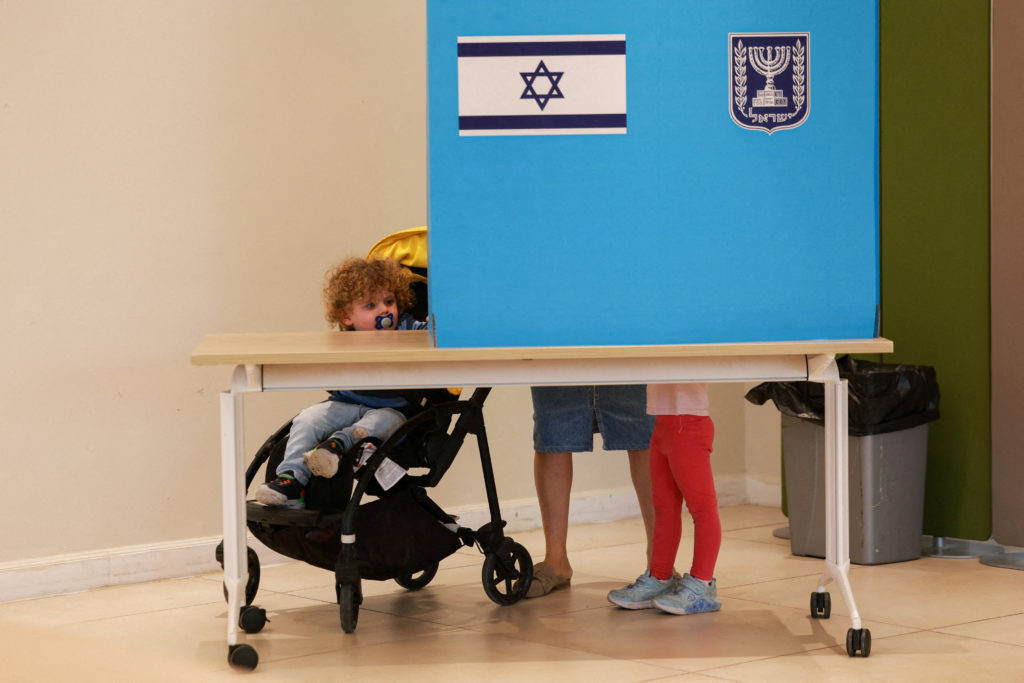
Polling stations across Israel are set to close on Tuesday evening, marking the end of voting in an election that could leave the nation without a clear political direction for weeks or even months. The outcome will not be immediately apparent because the Israeli electoral system requires voters to select parties rather than specific candidates for prime minister. Consequently, no single party is anticipated to capture the sixty-one seats necessary to command a majority in the Knesset, Israel’s parliament.
This structural reality means that whoever emerges as the next leader must construct a governing coalition from multiple smaller groups. The race appears tightly contested between blocs supporting incumbent Prime Minister Benjamin Netanyahu and those backing his primary challenger, retired General Gadi Eisenkot. Exit polls released by major television broadcasters shortly after the polls close will offer early estimates of seat distribution, though these projections may differ from the final official results that will be published in the days following the vote.
The period immediately following the election will likely be defined by intense negotiations and political bargaining. Party leaders will engage in complex discussions to assemble a majority coalition, a process that grants disproportionate influence to smaller parties. These minor factions can often provide the crucial margin needed to reach the sixty-one-seat threshold, allowing them to negotiate for cabinet positions, budget allocations, or specific policy concessions from the larger parties seeking their support.
President Isaac Herzog, whose role is largely ceremonial, will initiate consultations with all party leaders once the results are clear. He will then task the candidate who appears most capable of forming a viable coalition with the responsibility of doing so. This individual has a maximum period of six weeks to assemble a majority government. If they fail to secure enough support within this timeframe, the president may offer the opportunity to other candidates, extending the uncertainty further.
The potential involvement of Arab-led parties adds another layer of complexity to the coalition-building process. While both Netanyahu and Eisenkot have currently ruled out formal partnerships with these groups, their stance could shift under pressure. These parties might choose to support a minority government led by Eisenkot from outside the coalition or simply abstain during the Knesset vote required to seat the new administration, thereby enabling his leadership without direct participation.
Should all negotiation efforts fail and no candidate can form a majority government, Israel faces the prospect of another election in the coming months. This scenario would see Netanyahu’s current government remaining in place as a caretaker administration. While public services would continue to operate normally, the caretaker government would lack the authority to implement significant policy changes or make major decisions, effectively freezing substantial governance until a new mandate is established.
The possibility of repeated elections is not unprecedented in Israel’s recent political history. The last national election, held in November 2022, was the fifth conducted in just three and a half years. This pattern highlights the fragility of the current political landscape and the difficulty of achieving stable majorities. Even if a new election were to occur, there is no guarantee that it would resolve the underlying fragmentation or produce a clear winner.
For now, the focus remains on the immediate aftermath of Tuesday’s vote. The coming days will reveal whether the exit polls accurately reflect voter intent and which parties hold the balance of power. Regardless of the eventual outcome, the policies regarding Palestinians are expected to endure, suggesting that while leadership may change, certain strategic directions remain consistent across different political blocs.
The extended timeline for determining a winner underscores the challenges inherent in Israel’s proportional representation system. As negotiations unfold, the public will watch closely to see how party leaders navigate the delicate balance of power. The resolution of this election will depend not just on the votes cast, but on the ability of politicians to forge alliances in a deeply divided political environment.
International observers and domestic citizens alike are aware that the path forward is uncertain. The lack of a decisive victory means that the status quo may persist for an extended period, with limited capacity for major governmental action. This interim phase will test the resilience of democratic institutions and the patience of a electorate seeking clarity and stability in times of ongoing conflict and internal debate.
Sources behind this briefing
Go to the original reporting
- PBS NewsHour↗Why it could be weeks or months before Israel's election winner is known


