The short version
- Netanyahu's bloc won 53 seats, falling short of the 61 needed for a majority in the Knesset.
- Opposition leader Gadi Eisenkot and Arab parties hold enough combined seats to form a government but face significant political barriers.
- Analysts warn that Netanyahu may pursue military escalation against Iran to strengthen his negotiating position during coalition talks.
Israel is entering a period of intense political uncertainty following an election that failed to produce a clear mandate for any single faction. Although Prime Minister Benjamin Netanyahu and his allies secured the largest number of seats in the Knesset, they did not achieve the majority required to form a government independently. The results have left the country at a crossroads, with no immediate path to stable governance and significant divisions remaining among voters.
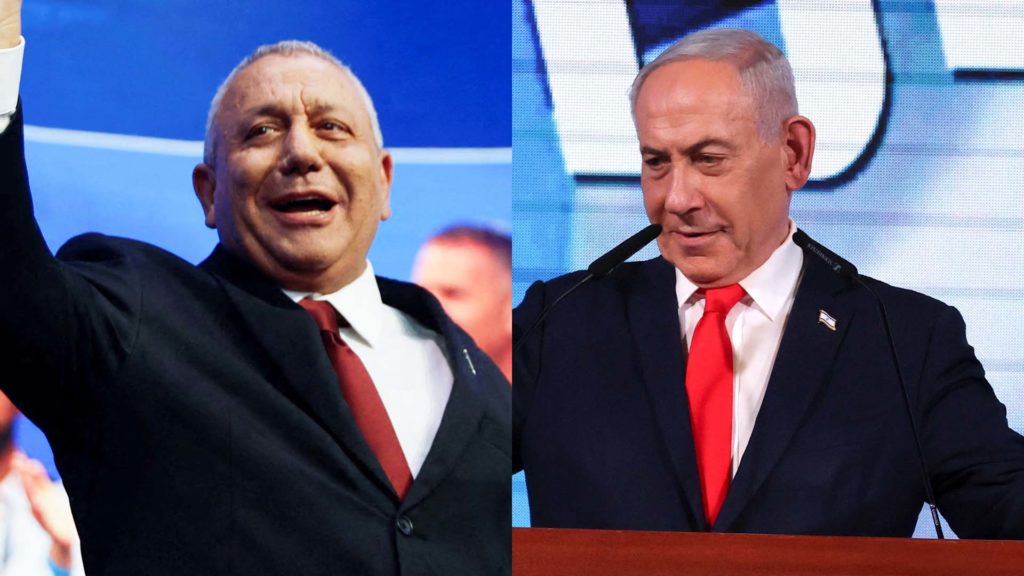
The final vote count revealed that Netanyahu’s Likud Party and its coalition partners hold 53 seats. This total is eight seats short of the 61 needed for a majority in the 120-seat parliament. While this bloc remains the largest single entity, it represents a loss of ground compared to previous standings. The opposition Change bloc, led by Gadi Eisenkot, secured 48 seats, placing it firmly behind Netanyahu’s coalition but still within striking distance of power.
A critical development in this election was the performance of Arab political parties, which collectively won 19 seats. These parties are uniformly opposed to Netanyahu and his current government structure. When combined with Eisenkot’s Change bloc, these groups hold more than the 61 seats necessary to form a majority. However, Israeli political norms and public sentiment have historically been resistant to coalitions that rely on Arab party support, particularly in the wake of the October 7 attacks.
Eisenkot has explicitly ruled out forming a government with Netanyahu, describing his own coalition as Zionist and distancing it from any alliance with the current prime minister. Despite this, there are technical mechanisms by which Arab parties could support an Eisenkot-led government from the outside without joining the cabinet directly. This arrangement remains politically sensitive and faces strong opposition from right-wing factions who argue that such a move would endanger national security.
Netanyahu has responded to the election results by calling for a strong right-wing national government and urging the exclusion of Arab parties from any ruling coalition. His campaign team has accused Arab voters of undermining the democratic process, claims that police have stated lack investigative substantiation. Netanyahu maintains that he must prevent the establishment of a government backed by what he characterizes as anti-Zionist forces.
The next steps involve Israel’s president inviting one of the blocs to attempt to form a majority government. Netanyahu would need to persuade members of Eisenkot’s coalition to defect, a move his officials have described as impossible given the strong anti-Netanyahu stance of those parties. Alternatively, a unity government could be formed, but this option has been firmly rejected by Eisenkot and his allies.
If neither side succeeds in building a stable coalition, Israel faces the prospect of another election. This scenario is viewed with concern by many Israelis who are eager for political stability. The prolonged gridlock could exacerbate existing social and political fractures, leaving key policy decisions unresolved and governance functions impaired during a critical period.
Amid the political stalemate, there are growing concerns about potential military escalation. Analysts suggest that Netanyahu might use the ambiguity of the post-election period to justify aggressive actions against Iran. U.S. officials have noted that Netanyahu pushed for attacks on Iran prior to the election, and defense officials have echoed these sentiments. This raises the risk that security matters could be leveraged for political gain.
Gadi Eisenkot has issued a stark warning to security establishment heads and civil servants, urging them to serve only the state and Israeli citizens rather than any individual politician. He cautioned against attempts to challenge their independence and explicitly told Netanyahu not to use national security for personal political needs. This appeal highlights the deep anxieties about the intersection of politics and military strategy.
International observers, including U.S. officials, are closely monitoring the situation. President Trump has publicly suggested that the United States could re-engage in conflict with Iran after its own midterm elections, which may provide Netanyahu with additional leverage during coalition negotiations. Regardless of the domestic political outcome, the region remains on high alert as diplomatic and military pressures continue to mount.
Sources behind this briefing
Go to the original reporting
- PBS NewsHour↗What's next for Israel after election produces political gridlock