The short version
- Benjamin Netanyahu’s coalition leads partial counts but lacks the sixty-one seats needed to govern without support from Arab-led parties.
- Opposition leader Gadi Eisenkot claims a mandate for change, yet most Jewish opposition factions refuse to partner with Arab representatives.
- President Isaac Herzog has urged political leaders to avoid another election cycle as coalition negotiations begin amid high voter turnout.
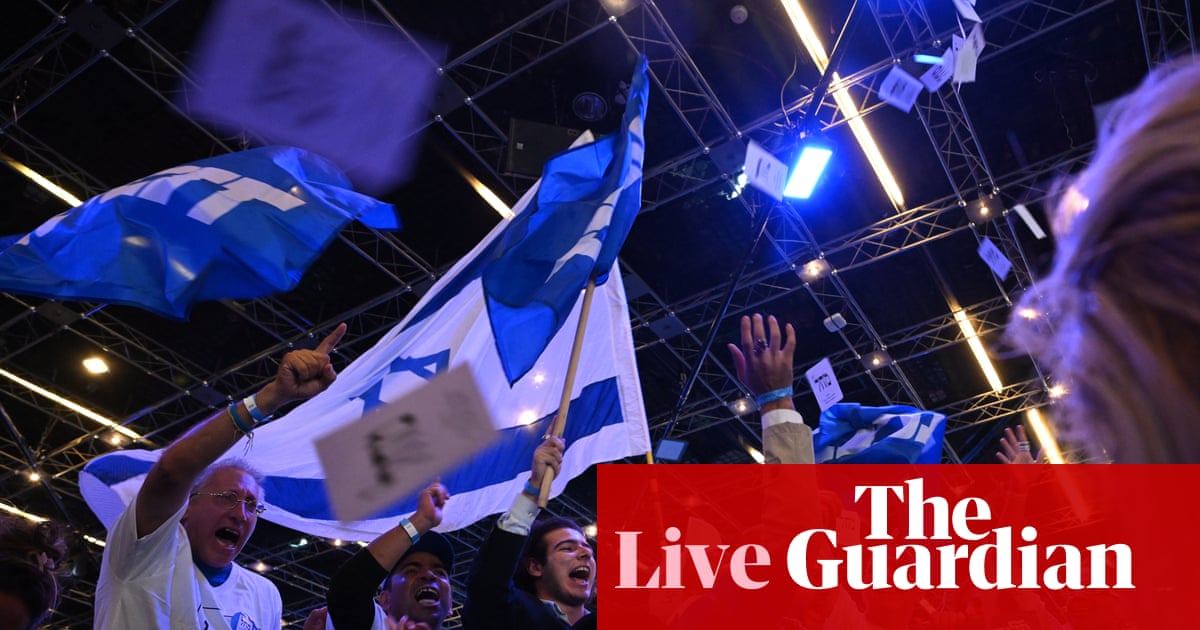
Israel’s general election has produced a fragmented parliament that leaves neither the incumbent prime minister nor his main challenger with a clear path to immediate power. Partial results indicate that Benjamin Netanyahu’s right-wing and ultra-Orthodox alliance is leading the race but remains short of the sixty-one seats required for a majority in the 120-seat Knesset. This outcome forces both sides into difficult coalition arithmetic, raising the prospect of prolonged negotiations or even another election if no stable government can be formed.
With approximately eighty-five percent of ballots counted, Netanyahu’s bloc is projected to secure fifty-three seats. His rival, former military chief Gadi Eisenkot, leads a center-left alliance that appears set for forty-eight seats. The gap between the two camps is narrow enough that small shifts in final counts could alter the balance of power. Both leaders have asserted their right to attempt forming a government, setting the stage for a tense political struggle over who will receive the mandate from the president.
The election results highlight a significant shift in Israel’s political landscape, particularly regarding Arab-led parties. These groups are on track to win an unprecedented nineteen seats, driven by high turnout among Arab Israelis who constitute roughly one-fifth of the population. This surge gives them substantial leverage as potential kingmakers. However, most Jewish parties, including those in Eisenkot’s bloc, have ruled out entering into a coalition with Arab representatives, citing ideological and political constraints.
Despite these reservations, some opposition figures are exploring ways to work indirectly with Arab parties to block Netanyahu. Ahmad Tibi, leader of the Ta’al party within the Joint List, stated his willingness to cooperate with Jewish Israeli parties to facilitate an alternative government led by Eisenkot. He suggested that such cooperation could begin immediately upon the seating of the new Knesset, even without a full coalition agreement, by supporting opposition candidates for key parliamentary roles like the speaker.
President Isaac Herzog has called for unity and pragmatism in the wake of the election, which saw a voter turnout of seventy-seven point seven percent—the highest in more than two decades. Herzog praised this engagement as a testament to democratic commitment and urged all factions to approach negotiations with open minds. He plans to consult with party leaders next week before deciding whom to task with forming a government, a process that could take several weeks.
The stakes of this election extend beyond leadership changes, touching on deep divisions over national security, religious-nationalist policies, and accountability for the October 2023 attacks. Netanyahu has emphasized the need for a strong right-wing government, warning against alliances with parties he labels anti-Zionist. Eisenkot, conversely, argues that the public has demanded change and criticized the current coalition’s handling of recent conflicts and security failures.
Uncertainty remains regarding the final seat distribution, as hundreds of thousands of absentee ballots from soldiers and diplomats are yet to be counted. These votes could potentially shift the balance between the two main blocs. If neither Netanyahu nor Eisenkot can assemble a majority within the allotted time, Israel may face another election, further destabilizing an already tense political environment.
As negotiations commence, the focus will be on whether any Jewish opposition party is willing to break with tradition and consider indirect support from Arab parties. The outcome will determine not only who leads the next government but also the direction of Israel’s domestic and foreign policies in the coming years. The coming weeks will test the resilience of Israel’s democratic institutions amid deep societal divides.
Sources behind this briefing
Go to the original reporting
- The Guardian US↗Israel election results live: Netanyahu bloc loses majority as most ballots counted
- BBC World↗Netanyahu's bloc leading Israel election but short of majority, partial results show


