The short version
- President Masoud Pezeshkian has firmly denied allegations that he threatened to resign over disagreements with hardline factions regarding negotiations with the United States.
- The conservative Assembly of Experts has labeled hopes for a diplomatic agreement as futile, describing potential concessions as an unforgivable betrayal of national interests.
- Tensions are exacerbated by the absence of Supreme Leader Mojtaba Khamenei, who remains secluded following injuries sustained in an Israeli airstrike earlier this year.
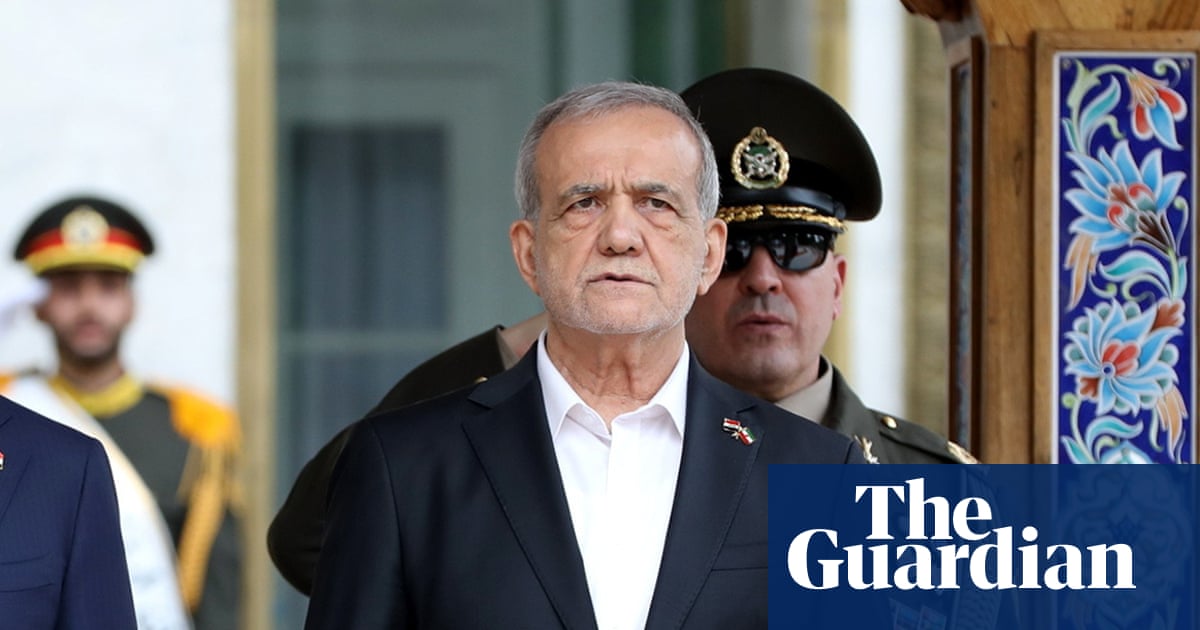
Iranian President Masoud Pezeshkian has moved to quell rumors of a significant internal power struggle, explicitly denying reports that he had repeatedly threatened to step down from office. The denial came during a televised interview marking the second anniversary of his presidency, a moment chosen to address growing speculation about fractures within the government’s approach to foreign policy. Pezeshkian stated that any such resignation would be announced officially and affirmed his commitment to remaining in his position despite intense pressure from conservative elements.
The controversy centers on ongoing diplomatic efforts between Iran, the United States, and European powers aimed at reopening the Strait of Hormuz. This vital waterway has been a focal point of geopolitical tension, with Western nations seeking a temporary agreement to restore shipping routes. Officials in Oman have expressed concern that any interim deal might inadvertently grant Iran near-permanent dominance over the channel. Under proposed terms, vessels would enter the strait via a route close to Iranian shores but depart through waters shared by Iran and Oman, a compromise that has drawn sharp criticism from hardliners.
Allegations of Pezeshkian’s frustration were brought to public attention by Mohammad Bagher Kharazi, a figure connected by marriage to Mojtaba Khamenei, the current Supreme Leader. Kharazi claimed that the president had become increasingly marginalized in decision-making processes, a situation worsened by the Supreme Leader’s reluctance to reveal his whereabouts due to fears of foreign intelligence surveillance. Kharazi further asserted that Pezeshkian had threatened resignation so frequently that Khamenei had warned him to cease such ultimatums. These claims were swiftly dismissed as fundamentally false by the Supreme Leader’s office.
The absence of Mojtaba Khamenei from public view has added a layer of uncertainty to Iran’s political landscape. The Supreme Leader was severely injured in an Israeli bombing on the first day of recent hostilities, an attack that also killed his father. Since his elevation to the post in March, he has not appeared or spoken publicly. Critics note that while Kharazi holds familial ties to the leadership, it remains unclear whether he has had direct access to Khamenei since the latter’s appointment. This opacity has fueled speculation about who truly controls the direction of Iran’s foreign policy and domestic stability.
Pezeshkian used his interview to assert unity with the military and to challenge critics who have made unsubstantiated claims about casualties from January protests. He emphasized that those alleging thirty thousand deaths had failed to provide evidence when offered the opportunity. The president framed his stance as one of consensus-building rather than weakness, attempting to dispel the notion that he has been sidelined by war-hardened leaders. His administration views the memorandum of understanding negotiated with the US in June as a foundational element for future foreign relations, insisting that Iran must hold other parties accountable to their signed commitments.
In stark contrast, the conservative-dominated Assembly of Experts issued a statement condemning any hope for an agreement with the United States as futile. The body described whispers of capitulation in the name of peace as an unforgivable betrayal and characterized trust in the US government as a mirage. This hardline stance reflects deep strategic differences within Iran regarding the wisdom of engaging in talks with Washington. While Khamenei had previously stated in April that he opposed such negotiations in principle, he allowed them to proceed out of deference to Pezeshkian’s diplomatic initiatives.
Senior officials in Pezeshkian’s office have responded aggressively to the accusations. Mehdi Tabatabaei, a high-ranking member of the presidential staff, labeled the reports as complete nonsense and condemned what he described as a sinister coalition of extremists seeking revenge for their electoral failures two years ago. He accused these factions of acting as puppets for Iran’s enemies. Reformist voices, including reporter Ahmad Zeidabadi, have echoed concerns that such inflammatory claims serve only to exacerbate tensions without contributing to constructive dialogue.
As the diplomatic window narrows, the internal rift threatens to complicate any potential breakthrough in reopening the Strait of Hormuz. The US and Europe are applying pressure on Oman to accept a temporary framework, yet fears persist that such an arrangement could solidify Iranian control over critical shipping lanes. With Pezeshkian standing firm against resignation rumors and hardliners doubling down on their opposition, the path forward remains fraught with uncertainty. The coming weeks will likely reveal whether diplomatic momentum can overcome entrenched ideological divides within Iran’s leadership.
Sources behind this briefing
Go to the original reporting
- The Guardian World↗Iran’s president denies threatening to resign during talks over strait of Hormuz

