The short version
- Iowa gubernatorial candidate Rob Sand explicitly declined support from Kamala Harris and Joe Biden, citing the need to appeal to non-Democratic voters.
- Sand criticized the current two-party system as broken and expressed a desire for political disruption rather than traditional party loyalty.
- Similar tensions are evident in Alaska, where Senate candidate Mary Peltola rejected unsolicited fundraising efforts from Harris to maintain an independent image.
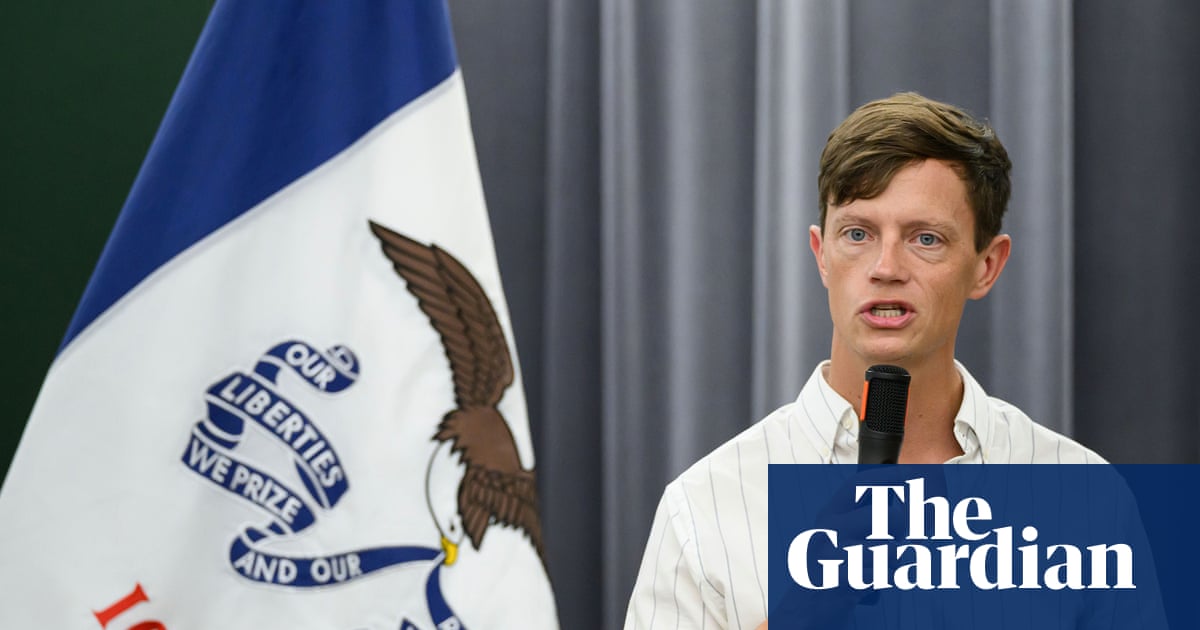
A significant fracture has emerged within the Democratic Party as Rob Sand, the nominee for governor of Iowa, publicly rejected the prospect of campaigning alongside former Vice President Kamala Harris or former President Joe Biden. Sand’s direct refusal marks a departure from the typical deference shown to national party leaders, signaling a strategic pivot by down-ballot candidates who feel constrained by their association with high-profile figures that may alienate independent and Republican-leaning voters.
When asked by Politico whether he would welcome Harris’s support in his bid to flip Iowa back to Democratic control, Sand answered with a definitive no. He extended this rejection to Joe Biden as well, questioning the former president’s current political viability and declining any endorsement from him. This stance underscores the difficult calculus facing Democrats in swing states, where winning over moderate voters often requires distancing oneself from the national party brand.
Sand’s comments come amid a broader silence from prominent national Democrats regarding Harris’s potential future ambitions. While many have avoided speculating on whether she will seek another presidential run, Sand did not hesitate to weigh in on the leadership question. He argued that the party needs fresh direction, suggesting that the era of relying on established figures like Biden or Harris may be ending for those seeking to expand their electoral coalition.
The former vice president has yet to announce whether she will pursue another term in office, maintaining only that she has not made a final decision. Her loss to Donald Trump in the 2024 election has left her political future uncertain, and the reluctance of candidates like Sand to embrace her candidacy reflects concerns about her appeal outside the Democratic base. This dynamic is particularly acute in Iowa, where Sand must navigate a electorate that includes significant numbers of independents.
Sand’s perspective is rooted in his background as the state auditor of Iowa and his previous status as a registered independent. He expressed dissatisfaction with the traditional two-party system, describing it as fundamentally broken and failing to address critical issues. His comments suggest a desire for political disruption rather than continuity, indicating that some Democrats are willing to challenge the status quo even if it means alienating party elites.
Similar tensions have surfaced in Alaska, where Democratic Senate candidate Mary Peltola rejected unsolicited fundraising emails from Harris. Peltola’s campaign emphasized her focus on Alaska-specific issues and her strategy of avoiding endorsements from figures based in the Lower 48. This approach mirrors Sand’s efforts to cultivate an image independent of national party machinery, aiming to resonate with voters who may be skeptical of Washington-centric politics.
The rejection of Harris’s support by both Sand and Peltola highlights a strategic divergence within the Democratic Party. While national leaders may view endorsements as essential for mobilizing the base, down-ballot candidates in competitive races are increasingly prioritizing their ability to attract crossover voters. This shift suggests that the party’s path to victory may depend on empowering local candidates to define their own narratives rather than relying on top-down messaging.
Sand also dismissed the idea of running for president himself or serving as a vice-presidential candidate, reinforcing his commitment to state-level governance and his critique of national party politics. His comments reflect a broader sentiment among some Democrats who feel that the current political landscape offers limited choices and fails to address systemic problems. As the 2026 elections approach, these internal conflicts may shape the party’s strategy and its ability to unify behind a common vision.
The implications of Sand’s stance extend beyond Iowa, offering a glimpse into the challenges facing Democrats in other swing states. Candidates who rely on independent voters may find themselves at odds with national party figures whose appeal is limited to the Democratic base. This tension could influence how the party allocates resources and supports its candidates in the coming months.
As Harris remains silent on her future plans, the lack of clarity adds uncertainty to the political landscape. Democrats must navigate this ambiguity while balancing the need for strong leadership with the desire for fresh faces. The decisions made by candidates like Sand and Peltola will likely have lasting effects on the party’s direction and its ability to compete in a polarized electorate.
Sources behind this briefing
Go to the original reporting
- The Guardian US↗Should Kamala Harris runs for president again? ‘No,’ says Iowa Democrat

