The short version
- Christina Bohannan is running for Congress in Iowa's 1st District for the third time, following losses in 2022 and a narrow defeat in 2024.
- The candidate has expanded her campaign operations into rural counties she previously ignored, aiming to convert voters in areas that heavily supported Donald Trump.
- Bohannan emphasizes her background as a law professor and former engineer while distancing herself from progressive labels to appeal to moderate and independent voters.
Christina Bohannan has entered the race for Iowa’s 1st Congressional District for a third consecutive cycle, positioning herself as a viable challenger in one of the nation’s most competitive House seats. The Democratic candidate previously lost to Republican Representative Mariannette Miller-Meeks in 2022 by a margin of approximately 23,000 votes. However, her performance improved significantly in the 2024 election, where she fell short by only 799 votes after a recount. This razor-thin result has prompted Bohannan to view the current cycle as an opportunity to capitalize on shifting political dynamics and potential dissatisfaction with the incumbent administration.
The district itself presents a complex electoral landscape that mirrors broader national trends. Spanning more than 20 counties, the area is geographically vast, covering territory larger than Massachusetts. While it contains urban centers like Iowa City and Davenport, the majority of its population resides in rural communities with fewer than 20,000 residents. In the 2024 presidential election, Donald Trump won the district by 8.4 percentage points, underscoring the Republican advantage in these areas. Bohannan’s strategy now focuses on narrowing this gap by engaging voters in counties she largely bypassed during her previous campaigns.
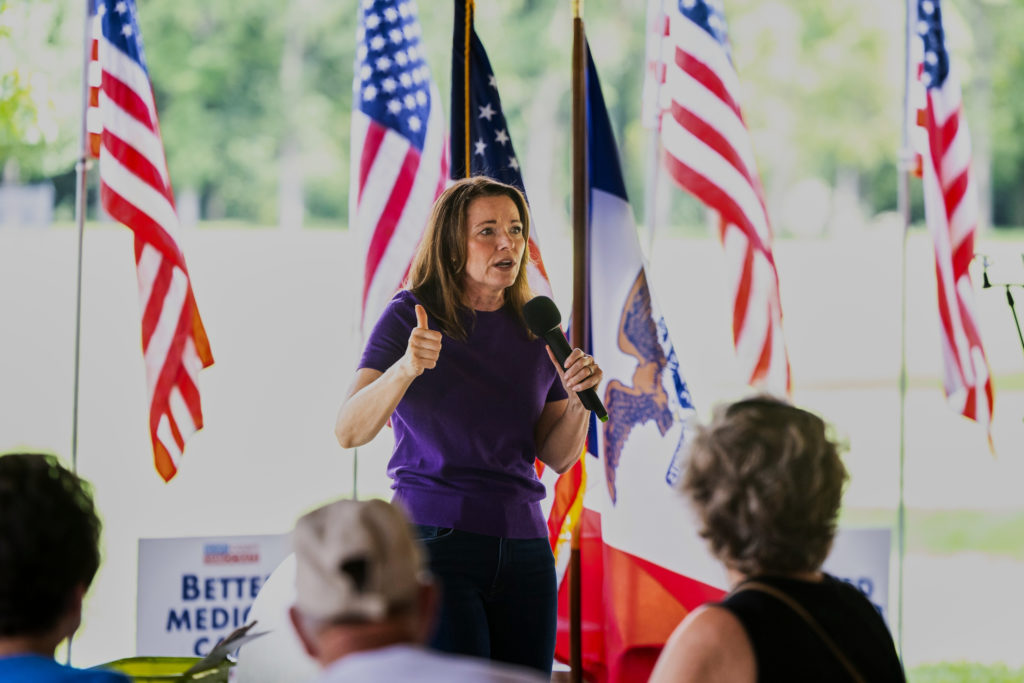
A key component of Bohannan’s revised approach involves a more aggressive and earlier ground game. Unlike previous cycles where canvassing began in April, her team started door-knocking in January. Campaign workers are now traveling to rural locales such as Columbus Junction in Louisa County, a region where Bohannan lost by nearly 1,400 votes two years ago. Residents in these areas report that they had not encountered the candidate before this election cycle. The campaign aims to build trust through direct contact, utilizing introductory letters and sustained presence in communities that have historically been overlooked.
Bohannan faces significant challenges in reconciling her professional identity with the political realities of a conservative-leaning district. As a law professor at the University of Iowa, she is often characterized by opponents as a radical progressive tied to liberal academic circles. Miller-Meeks has employed this framing to distinguish herself from Bohannan. In response, Bohannan highlights her personal history, including her upbringing in rural Florida and her father’s work as a construction worker. She also points to her background as an environmental engineer and her legal scholarship on intellectual property and business innovation to present herself as pragmatic rather than ideological.
The candidate has made efforts to align her policy positions with the concerns of moderate voters. She has acknowledged that Republicans sometimes raise valid points regarding economic regulation and the prudent use of tax dollars. By emphasizing common-sense governance and fiscal responsibility, Bohannan seeks to bridge the gap between her academic credentials and the everyday experiences of working-class Iowans. This messaging is designed to counter perceptions that she is out of touch with the district’s predominantly rural and manufacturing-oriented economy.
Urban and suburban pockets remain critical to Bohannan’s electoral math. Johnson County, home to Iowa City, has consistently delivered strong support for her, with Bohannan securing more than 70% of the vote in both 2022 and 2024. Scott County, which includes Davenport and Bettendorf, has also become a competitive battleground. While she lost this county in 2022, she managed a narrow victory there in 2024. Maintaining these gains while expanding her reach into rural areas is essential for closing the overall deficit.
The 2024 election results provided crucial data that informed Bohannan’s decision to run again. The narrow margin indicated that tens of thousands of voters who supported Trump in the presidential race split their ballots and voted for Bohannan in the House contest. This crossover support suggests a segment of the electorate is open to Democratic candidates despite broader partisan alignments. Bohannan’s campaign is now focused on retaining these independent and moderate Republican voters while attempting to persuade others who may have stayed home or voted differently in previous years.
Healthcare costs and economic concerns are central themes in the current political environment, factors that Bohannan believes could benefit her candidacy. She argues that these issues resonate across the Mississippi Valley region, where union manufacturing jobs have declined over recent decades. By connecting these broader national trends to local struggles, she aims to frame the election as a choice about practical solutions rather than abstract ideological battles. The success of this strategy will depend on her ability to sustain voter engagement in a district that has historically favored Republicans.
If Bohannan succeeds in unseating Miller-Meeks, it could signal a larger shift in the national political landscape. Democrats view this race as a potential bellwether for their efforts to regain control of the U.S. House. A victory here would demonstrate that targeted outreach and message discipline can overcome significant partisan headwinds in rural-heavy districts. Conversely, a loss would reinforce the challenges facing Democratic candidates in areas where Trump’s popularity remains strong. The outcome will likely hinge on turnout among independent voters and the effectiveness of Bohannan’s expanded ground operations.
As the campaign progresses, both sides are preparing for a contentious contest. Miller-Meeks is expected to defend her seat vigorously, leveraging her incumbency and established connections within the district. Bohannan must continue to navigate the delicate balance between appealing to her base in urban areas and winning over skeptics in rural counties. The race remains one of the closest in the country, with every vote potentially decisive. Voters in Iowa’s 1st District will ultimately determine whether Bohannan’s third attempt yields the breakthrough she seeks.
Sources behind this briefing
Go to the original reporting
- PBS NewsHour↗Third time the charm? Democrat Christina Bohannan tries again in pivotal House race in Iowa

