The short version
- West Midlands Fire Service concluded that farming equipment ignited the grass fires that spread to residential properties in Stourbridge.
- The incident occurred on the hottest day of the year, with temperatures reaching 38.1C and causing widespread emergency responses across the region.
- Nineteen homes were completely destroyed and eighteen others damaged, prompting community support efforts for displaced residents.
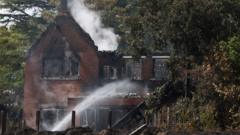
Investigators have determined that the devastating fires which swept through Stourbridge, destroying nineteen homes and damaging eighteen others, were accidental in origin. The West Midlands Fire Service announced this conclusion after establishing that farming machinery was operating in fields immediately adjacent to where the flames first appeared. Chief Fire Officer Simon Tuhill emphasized the importance of clarifying the cause, noting that many affected residents had been anxious about whether the blazes were deliberate acts.
The sequence of events began on August 13, a day marked by extreme heat across the United Kingdom. The first fire ignited in a field near Racecourse Lane at approximately 13:27 BST. Shortly thereafter, a second blaze started in a field close to Quarry Park Road. Both incidents occurred while agricultural equipment was being used in the vicinity. Investigators linked the presence of this machinery to the ignition sources, ruling out arson as a factor in these specific cases.
The rapid spread of fire was fueled by exceptionally dry conditions. The Met Office recorded temperatures peaking at 38.1C in parts of the country, making it the hottest day of the year. Grass and woodland surrounding the fields acted as accelerants, allowing flames to move quickly toward residential areas. This environmental context helped explain why the fires escalated so rapidly despite emergency response efforts.
The impact on the local community was severe. Nineteen properties were completely razed, while eighteen more sustained significant damage. Residents were forced to evacuate their homes, with some seeking refuge at Stourbridge Town Hall. Volunteers provided immediate support to those displaced by the disaster. The Bishop of Dudley, Right Reverend Martin Gorick, was among those who had to leave his residence during the evacuation. He described the scene as tragic, witnessing houses engulfed in smoke before his eyes.
Chief Fire Officer Tuhill acknowledged that confirming the accidental nature of the fires would not restore lost homes or cherished memories. However, he hoped the information would help people understand what happened on such a challenging day. He expressed pride in the response from fire crews, police, ambulance services, and local farmers who assisted in managing the crisis. The collective effort highlighted the resilience of Stourbridge and the wider West Midlands region.
The Stourbridge incident was part of a broader pattern of emergency activity across the West Midlands on that same day. Paramedics treated fifty-four patients, with nineteen requiring hospitalization due to heat-related issues or fire exposure. Other fires broke out in nearby areas, including Birmingham, Stoke-on-Trent, Pershore, and Willenhall. In total, dozens of homes were lost or damaged across these locations, underscoring the widespread danger posed by the extreme weather conditions.
While the cause of the Stourbridge fires has been clarified, investigations into other incidents remain ongoing. For example, authorities confirmed that a barbecue sparked the fire in Stoke-on-Trent. The causes of most other blazes are still under review. This distinction highlights the varied origins of the regional emergencies, with some linked to human activity like grilling and others to agricultural operations.
In the aftermath, community support has been a central focus for those affected by the Stourbridge fires. Fundraisers have been organized to assist victims, including offers to replace family photos lost in the blaze. These efforts reflect the strong sense of solidarity within the town. As residents begin the long process of recovery, the confirmation that the fires were accidental provides a measure of closure, even as the physical and emotional scars remain.
The incident serves as a stark reminder of the risks associated with extreme heat and dry vegetation. As climate patterns continue to shift, such events may become more frequent. Local authorities are likely to review safety protocols for agricultural operations during high-risk periods. For now, the priority remains supporting the families who lost their homes and helping them rebuild their lives in the wake of this accidental tragedy.
Sources behind this briefing
Go to the original reporting
- BBC News↗Stourbridge fires that razed 19 homes was accidental, say investigators

