The short version
- The multinational mission launches a heavy spacecraft toward Mars with the goal of collecting soil samples from Phobos for return to Earth in 2031.
- A small French-German rover will scout the surface to ensure safe landing zones for the Japanese lander, which has only two hours to collect material before departing.
- The project carries significant technical risks given the history of failed missions to Mars' moons and the challenging low-gravity environment of Phobos.
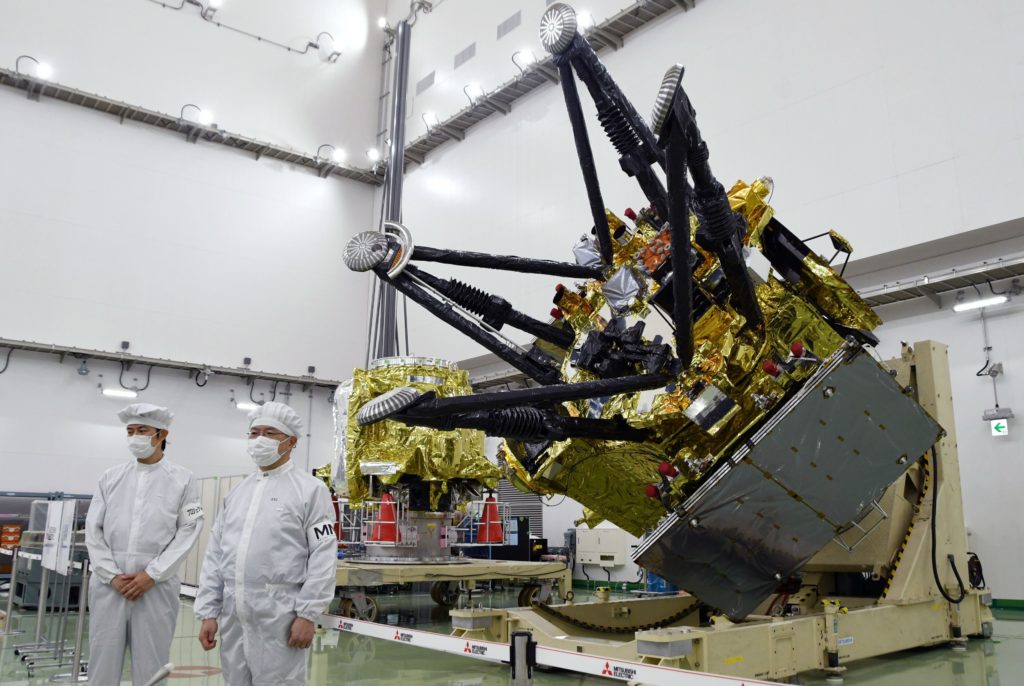
A major international space initiative began its journey toward Mars on Tuesday, marking a historic attempt to retrieve physical samples from one of the red planet's moons. Led by the Japan Aerospace Exploration Agency, the mission involves five global space agencies working in concert over a planned five-year timeline. The spacecraft departed from Tanegashima Island before dawn, carrying equipment designed to explore Phobos, the larger and closer of Mars' two small satellites. This endeavor represents a significant expansion of human reach beyond Earth orbit, as no nation has previously landed on or returned material from either Phobos or its smaller counterpart, Deimos.
The primary objective is to collect dust, soil, and rock fragments from Phobos and deliver them to Earth by 2031. The mission, officially known as Martian Moons Exploration, carries a budget of approximately $578 million and features a substantial five-ton spacecraft. Upon reaching the Martian system in late summer of next year, the vehicle will synchronize with Phobos' orbit. It will then deploy a small rover named Idefix, developed by French and German partners, to conduct preliminary surface operations. This rover serves as a critical scout, assessing terrain conditions to identify safe landing spots for the main lander.
Idefix is designed to operate in the extremely low gravity of Phobos, moving at a slow pace of one millimeter per second. The vehicle, roughly the size of a microwave oven, will bounce upon impact before stabilizing itself. It possesses the ability to right itself if it lands upside down, though this capability ceases once its solar panels are deployed. If the rover becomes stuck in soft soil or wedged between rocks, recovery options are limited. Its mission is to spend about 100 days mapping the surface, helping Japanese controllers avoid hazardous areas such as powdery soil or rough terrain when the mothership descends.
The main lander, a four-legged stationary vehicle, is scheduled to touch down on Phobos in late 2028 or 2029. It has a brief operational window of just two hours to drill and vacuum at least ten grams of material. After collecting the samples, the lander will launch back into space, leaving the Martian neighborhood in 2030. The spacecraft will then travel back to Earth, with the final sample delivery planned for an Australian desert site in 2031. This complex sequence requires precise timing and successful execution of multiple high-risk maneuvers.
Scientific interest in Phobos stems from uncertainty about its origins. Researchers are divided on whether the moons formed from debris after a massive collision between Mars and another celestial body or if they are captured asteroids that became trapped by Martian gravity. Analyzing samples could provide definitive evidence to resolve this debate. Additionally, scientists expect to find traces of Martian material on Phobos, offering insights into planetary formation and potentially clues about the conditions necessary for life. These findings could inform future crewed missions to Mars.
The mission faces considerable challenges given the historical difficulty of exploring Mars' moons. Russia has failed in all three of its previous attempts to reach Phobos, and Japan itself experienced a failure in an earlier Mars orbit insertion attempt. Even NASA, which has successfully landed nine spacecraft on Mars over five decades, has encountered setbacks in its own exploration efforts. The names of the moons, derived from Greek mythology for fear and dread, reflect the perilous nature of these endeavors. The low gravity and unknown surface conditions add layers of complexity to landing and sample collection.
Japan brings experience to this venture, having successfully completed two asteroid sample return missions previously. This track record provides confidence in the agency's ability to handle complex retrieval operations. However, the stakes remain high as this is the first attempt to bring back material from the Martian system. Other nations are also pursuing similar goals, with China planning a Mars sample return mission for 2028 and NASA still determining how to retrieve samples collected by its Perseverance rover. Both Japan and China aim to return samples by 2031, creating a competitive timeline in deep space exploration.
The success of this mission would represent a milestone in planetary science, providing tangible data from a body that has remained untouched by human technology. The collaboration between multiple space agencies highlights the growing trend of international cooperation in high-cost scientific endeavors. As the spacecraft travels toward Mars, the global scientific community awaits updates on its progress. The outcome will not only answer fundamental questions about the solar system's history but also demonstrate the feasibility of complex sample return missions from distant celestial bodies.
Sources behind this briefing
Go to the original reporting
- PBS NewsHour↗Japan launches spacecraft to Mars' moon in mission to bring back soil samples