The short version
- Non-Muslim residents in Punjab are donating land and funds to rebuild mosques destroyed or abandoned during the 1947 partition.
- The initiative, supported by local religious leaders, has seen over 165 sites restored in the past nine years across rural districts.
- Participants view the projects as acts of neighborly duty and spiritual atonement for historical violence, fostering renewed communal harmony.
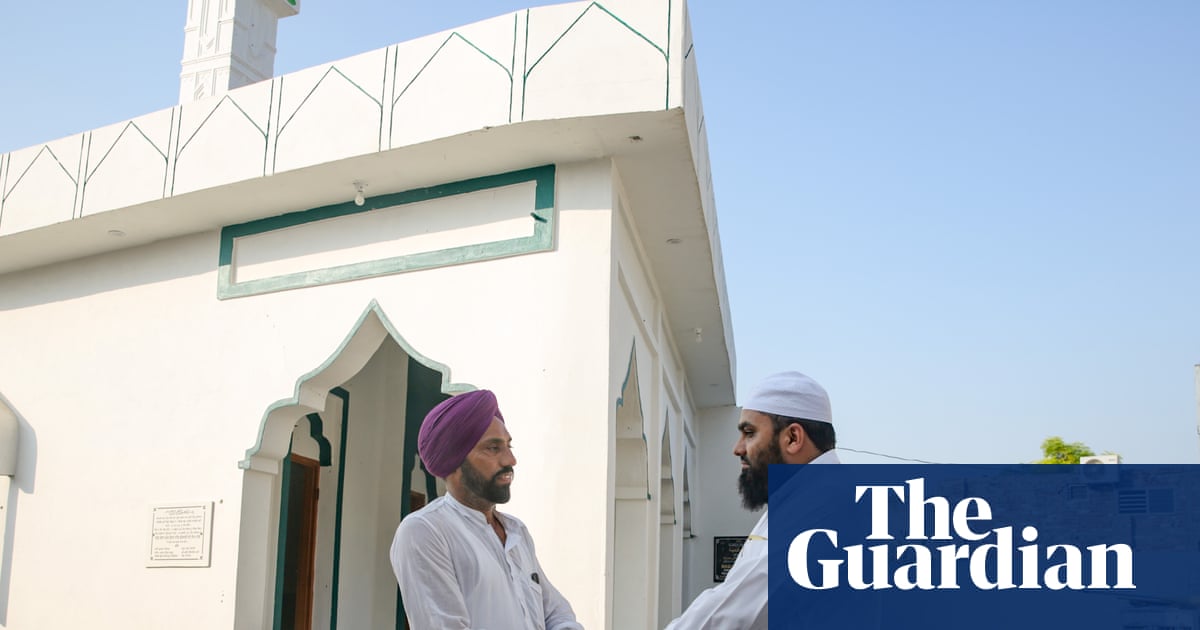
In the northern Indian state of Punjab, a quiet movement is reshaping the religious landscape of several villages. Sikh and Hindu residents are increasingly stepping forward to fund and construct mosques that were destroyed, abandoned, or repurposed during the sectarian violence accompanying India’s partition in 1947. This grassroots effort aims to restore places of worship for remaining Muslim families and symbolically heal the deep communal wounds inflicted by the border division that severed the region decades ago.
The restoration work is evident in Jakhiwal, a village in the Fatehgarh Sahib district, where an unfinished mosque stands as a testament to interfaith cooperation. Gajju Khan, an 87-year-old Muslim resident, expresses hope that he will live to hear the call to prayer echo through his community once more. He had not heard it since childhood, when his family fled violence in 1947. The project has been financed almost entirely by Sikh and Hindu neighbors, including Bibi Rajinder Kaur, who donated family farmland for the construction.
Kaur, a 77-year-old Sikh woman, explained that her decision was driven by a desire to ensure every faith had a gathering place and to seek spiritual appeasement for the bloodshed the land had witnessed. She noted that local Muslims previously had to travel several kilometers to pray elsewhere. For Khan, whose parents were killed during the partition violence while he was sheltered by Sikh neighbors, the rebuilding represents a profound gesture of gratitude and reconciliation.
Similar initiatives are occurring in other parts of Punjab. In Punawal village within the Sangrur district, Jaspal Sharma, from a family of Hindu priests, donated land for a new mosque. He described the act as a neighborly duty, noting that while Muslims make up only a small fraction of the 550 households in the village, their presence warrants a local place of worship. The entire community contributed to the project, with some providing funds and others supplying building materials like bricks and cement.
Sharma reported that the inauguration feast brought the village together, and he appreciates the lively atmosphere created by the daily prayers. These efforts are not isolated incidents but part of a broader trend observed over the past decade. Rural communities without significant Muslim populations have even invited clerics and farmhands from nearby districts to use the revived mosques, emphasizing inclusivity over demographic necessity.
In Malerkotla’s Umarpura village, Sukhjinder Singh Pandher and his brother restored a local shrine as an act of filial reverence. Their grandfather had fled west Punjab during the partition to settle in India. Pandher highlighted the syncretic traditions deeply rooted in Punjabi history, citing the belief that the 16th-century Sufi saint Hazrat Mian Mir laid the foundation stone for the Golden Temple in Amritsar. He emphasized that Eid and Gurpurab are celebrated with equal fervor by both communities in their village.
The momentum behind these restorations has been inspired by Maulana Habib-ur-Rehman Sani Ludhianvi, the former chief imam of Punjab. Under his influence, non-Muslim villagers have contributed to more than 165 mosque restoration projects over the last nine years. The current shahi imam, Maulana Muhammad Usman Rehmani Ludhianvi, who succeeded his father in 2021, acknowledges that partition tore at the natural social fabric of the region.
These rebuilding efforts serve as practical demonstrations of unity in a region historically marked by division. By restoring physical spaces for worship, villagers are actively countering the legacy of forced migration and communal bloodshed. The projects underscore a local commitment to coexistence, where religious differences are bridged through shared labor and mutual respect, offering a model of reconciliation that contrasts with broader national tensions.
As these mosques near completion or open their doors to worshippers, they stand as symbols of hope for an older generation that remembers the trauma of 1947. For younger residents, they represent a living heritage of tolerance. The continued support from diverse religious groups suggests a sustained desire to maintain social harmony and ensure that no community is left without a spiritual home in the post-partition landscape of Punjab.
Sources behind this briefing
Go to the original reporting
- The Guardian US↗How rebuilding old mosques is bringing Sikhs, Hindus and Muslims together in Punjab
