The short version
- A series of cloudbursts and landslides in July killed at least 28 people and destroyed homes across Indian-administered Kashmir.
- Remote mountain communities faced severe isolation as infrastructure collapsed, hindering rescue efforts and access to essential supplies.
- Experts attribute the intensifying rainfall patterns to climate change, which threatens traditional livelihoods dependent on predictable seasonal cycles.
Severe weather events have struck Indian-administered Kashmir with unusual intensity this month, resulting in significant loss of life and property. A sequence of cloudbursts, flash floods, and landslides swept through the region starting in mid-July, killing at least twenty-eight people according to available reports. The devastation has been particularly acute in remote mountain villages where infrastructure is fragile and emergency response capabilities are limited by difficult terrain.
In Murrah, a high-altitude village in the Pir Panjal range within the Poonch district, the impact was catastrophic for local residents. On July 19, heavy rains triggered a massive landslide that destroyed homes built over generations. One resident recounted how quickly the situation deteriorated after stepping outside to move a vehicle; within minutes, a torrent of mud and water engulfed his family home, trapping eight relatives inside. Only those who had stepped away from the structure survived the initial impact.
The aftermath in Murrah highlighted the logistical challenges facing disaster response teams in isolated areas. Four days after the event, electricity, mobile networks, and road access remained severed. Floodwaters had washed away critical bridges and roads, leaving a treacherous ninety-minute trek through debris as the only route into the village. Residents were forced to carry essential supplies such as flour, cooking gas, and medicine across unstable ground while rescue workers searched for missing persons.
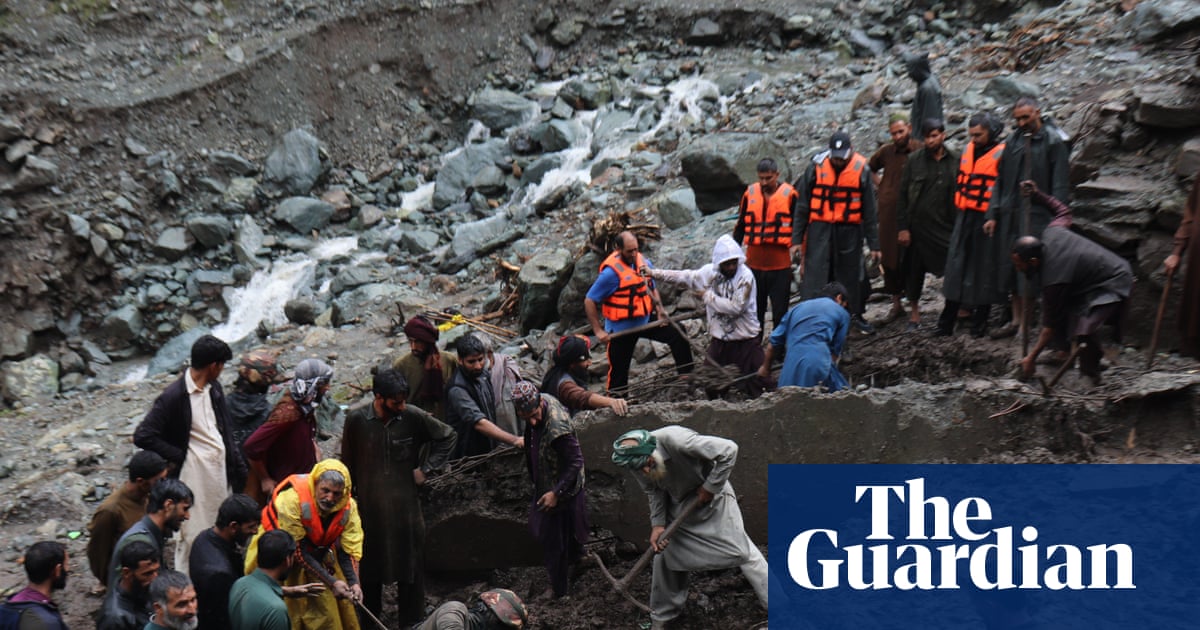
Search operations continued under difficult conditions, with soldiers, disaster response personnel, and local volunteers combing riverbanks and landslide sites by hand. Heavy machinery could not reach the unstable hillsides, slowing recovery efforts significantly. Families gathered in surviving structures to mourn their losses, with some still searching for loved ones whose bodies had not yet been recovered from the swollen Suran River downstream.
The destruction extended well beyond Murrah, affecting multiple districts across the region. In Rajouri, located approximately thirty miles away, the Manawar Tawi River overflowed its banks, destroying roads, vehicles, and a major bus station. Low-lying settlements were submerged in mud, leading to the displacement of hundreds of families. Livestock, which forms a crucial part of the local economy for pastoralist communities like the Gujjars, was also swept away or killed.
Further north, in the Gurez Valley near the Line of Control with Pakistan-administered Kashmir, similar patterns of disruption emerged. A cloudburst on July 20 damaged crops and blocked the valley’s sole road connection. Residents reported that recent months had seen repeated weather events damaging homes, farmland, bridges, and roads. These incidents have disrupted traditional farming schedules and made seasonal migration routes more hazardous.
Local residents expressed growing concern about the unpredictability of weather patterns that once governed their agricultural and pastoral activities. Farmers noted that historical knowledge regarding snowfall timing and planting seasons is becoming less reliable as rainfall intensity increases annually. This shift threatens livelihoods that have depended on stable environmental conditions for generations, adding economic stress to communities already vulnerable due to their geographic isolation.
Scientists point to climate change as a driving factor behind these extreme weather events. Rising temperatures are increasing the likelihood of short, intense rainfall episodes across the western Himalayas. In steep mountainous terrain, such rains can rapidly trigger flooding and landslides. The International Centre for Integrated Mountain Development has noted that accelerating glacier melt may increase flood risks in the near term before potentially reducing water availability in coming decades.
The broader implications of these events extend across the western Himalayas, including regions in Ladakh and Pakistan-administered Gilgit-Baltistan, where heavy rainfall also caused significant flooding. The dual challenge facing mountain communities involves managing periods of excessive water followed by potential scarcity. As weather patterns become more erratic, the need for adaptive strategies to protect lives and livelihoods grows increasingly urgent.
Recovery efforts remain ongoing as communities grapple with the immediate aftermath of the disasters. The combination of physical destruction, loss of life, and long-term economic uncertainty poses significant hurdles. Without improved infrastructure and climate-resilient planning, remote populations in the Himalayas may face recurring vulnerabilities to similar extreme weather events in the future.
Sources behind this briefing
Go to the original reporting
- The Guardian World↗‘I just want to find them’: deadly cloudbursts devastate Kashmir’s mountain communities