The short version
- Indonesian police arrested seventy-two individuals suspected of deliberately igniting forest and peatland fires to clear land for agricultural use at reduced costs.
- The resulting haze has severely degraded air quality in neighboring Malaysia, leading to the closure of nearly six hundred schools and affecting approximately two hundred thousand students.
- President Prabowo Subianto deployed significant government resources, including dozens of helicopters for water-bombing missions, while officials warned that investigations may expand to include corporate entities financing the arson.
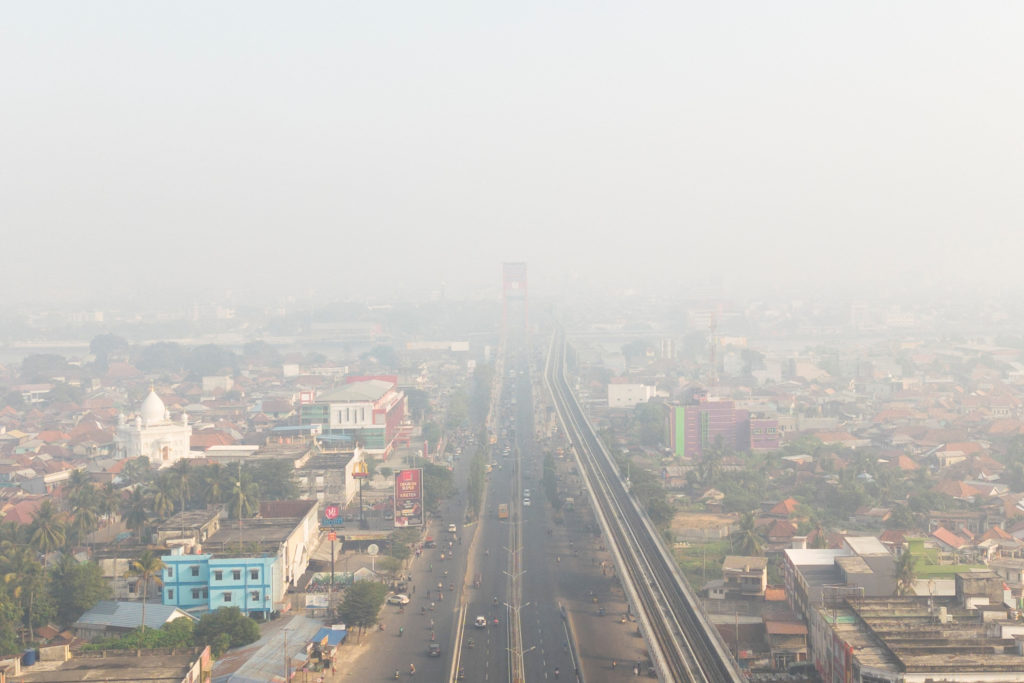
Indonesian authorities have moved aggressively to curb a surge in forest and peatland fires by detaining seventy-two individuals suspected of starting blazes across multiple provinces. The arrests mark a significant escalation in the government’s response to an environmental crisis that has generated dense, toxic haze over central and western regions of the archipelago. Police officials stated that the suspects are being investigated in connection with eighty-nine separate fire cases spanning five provinces on the island of Borneo and four on Sumatra. The move comes as the country struggles to contain fires fueled by an intensifying El Niño weather pattern and a prolonged dry season, conditions that have exacerbated the spread of flames and smoke.
Mohammad Irhamni, director of special crimes at the National Police’s Criminal Investigation Agency, explained that plantation owners and traditional farmers frequently use fire as a method to clear land for agricultural purposes. He noted that most of those detained are accused of deliberately burning areas to reduce the cost of establishing plantations. However, investigators are not limiting their probe to the individuals physically setting the fires. Irhamni emphasized that authorities are tracing financial records to determine whether larger companies financed or ordered the land-clearing activities. The investigation aims to identify who ultimately benefited from these actions, signaling that legal consequences could extend beyond the ground-level perpetrators to include corporate executives and investors.
The suspects face serious legal repercussions, with potential penalties ranging from substantial fines to prison sentences of up to fifteen years. Prasetyo Hadi, head of the State Secretariat, indicated that at least four companies in West Kalimantan province are currently under investigation for allegedly using fire to clear land. If evidence proves these entities intentionally set the fires, they could face severe sanctions, including the revocation of their operating permits. This approach reflects a broader governmental strategy to hold accountable not only those who ignite the flames but also the economic interests driving the destruction of forest and peatland ecosystems.
President Prabowo Subianto traveled to Central Kalimantan province on Saturday to oversee the response efforts and urge authorities to bring the haze under control. During his visit, he promised to deploy necessary government resources, including helicopters and water pumps, to combat the blazes. More than seven thousand six hundred hectares of land have burned in the region alone. Prabowo expressed confidence that the situation could be managed, drawing on past experiences where Indonesia successfully overcame worse forest and land fires. His presence underscored the high priority the administration places on resolving the crisis, which has strained diplomatic relations with neighboring countries due to the transboundary nature of the smoke.
The environmental impact of the fires is severe and widespread. Smoke from the blazes has blanketed parts of Borneo, the world’s third-largest island, shared by Indonesia, Malaysia, and Brunei. Indonesia administers approximately three-quarters of the island, where the Environment Ministry recorded more than three thousand seven hundred hot spots on Sunday alone. Fire activity has increased significantly in West, Central, and South Kalimantan provinces. Many of these fires burn in peatlands, which are particularly difficult to extinguish because embers can remain smoldering beneath the surface long after the visible flames die down. Officials warn that sufficient rainfall is crucial to rewet the peat and fully suppress the underground fires.
The crisis has also taken a heavy toll on South Sumatra, where more than one thousand seven hundred hot spots were detected. The resulting haze cloud has drastically reduced visibility in some areas to just ten meters, creating hazardous conditions for residents and travelers. To combat the spread of smoke and flames, authorities resumed cloud-seeding operations over Kalimantan on Sunday. A fleet of thirty helicopters was deployed for water-bombing and aerial patrol missions in the region, while another twenty-two helicopters were assigned to cover Sumatra. These aerial efforts are part of a larger strategy to mitigate the immediate dangers posed by the fires and reduce the concentration of harmful particulates in the air.
The transboundary nature of the haze has caused significant disruption in Malaysia, particularly in the eastern state of Sarawak, which has been among the hardest hit. Air quality readings in several districts have reached levels classified as unhealthy or very unhealthy. In response to the deteriorating conditions, the Sarawak government ordered the closure of nearly six hundred schools, affecting approximately two hundred thousand students. The health risks associated with the haze are a major concern for public officials on both sides of the border, as prolonged exposure to smoke can lead to respiratory issues and other health complications. The situation highlights the interconnectedness of environmental challenges in Southeast Asia and the need for coordinated regional responses.
Looking ahead, authorities remain cautious about the trajectory of the fire season. Suharyanto, chief of Indonesia’s National Disaster Management Agency, noted that fires appearing extinguished on the surface may still contain active embers underneath, making complete suppression difficult without adequate rainfall. The combination of dry weather patterns and extensive peatland burning creates a persistent threat to air quality and public health. As investigations continue into the financial networks behind the arson, the focus remains on both immediate containment and long-term accountability. The outcome of these efforts will likely influence future policies regarding land use and environmental protection in Indonesia.
Sources behind this briefing
Go to the original reporting
- PBS NewsHour↗Indonesian police arrest 72 people suspected of starting forest fires

