The short version
- Nineteen Independent Games Festival jurors signed a statement refusing to vote for games that employ generative AI in any capacity, citing concerns over labor and ecological impacts.
- Developers of Big Walk revealed they used large language models to resolve a specific technical bug, representing less than 0.1 percent of the game's total codebase.
- The controversy highlights a growing divide between platforms that distinguish between content generation and development efficiency and award bodies that enforce blanket bans on AI assistance.
A significant rift has emerged within the independent video game community regarding the use of artificial intelligence in development, centered on new voting guidelines proposed by a subset of Independent Games Festival jurors. On Monday, nineteen members of the fifty-plus person jury released a joint declaration stating they would decline to vote for any submission that utilizes generative AI tools, regardless of the extent or nature of their application. This move marks an escalation in ongoing debates about technology's role in creative industries, moving from private discussions among judges to public policy demands.
The group behind the statement cited a noticeable rise in submissions leveraging these technologies and expressed concern over the broader implications for the industry. They pointed to potential harms related to labor displacement, economic instability, psychological effects on creators, and environmental costs associated with training models. The jurors argued that the integration of such tools is not yet an inevitable standard and urged the festival organizers to implement a strict prohibition against AI-generated work in future award cycles. Their position reflects a desire to prioritize human creativity and manual effort over automated assistance.
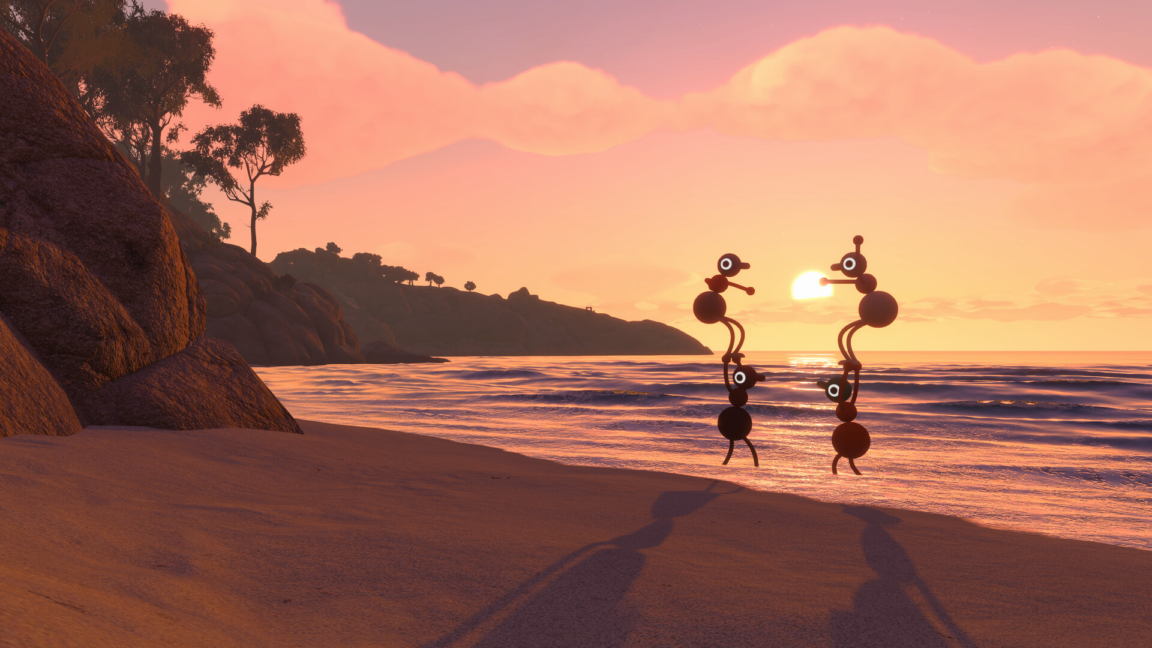
The controversy gained immediate focus on House House, the studio behind Big Walk, a co-operative puzzle exploration title that had been widely praised by critics and peers alike. Following the jurors' statement, the developer issued a disclosure explaining that large language models were used sparingly during the final stages of production. Specifically, the team employed an AI chatbot to help troubleshoot a persistent bug involving infinite-length shadows in the Unity engine, which was causing performance issues. The developers noted that this assistance accounted for well under 0.1 percent of the game's total code.
According to House House, the technical challenge involved a shadow rendering error that a Unity engineer reportedly deemed unfixable through conventional means. After consulting an AI tool, the developers received a suggested solution which they then heavily modified before integrating ten lines of code into the final build. The studio emphasized that this was not an endorsement of AI usage but rather a pragmatic response to a specific obstacle. They apologized if this minimal assistance failed to meet the strict standards set by some members of the judging community, acknowledging the sensitivity surrounding the normalization of such tools.
The decision to disclose this information publicly came after it became a matter of public interest, particularly as the game was under consideration for awards. House House explained that they had not highlighted this usage during the game's Steam release earlier in the year because Valve, the platform holder, does not require developers to report code or chatbot usage. Valve’s disclosure forms focus on AI-generated content rather than efficiency gains derived from modern development environments that may include built-in AI features. However, the IGF Awards do not make this distinction, prompting the studio to clarify their methods.
The reaction among jurors who had previously championed Big Walk was mixed and often painful. Several judges expressed deep admiration for the game's design and emotional resonance, describing it as a remarkable achievement that captured a range of play largely abandoned by digital formats. One jurist noted the game provided a profound sense of belonging, while another praised its beauty and puzzle mechanics. Despite this personal connection, these same individuals maintained that even minimal AI use disqualified the title from their consideration, viewing the act of voting for it as complicit in a trend they wish to resist.
Some jurors framed their refusal to vote as a necessary cultural intervention. They argued that speaking out against AI integration is essential to steering the industry away from practices they view as harmful to human labor and creativity. To remain silent, they suggested, would be an act of cowardice in the face of rapid technological adoption. This hardline stance contrasts with more nuanced views held by others in the development community who distinguish between generating assets and using tools for debugging or optimization.
This incident follows a similar controversy at last year's Indie Game Awards, where titles were stripped of honors after developers admitted to using AI for texture generation. Those assets were subsequently removed from the games, but the precedent established that award bodies are increasingly scrutinizing development pipelines. The current situation underscores the difficulty in defining acceptable boundaries for AI use, particularly when tools are employed for technical problem-solving rather than creative generation.
As the Independent Games Festival considers its official policy, the industry watches to see how these competing values will be balanced. The debate is no longer confined to theoretical discussions but has tangible consequences for developers seeking recognition. Whether the festival adopts a blanket ban or a more nuanced approach will likely influence how studios disclose their use of emerging technologies in the future.
For now, the controversy serves as a flashpoint for broader questions about authorship, efficiency, and ethics in game design. While some view AI assistance as an inevitable part of modern development, others see it as a threat to the human-centric nature of creative work. The outcome of this dispute may set a precedent for how independent games are evaluated and valued in an era of rapid technological change.
Sources behind this briefing
Go to the original reporting
- Ars Technica↗Big Walk used AI to fix a bug. Now the indie gaming world is having a reckoning.
