The short version
- Clark County officials identified the remains as Edward Lelburian Jackson, who was likely killed between the mid-1970s and early 1980s.
- Forensic genealogy and DNA testing linked the unidentified body to family members, resolving a case that began when boaters found him in 2022.
- Investigators have found no evidence connecting Jackson to organized crime or specific ties to Las Vegas, though his death remains unsolved.
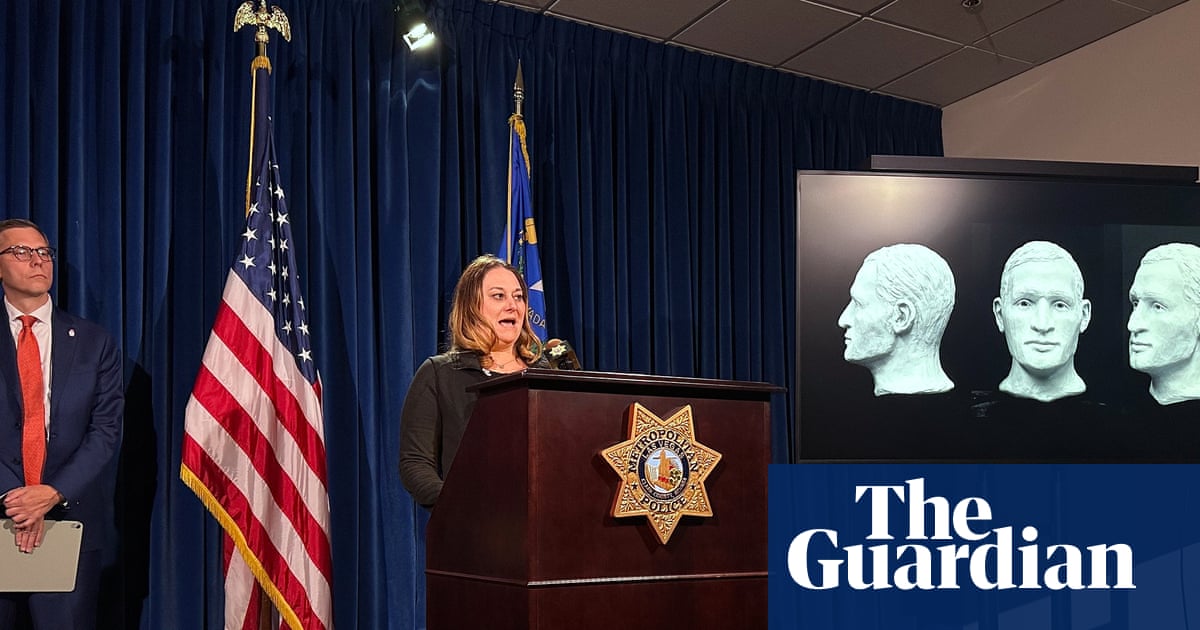
Authorities in Nevada have officially identified the man whose remains were discovered inside a barrel in Lake Mead, bringing a partial resolution to a case that has captivated public attention since 2022. Clark County Coroner Melanie Rouse announced at a press conference that the victim is Edward Lelburian Jackson, also known as Buddy. The identification marks the end of a four-year search for his identity, although the circumstances surrounding his death remain under active investigation.
Jackson’s body was first uncovered by boaters near Hemenway Harbor in the Lake Mead National Recreation Area. The discovery occurred during a period of historic drought that had caused water levels to drop significantly, exposing areas of the lakebed that had been submerged for decades. Initial autopsies indicated that Jackson had died from a single gunshot wound to the head. Based on the style of his clothing, which included a short-sleeve button-down shirt, light blue jeans, and tennis shoes, investigators estimated that the homicide occurred between the mid-1970s and the early 1980s.
For years, the focus of the investigation was not on finding a killer, but on determining who the victim was. Law enforcement agencies utilized various methods to solve the mystery, including uploading his description to national missing persons databases and searching for matches in crime DNA repositories. A significant breakthrough occurred this year when a forensics team at Oklahoma State University, working in partnership with local investigators, obtained a strong lead through genetic genealogy.
Using bone samples from the remains, the forensic team created a genealogy profile that allowed them to identify potential relatives. By comparing Jackson’s DNA with that of a believed family member, they were able to confirm his identity with certainty. Rouse noted that the confirmation process was rigorous and definitive, allowing authorities to move forward with notifying next of kin and sharing details with the public for the first time.
Jackson was originally from Arkansas, according to Las Vegas Metropolitan Police Department Lt. Robert Price. His family last saw him in the early 1980s. Records indicate that he lived briefly in California with his wife and had legal issues in Utah, where he faced charges for aggravated arson and conspiracy fraud. Despite these records, detectives have not found any concrete evidence linking Jackson to the Las Vegas area or explaining why his body ended up in Lake Mead.
Early speculation suggested that the murder might be connected to organized crime, given the era in which it likely occurred and the notorious history of such groups in Las Vegas during the 1970s and 80s. However, Lt. Price stated that current investigations do not support these theories. There is no information at this stage to suggest involvement by criminal organizations, shifting the focus back to individual motives and unknown perpetrators.
The discovery of Jackson’s remains was part of a broader pattern of findings in Lake Mead as water levels continued to decline due to overuse, prolonged drought, and rising temperatures. Shortly after the barrel containing Jackson was found, news crews discovered an empty barrel nearby. In subsequent months, paddleboarders found other human remains on newly exposed sandbars, though officials determined there was no evidence of foul play in those cases.
Lake Mead and its upstream counterpart, Lake Powell, are critical components of the Colorado River water system, providing resources to more than 40 million people across seven states and into Mexico. As historians and environmental experts predict that further drops in water levels may expose more submerged artifacts and remains, law enforcement agencies remain prepared for additional discoveries. For Jackson’s case, the identification allows investigators to pursue leads regarding his final days and the person responsible for his death.
The resolution of Jackson’s identity provides closure for his family and clarifies the historical context of the find. While the mystery of his murder remains unsolved, the confirmation of who he was transforms the case from an unidentified cold hit into a specific homicide investigation. Authorities continue to appeal for information that might shed light on the events leading to his death in the decades prior to his discovery.
Sources behind this briefing
Go to the original reporting
- The Guardian US↗Police reveal identity of man found in a barrel in drought-stricken Lake Mead