The short version
- Hurricane Isaias is expected to make landfall in Florida or Alabama, serving as a major operational test for FEMA following significant workforce reductions.
- Federal watchdogs report that over 4,300 employees left the agency in fiscal year 2025, including many senior executives with critical institutional knowledge.
- While state officials report close coordination with federal partners, concerns remain about the agency's ability to handle multiple simultaneous emergencies.
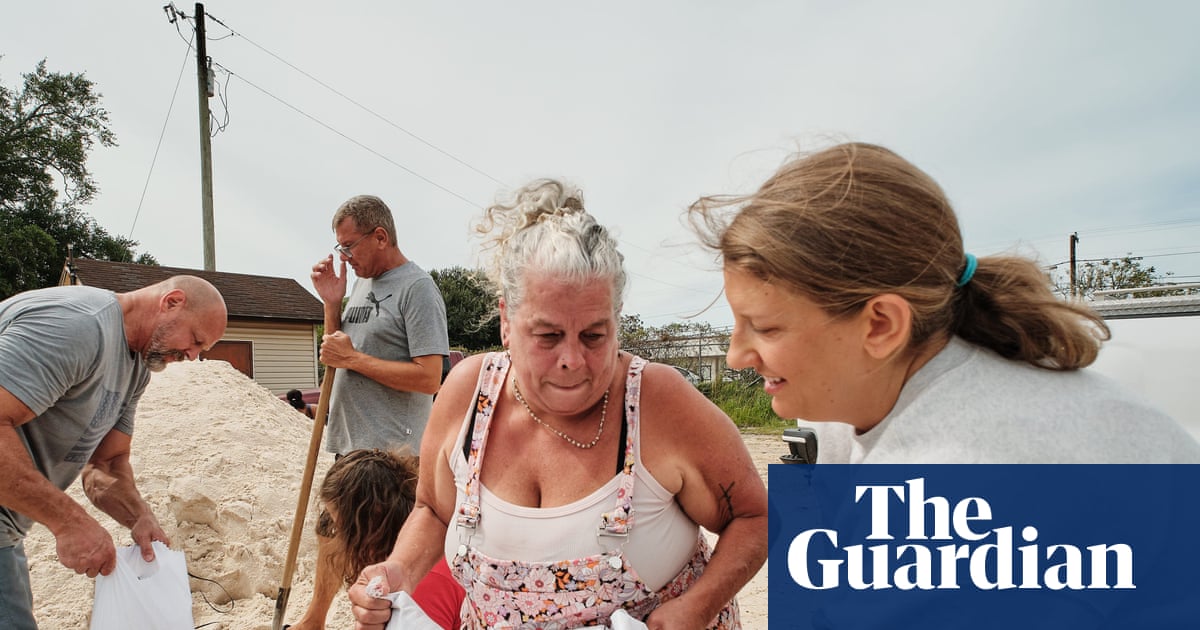
Hurricane Isaias is projected to make landfall along the Gulf Coast late Friday or early Saturday, presenting what emergency management experts describe as a significant stress test for the Federal Emergency Management Agency. The storm arrives at a time when FEMA has undergone sweeping restructuring and workforce reductions under the Trump administration, raising questions about its capacity to deploy large-scale surge teams effectively. While officials in Gulf states assert they are prepared for the incoming weather system, the broader implications of these organizational changes remain a focal point for analysts monitoring federal disaster response capabilities.
The agency’s staffing levels have declined sharply in recent months. According to a report from the U.S. Government Accountability Office, more than 4,300 employees departed FEMA during fiscal year 2025, representing approximately 17 percent of the total workforce. Chris Currie, director of homeland security and justice at the GAO, noted that these reductions were not implemented systematically to ensure the agency could continue meeting its statutory obligations. The departure of personnel was largely driven by early retirement incentives, which disproportionately affected experienced staff members who had previously managed major disaster responses.
The loss of senior leadership has been particularly pronounced. Between January 2025 and January 2026, 58 Senior Executive Service employees left the agency, a stark contrast to the average of 13 separations per year recorded in the three preceding fiscal years. Among those who departed was the administrator for Region Four, which oversees eight states including Florida and Alabama, the primary targets for Hurricane Isaias. Deanne Criswell, who led FEMA during the Biden administration, emphasized that the concern extends beyond raw headcount to the erosion of institutional memory. She argued that losing individuals with firsthand experience in large-scale disaster management creates a vulnerability that new hires cannot immediately fill.
Despite these internal challenges, FEMA maintains that it is actively monitoring and preparing for the storm. In a written statement, the agency highlighted its deployment of incident management assistance teams to Alabama and Florida, as well as the embedding of personnel within state emergency operations centers. Emergency supplies have also been prepositioned at Maxwell Air Force Base in Montgomery, Alabama, to supplement state resources if requested. The administration has framed these actions as part of a broader priority to ensure public safety under the leadership of President Trump and Secretary Mullin.
State officials have echoed sentiments of readiness and cooperation. Governors in Florida, Georgia, and Alabama have declared states of emergency for counties in the storm’s path. Jared Perdue, executive director of the Florida Division of Emergency Management, stated that his agency has maintained close coordination with federal partners. Similarly, emergency management personnel in Louisiana and Mississippi reported receiving full support from FEMA earlier this year during Tropical Storm Arthur, which brought flash flooding and tornadoes to the region. These accounts suggest that day-to-day operational relationships remain functional despite the broader structural shifts within the federal agency.
However, experts warn that the true test of FEMA’s resilience may lie in its ability to handle concurrent crises. Currie cautioned that the agency could quickly become stretched thin if it must respond to more than one natural disaster simultaneously. This risk is heightened as El Niño conditions strengthen and the nation enters the fall and winter months, periods historically associated with increased weather volatility. The potential for multiple simultaneous events mirrors the challenges faced in 2024, when Hurricanes Helene and Milton struck Florida less than two weeks apart, requiring FEMA to deploy 13,500 employees and strain its staffing capacity.
The agency’s current workload further complicates its ability to surge resources. As of June, FEMA was managing active recovery efforts for over 1,000 open emergency disaster declarations. If new disasters require immediate attention, the agency may need to pull staff from these ongoing recovery operations, potentially halting progress in other affected areas. Currie noted that even though the current hurricane season has been relatively quiet compared to previous years, it could still prove to be a busy period for disaster response overall. The strain on personnel is compounded by pre-existing difficulties in recruiting and retaining qualified staff.
Legal and financial hurdles also loom over the agency’s operations. A federal judge recently ruled that the Trump administration’s plan to cut FEMA staff by 50 percent was unlawful, adding a layer of legal uncertainty to ongoing restructuring efforts. Additionally, an analysis by the Texas Tribune indicated that the administration has been slow to approve major disaster funding in 2026. Most major disaster declarations this year came a month after initial requests, roughly three times longer than the historical average. This delay has tangible consequences for survivors, such as those affected by flooding in the Texas Hill Country this summer, who have yet to receive individual assistance from FEMA.
The disconnect between federal promises and on-the-ground realities has drawn criticism from advocacy groups. Ginny Goldman, founder of Rebuild: the National Disaster Survivors Association, highlighted the struggles of survivors waiting for aid. While President Trump announced via social media that the federal government would send $50 million for disaster recovery assistance, questions remain about the distribution and accessibility of these funds. As Hurricane Isaias approaches, the interplay between state preparedness, federal capacity, and bureaucratic delays will likely determine how effectively the affected communities are supported in the immediate aftermath.
Sources behind this briefing
Go to the original reporting
- The Guardian US Politics↗Hurricane Isaias ‘biggest test’ for Fema since Trump cuts, experts warn