The short version
- Violent clashes erupted in Milan as protesters targeting high living costs threw objects at police, resulting in injuries and dozens of arrests.
- A tent encampment formed in Lisbon to demand housing reforms, reflecting a broader regional surge in anger over rent increases and social inequality.
- Political leaders in Italy and Portugal condemn the violence while acknowledging public frustration, even as unrest spreads to Albania over university fees.
Widespread demonstrations against rising living costs and housing unaffordability have expanded across Southern Europe, moving beyond Spain and France into Italy and Portugal. The unrest has taken distinct forms in different capitals, ranging from violent street clashes in Milan to a sustained tent encampment in Lisbon. These events highlight a growing regional crisis as citizens confront steep increases in rent and daily expenses, prompting significant political reactions and police interventions.
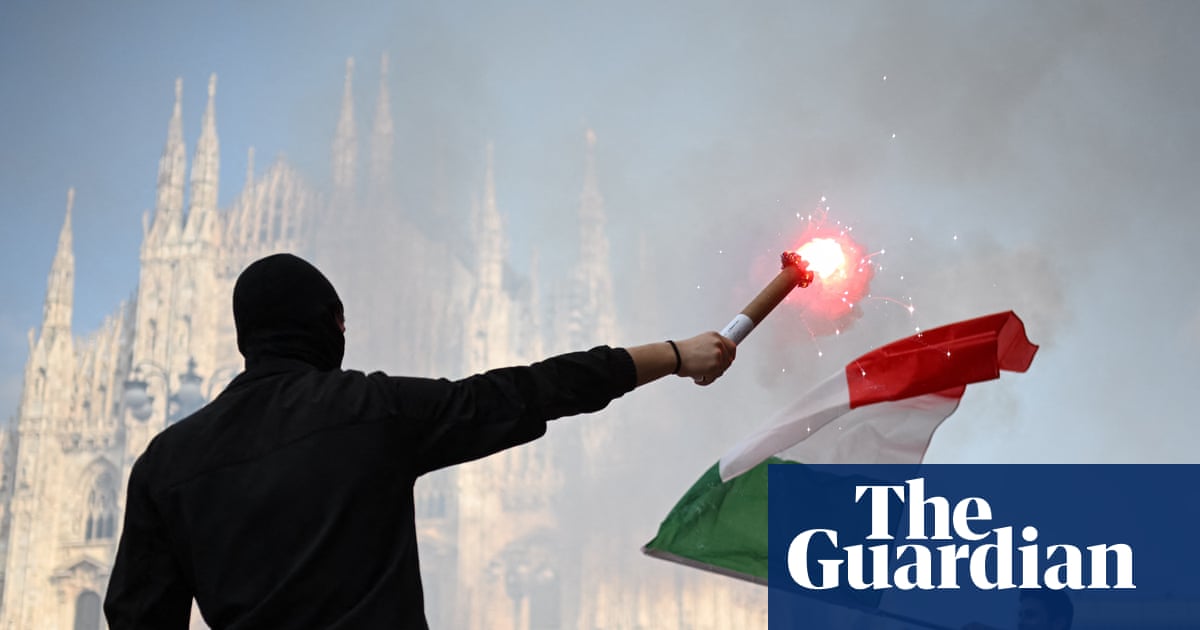
In Milan, a march organized on Saturday to address the cost of living began without incident but deteriorated into violence later in the day. Masked individuals threw stones, paving blocks, and other debris at riot police while setting fire to barricades constructed from bar tables. Law enforcement responded with water cannons and tear gas to disperse the crowds. The aftermath revealed significant damage, including a severely damaged vehicle belonging to the carabinieri. Authorities reported that at least two officers were injured and approximately fifty demonstrators, many of them minors, were detained.
Italian Prime Minister Giorgia Meloni addressed the violence on social media, distinguishing between the right to demonstrate and the act of destroying property. She argued that hooligans had exploited the legitimate grievances of protesters to sow chaos and attack security forces. Milan’s mayor, Giuseppe Sala, echoed this sentiment by stating that while the motivations behind the protests were understandable, the violence against law enforcement and the serious damage inflicted on the city were not justifiable.
Meanwhile, in Lisbon, hundreds of protesters established a tent camp in Rossio Square, located in the tourist-heavy center of the Portuguese capital. This encampment mirrors a similar protest site set up in Madrid three weeks prior. Demonstrators vowed to remain overnight, gathering around the statue of King Pedro IV and singing songs. The action followed a nationwide march that drew thousands of participants. Protesters expressed deep frustration with the current economic conditions, describing their situation as suffocating under the weight of financial pressures.
Participants in Lisbon criticized the center-right government for policies they claim favor property owners over tenants. One protester noted that rents have been liberalized to the detriment of those needing housing. Official data indicates that Portuguese housing prices rose by 124 percent between 2015 and 2024, a rate roughly double the European Union average. This surge has disproportionately affected younger residents and those living in the greater Lisbon metropolitan area, which is home to about a quarter of Portugal’s population.
The protests in Lisbon also amplified earlier demonstrations that began in Porto, where dozens of tents had already been erected. Organized by the main CGTP union, the rallies called for improvements in public services, pensions, and wages, alongside measures to curb soaring housing costs. Portuguese Prime Minister Luís Montenegro stated that his government understood the desire to express outrage over perceived omissions in public policy. However, he warned political rivals against importing climates of instability from other countries, a remark widely interpreted as a reference to the violent protests seen in France.
The wave of unrest has also reached Albania, where demonstrators have clashed with police over university conditions and high tuition fees. Protesters demanded the resignation of Prime Minister Edi Rama. In recent days, demonstrators threw rocks, Molotov cocktails, and pyrotechnic devices at law enforcement, setting fire to cars and litter bins to create barricades. Police fired rubber bullets for the first time since the protests began. Buildings, including a court, banks, and a post office, were set on fire or severely damaged.
The broader context of this European unrest traces back to Spain, where anger over social inequality and soaring rents boiled over last month. The catalyst was the eviction of an 87-year-old woman who could not pay a 230 percent rent increase demanded by an investment firm that had purchased her apartment. Her plight sparked street demonstrations and a protest camp in Madrid, leading the socialist-led government to propose emergency housing measures. After right-wing and far-right parties voted down these proposals, Prime Minister Pedro Sánchez announced a snap general election.
As these movements spread, they reflect a shared sense of desperation among working-class citizens across multiple nations. While the specific triggers vary from housing evictions in Spain to tuition fees in Albania, the underlying theme is a struggle against economic precarity. Governments are now faced with balancing public order with the need to address legitimate concerns about affordability and social safety nets. The coming weeks will likely see continued tension as protesters maintain their presence and authorities respond to the escalating demands.
Sources behind this briefing
Go to the original reporting
- The Guardian World↗‘We are suffocating’: protests spread to Lisbon and Milan as housing and living cost tensions intensify