The short version
- Two former leaders of the Hong Kong Alliance in Support of Patriotic Democratic Movements of China were found guilty of inciting subversion under Beijing's national security legislation.
- Judges determined that the group's longstanding slogan calling to end one-party dictatorship amounted to an intent to overthrow constitutional leadership, rejecting arguments that the actions were non-violent political expression.
- The conviction signals a continued erosion of civic space in the territory, with observers noting that even moderate, law-abiding advocacy is now treated as criminal if it challenges the ruling party's status.
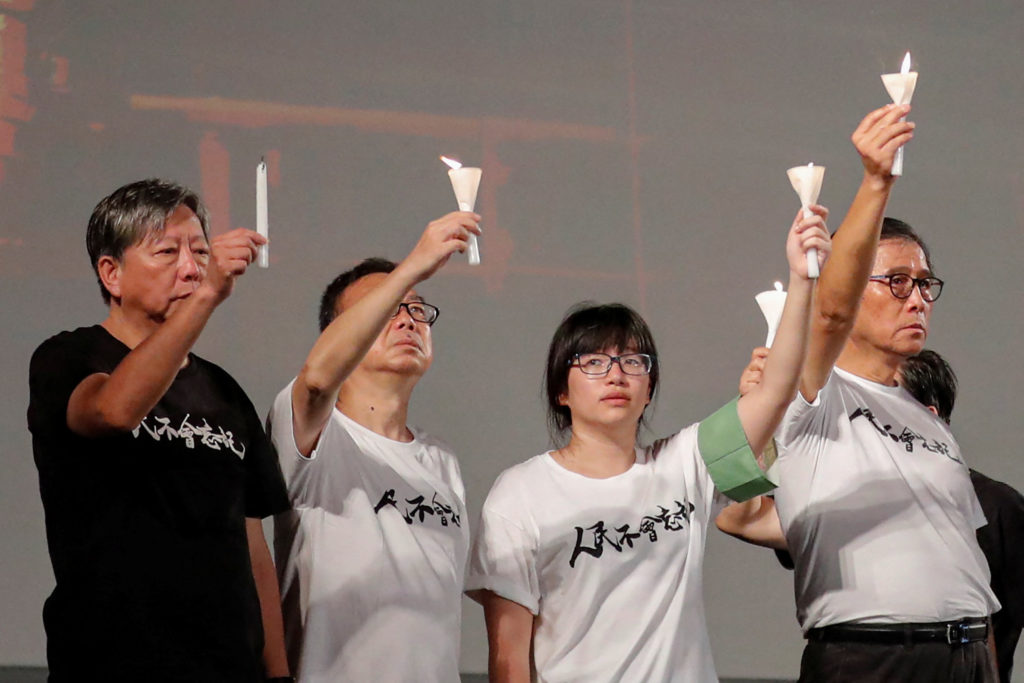
A Hong Kong court has convicted two prominent organizers of the city’s annual Tiananmen Square commemoration vigils, marking another significant step in the dismantling of the territory’s pro-democracy civil society. Lee Cheuk-yan and Chow Hang-tung, former leaders of the Hong Kong Alliance in Support of Patriotic Democratic Movements of China, were found guilty on Friday of inciting subversion under the national security law imposed by Beijing. The charges stem from their decades-long efforts to organize candlelight vigils that drew tens of thousands of participants before being banned during the pandemic.
The three-judge panel ruled that the alliance’s central slogan, which called to 'end one-party dictatorship,' was legally equivalent to an attempt to overthrow the Communist Party’s leadership. The judges argued that this phrasing violated the constitution, which defines the party’s role as a defining feature of socialism with Chinese characteristics. According to the verdict, the defendants persisted in their advocacy even after the introduction of the security law in 2020, thereby engaging in unlawful means to undermine state authority.
Legal experts and observers view the case as illustrative of the shrinking boundaries for political expression in Hong Kong. Eric Lai, a senior fellow at the Georgetown Center for Asian Law, noted that the verdict forces civil society actors to reconsider their assumptions about legal protection. He emphasized that moderation in method no longer shields individuals if their ultimate objectives are deemed unconstitutional by the state. The ruling suggests that any challenge to the party’s dominance, regardless of whether it involves violence, can be prosecuted as a national security threat.
During the proceedings, Lee Cheuk-yan maintained that the alliance’s goal was not to dismantle the government but to advance democratic principles and allow citizens to choose their leaders. He argued against the characterization of their work as dictatorial enforcement by the Communist Party. Despite these defenses, the court concluded that the defendants intentionally encouraged supporters to await an opportune moment to achieve their political aims through unlawful channels. The judges asserted that the trial was based on legal violations rather than political disagreement.
The defendants displayed calm defiance as they left the courtroom, smiling and waving to supporters in the public gallery. Sentencing has been deferred to a later date, with both men expected to plead for reduced penalties next week. They face a maximum prison term of ten years under the security law. Codefendant Albert Ho, who pleaded guilty at the start of the trial in January, will also address the court regarding his sentence. Guilty pleas typically result in lighter punishments in such cases.
Family members expressed deep disappointment with the outcome. Lee’s wife, Elizabeth Tang, told reporters that she felt the judges ignored key legal arguments and evidence presented by the defense team. She indicated that the family is still considering whether to appeal the decision. Chow Hang-tung’s mother voiced a hope for a more open environment where diverse viewpoints can flourish without fear of repression. The emotional toll on the families has been compounded by the harsh conditions described by the defendants during their detention.
Chow Hang-tung recently detailed the physical constraints she faced while being transported to court, describing how she was shackled with handcuffs and chains around her waist and ankles. She characterized the treatment by correctional officers as degrading, comparing it to being led like an animal. Despite the conviction, she maintained that justice resides in public conscience and that a single verdict does not diminish the moral weight of their cause. Her comments reflect a broader sentiment among supporters who view the legal proceedings as politically motivated.
Outside the courthouse, dozens of supporters gathered in drizzling rain to show solidarity with the defendants. Some faced restrictions from police regarding materials they could bring into the vicinity, including items referencing June 4, the anniversary of the Tiananmen crackdown. The presence of these observers underscores the continued public interest in the case, even as the space for such gatherings has been severely curtailed. The trial serves as a stark reminder of the changes in Hong Kong’s political landscape since the handover from British rule.
The annual vigils organized by the alliance were once the largest public commemorations of the 1989 events in China, made possible by the greater freedoms granted under the 'one country, two systems' framework. Since the implementation of the national security law, the pro-democracy movement has been largely dismantled, with many activists imprisoned or exiled. This conviction reinforces the government’s stance that historical memory and political dissent are incompatible with national security, effectively silencing one of the last remaining platforms for organized opposition in the city.
As sentencing approaches, the case remains a focal point for debates over human rights and judicial independence in Hong Kong. The international community continues to monitor developments closely, concerned about the precedent set by interpreting political slogans as criminal subversion. For now, the defendants await their final judgment, while their supporters navigate an increasingly restrictive environment where even symbolic acts of remembrance carry significant legal risk.
Sources behind this briefing
Go to the original reporting
- PBS NewsHour↗2 organizers of Hong Kong's Tiananmen vigils convicted in national security case

