The short version
- The Marché des Enfants Rouges, Paris's oldest surviving covered market, was largely destroyed in a fire that broke out in the early hours of October 12.
- Emergency crews prevented the blaze from spreading to adjacent structures, though the historic metal framework collapsed and most vendor stalls were consumed by flames.
- The site has a complex history involving near-demolition in the 1980s followed by a major renovation that transformed it into a renowned international food court.
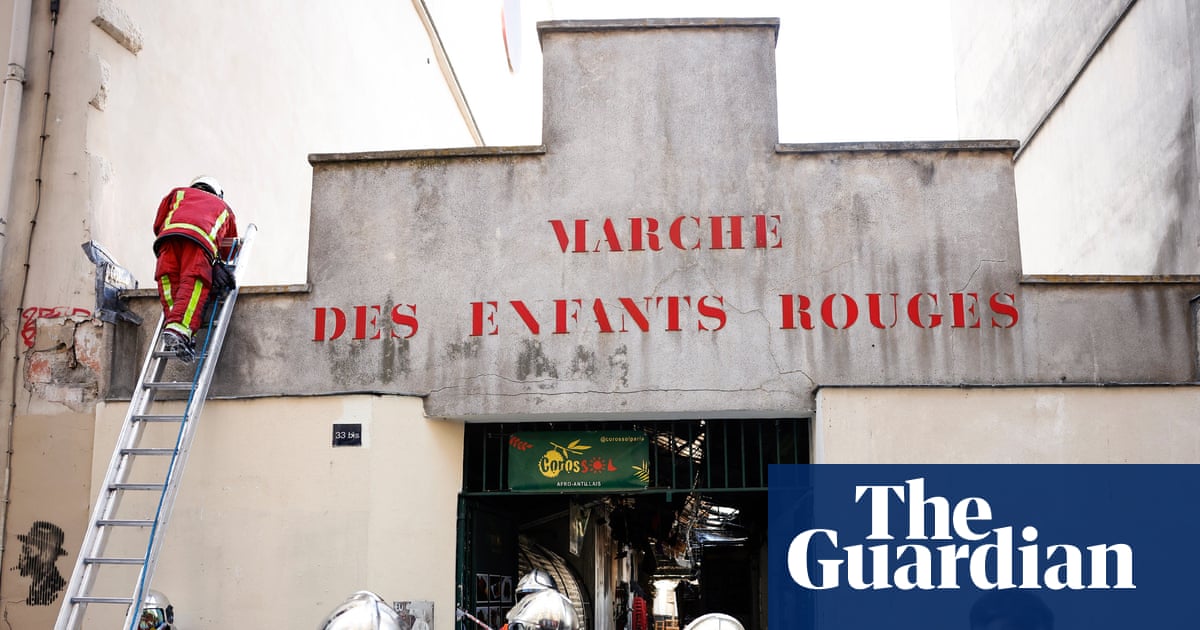
A significant cultural landmark in Paris suffered extensive damage after a fire broke out in the early hours of October 12, destroying much of the Marché des Enfants Rouges. The blaze occurred shortly after 3:00 am in the Marais district, targeting the city's oldest surviving covered food market. Emergency responders arrived quickly to contain the incident, but the historic structure sustained severe damage that officials described as total destruction of the interior and significant structural compromise.
Local government representatives confirmed the severity of the loss while noting that the wider neighborhood was spared from further devastation. Ariel Weil, the mayor of central Paris, stated that the market had been completely destroyed by the flames. He emphasized that emergency efforts successfully prevented the fire from spreading to surrounding buildings, a outcome he described as avoiding the worst possible scenario. Despite this containment, Weil acknowledged the deep emotional impact on residents and visitors, citing widespread sadness over the loss of a beloved community institution.
The physical toll on the building was substantial according to fire service officials. Lieutenant Colonel Pierre de Bouvier from the Paris fire brigade reported that much of the market's metal framework had collapsed during the incident. Most of the individual vendor stalls were consumed by the fire, leaving little of the commercial infrastructure intact. More than 150 firefighters and approximately 50 fire trucks were deployed to battle the blaze after receiving alerts at 4:15 am. The specific cause of the ignition remains unknown as investigations are ongoing.
The Marché des Enfants Rouges holds a unique place in Parisian history, having been established in 1615 during the reign of King Louis XIII. Its name derives from the nearby Hospice des Enfants Rouges, an orphanage founded in 1536 by King Francis I and his sister Marguerite de Navarre. The children residing at the hospice were traditionally dressed in red garments, a distinctive feature that gave both the institution and the adjacent market their enduring names. For centuries, the site served as a vital commercial hub for the local community.
The survival of the structure to the present day is largely due to intense preservation efforts during the 1980s. Although the building was listed as a historic monument in 1982, it faced imminent demolition shortly thereafter. City hall officials, led by then-mayor Jacques Chirac, had approved radical redevelopment plans that would have replaced the market with an underground parking facility, a daycare center, and a community space. These proposals threatened to erase the physical footprint of the 17th-century site entirely.
A robust coalition opposed the demolition plans, mobilizing tens of thousands of signatures against the project. The campaign included support from local residents, neighborhood associations, and prominent cultural figures such as filmmakers and photographers Bertrand Tavernier and Willy Ronis. Their collective pressure eventually led to the abandonment of the redevelopment scheme in the mid-1990s. Instead of demolition, the city committed to a comprehensive restoration effort that lasted six years and cost approximately 13 million francs.
The renovation project focused on restoring the market's historic wood and ironwork frame along with its glass roof. The site reopened in 2000 as a modernized food court, blending traditional commerce with contemporary dining experiences. While some classic stalls such as greengrocers, butchers, cheesemongers, and fishmongers remained, the majority of the 1,000-square-meter space was dedicated to diverse street food vendors. These stands offered cuisines ranging from French and Lebanese to Moroccan and Japanese, serving customers at counters or casual seating areas.
In recent years, the market gained international recognition for its culinary offerings. Travel guides and food publications frequently highlighted the venue as a premier destination for street food enthusiasts. The Time Out tourist guide characterized it as one of the coolest markets in Paris, while Food & Wine magazine ranked it fifth globally for street food quality earlier this year. This acclaim placed it among top destinations in cities like London, Bangkok, Lyon, and Mexico City, drawing thousands of locals and tourists daily before the fire.
The destruction of the Marché des Enfants Rouges marks a significant loss for Paris's cultural heritage and culinary landscape. The site had successfully navigated threats of demolition to become a symbol of adaptive reuse and community preservation. Its current state leaves questions about future restoration possibilities and the potential return of the vibrant food scene that defined its recent history. Authorities have not yet announced plans for reconstruction or compensation for the displaced vendors who operated within the market.
As investigations into the cause of the fire continue, the focus remains on assessing the full extent of the structural damage and supporting those affected by the loss. The incident underscores the vulnerability of historic structures even after significant investment in their preservation. For now, the empty shell of the 17th-century market stands as a stark reminder of what was lost, with no immediate timeline for recovery or reopening provided by city officials.
Sources behind this briefing
Go to the original reporting
- The Guardian World↗Fire destroys Marché des Enfants Rouges, ‘coolest market in Paris’