The short version
- Rinky Hijikata defeated Novak Djokovic to become only the fourth Australian player to beat the Serbian tennis legend.
- The loss eliminates Djokovic from contention for the ATP Finals, ending his 2026 competitive season early.
- Hijikata played through neck pain and advanced to face Tomas Martin Etcheverry in the next round of the Paris Masters.
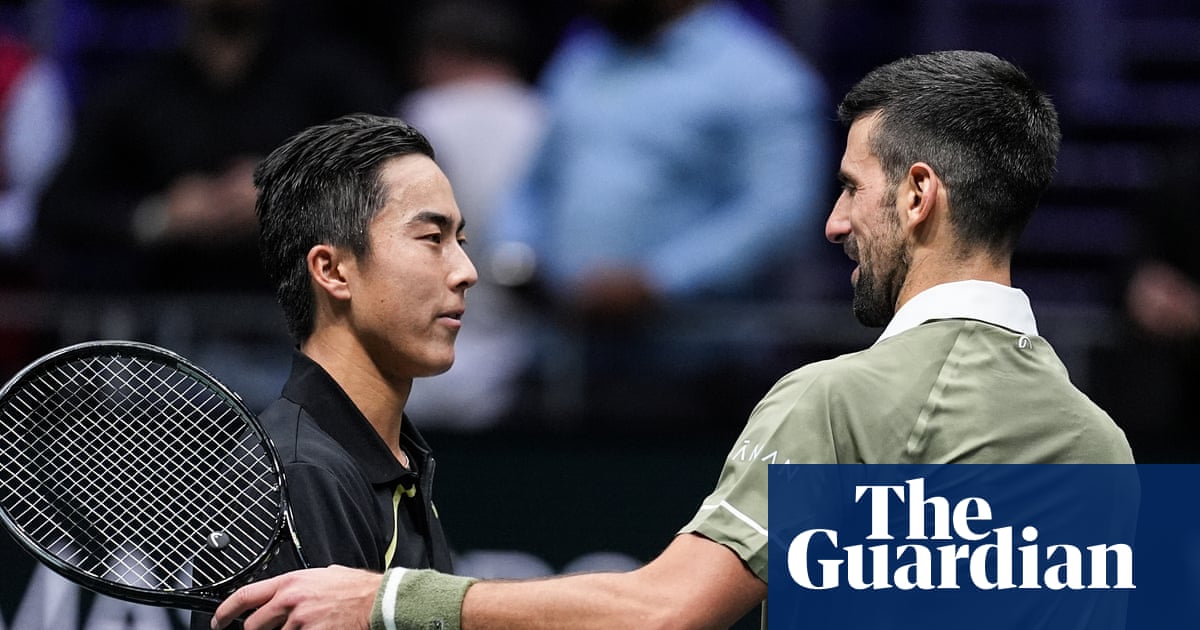
Rinky Hijikata delivered a stunning performance at the Paris Masters, defeating Novak Djokovic to eliminate the seven-time champion from contention for the season-ending ATP Finals. The match, played on Thursday under the lights of the Plenitude Arena, saw the Australian qualifier overcome the world number one in a three-set battle that ended with a scoreline of 2-6, 6-3, 6-3. This victory marks a significant milestone in Hijikata’s career, as he joins an exclusive group of Australian players who have managed to conquer Djokovic on tour.
The upset carries considerable weight given the disparity in ranking and recent form between the two competitors. Hijikata, currently ranked 83rd in the world, had never previously defeated a player inside the top 20 before this season. This win represents his fourth such scalp in 2026, propelling him closer to a new career-high ranking within the top 60. For Djokovic, the defeat was particularly costly, as it scuttled his chances of qualifying for the championship event he has won seven times, effectively concluding his competitive activities for the year.
Hijikata’s path to victory was not without physical challenges. The 28-year-old revealed that he had suffered a neck injury the day prior to the match and was experiencing significant discomfort leading up to the contest. Despite these physical limitations, he chose to compete, attributing his ability to push through the pain to a surge of adrenaline once play began. His decision to stay in the match paid off, as he managed to neutralize Djokovic’s strengths and impose his own game plan on the indoor hard court.
The match itself showcased a dramatic shift in momentum after the first set. Djokovic started strongly, taking the opening set comfortably and appearing to control the early stages of the second. However, Hijikata adjusted his strategy, beginning to hit with greater precision and consistency. The Australian player kept the ball low and minimized errors, forcing Djokovic into a difficult position. As the match progressed, Hijikata’s baseline winners increased in frequency, overwhelming the Serbian veteran who struggled to regain his footing after the initial dominance.
Djokovic acknowledged the quality of Hijikata’s performance in post-match comments, noting that the Australian was playing exceptionally well during the crucial moments of the contest. The 39-year-old expressed disappointment at losing a match where he felt he had established control early on. He admitted that his serving dropped off in the second set, allowing Hijikata to take charge and dictate the pace. Djokovic conceded that he lost control of the match after playing well in the opening set, highlighting the fine margins that often define high-level tennis encounters.
This victory places Hijikata among a select few Australians who have beaten Djokovic. He joins Alex de Minaur, Nick Kyrgios, and Lleyton Hewitt as the only players from his country to achieve this feat. The significance of this achievement cannot be overstated, given Djokovic’s historical dominance in the sport and his status as a 24-time Grand Slam champion. For Hijikata, this win serves as validation of his improved play throughout the 2026 season, which has seen him reach new heights in terms of both ranking and confidence.
The implications of this result extend beyond the immediate match outcome. For Djokovic, the loss means he will not participate in the ATP Finals, an event that typically serves as a culmination of the tennis calendar for the top-ranked players. His season had included a run to the Australian Open final in January and a title win in Beijing last month, demonstrating his continued ability to compete at the highest level. However, the defeat in Paris signals an abrupt end to his campaign, leaving questions about his future plans and potential return timeline.
Hijikata’s journey continues as he advances to the third round of the Paris Masters. His next opponent will be Tomas Martin Etcheverry, an Argentine player who recently defeated Alex de Minaur in a straight-sets victory. That match ended De Minaur’s hopes of qualifying for the Turin tournament for a third consecutive year, highlighting the competitive depth of the field. Hijikata faces another tough test against Etcheverry, but his confidence will be bolstered by the remarkable win over Djokovic.
The broader context of this upset reflects the evolving landscape of men’s tennis. While established stars like Djokovic continue to dominate, younger players are finding ways to challenge their supremacy. Hijikata’s success is a testament to the depth of talent emerging from Australia and other nations, suggesting that the sport remains dynamic and unpredictable. As the season draws to a close, this match will be remembered as a pivotal moment where experience met resilience, resulting in a surprising and impactful outcome.
Looking ahead, Hijikata’s performance in Paris may serve as a catalyst for further growth in his career. The exposure gained from defeating a player of Djokovic’s caliber could provide valuable momentum heading into future tournaments. For fans and analysts alike, this match offers a compelling narrative of perseverance and skill, illustrating how physical adversity can be overcome with mental fortitude and tactical acumen. The tennis world will undoubtedly watch closely to see how Hijikata builds on this achievement in the coming months.
Sources behind this briefing
Go to the original reporting
- The Guardian US↗‘Playing out of his mind’: Novak Djokovic hails Rinky Hijikata after Australian’s stunning win in Paris


