The short version
- Herbert Blomstedt has died at age 99, concluding a seven-decade career that included leadership roles with the San Francisco Symphony and Leipzig Gewandhaus.
- He remained active on the podium until earlier this year, conducting Mahler’s Ninth Symphony in London at age 97 and performing in San Francisco at 98 despite frailty.
- Colleagues and critics described him as an exception among conductors for his sobriety, modesty, and lack of ego-driven power dynamics.
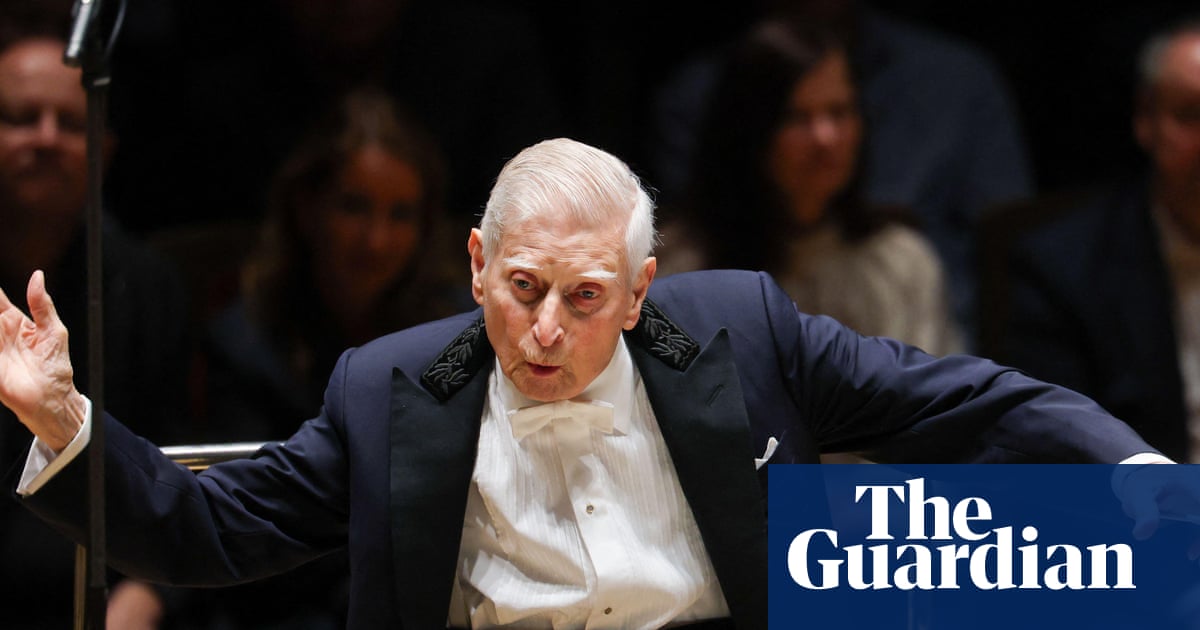
Herbert Blomstedt, a conductor whose career spanned seven decades and who remained active on the podium well into his tenth decade, has died at the age of 99. His passing marks the end of an era for classical music, particularly given his reputation as one of the most enduring figures in the profession. Blomstedt continued to lead major orchestras until earlier this year, demonstrating a level of professional longevity that few peers achieved. He died at his home in Gothenburg, Sweden, surrounded by the legacy of performances that defined late-twentieth and early-twenty-first-century symphonic repertoire.
Born in Massachusetts in July 1927 to Swedish parents, Blomstedt spent his formative years in Sweden and Finland. His musical education included tutelage from notable figures such as Igor Markevitch, Jean Morel, and Leonard Bernstein. He made his conducting debut with the Stockholm Philharmonic in 1954, launching a trajectory that would see him assume principal positions across Europe and North America. His early career included leadership of the Oslo Philharmonic from 1962 to 1968 and a decade-long tenure with the Danish Radio Symphony Orchestra between 1967 and 1977.
Blomstedt’s mid-career was defined by significant appointments in Germany and the United States. He led the Staatskapelle Dresden from 1975 to 1985, a role that solidified his standing in the German Romantic tradition. From 1985 to 1995, he served as music director of the San Francisco Symphony Orchestra, where he cultivated a deep connection with American audiences. Later, he returned to Europe to lead the Leipzig Gewandhaus Orchestra from 1998 to 2005. These positions allowed him to shape the artistic direction of some of the world’s most respected ensembles, bringing a consistent interpretive voice to works by Beethoven, Brahms, Mendelssohn, and Bruckner.
In his later years, Blomstedt developed a particularly close relationship with London’s Philharmonia Orchestra. He first conducted the ensemble in 2006 at the Edinburgh Festival and maintained this partnership through the following decades. His final appearance in London occurred in November 2024, when he conducted Gustav Mahler’s Ninth Symphony at age 97. Critics noted that while the performance required patience to find its stride, it ultimately delivered a vivid and Olympian reading of the complex work. The achievement was viewed as exceptional not only because of his age but also due to the high artistic standard maintained throughout the concert.
His final public performance took place in May 2025 in San Francisco, where he held the title of conductor laureate. At 98 years old, Blomstedt attempted to lead another rendition of Mahler’s Ninth Symphony. However, his physical frailty became apparent during the third movement, forcing a temporary halt to the performance. This event underscored the physical demands of conducting at an advanced age, even for someone with such extensive experience and dedication. Despite this setback, his commitment to music remained evident until the very end of his public career.
Blomstedt was widely recognized as one of the leading interpreters of Sibelius and Nielsen symphonies, with complete cycles receiving critical acclaim. His recordings earned him two Grammy Awards and a Gramophone Award, reflecting both commercial success and artistic respect. Earlier this autumn, he was named a laureate of the Praemium Imperiale, further cementing his status as a global cultural figure. These honors acknowledged not just his technical skill but also his ability to bring new life to familiar repertoire without relying on routine or spectacle.
Beyond his musical achievements, Blomstedt was noted for his personal character. The San Francisco Symphony described him as noble, charming, sober, and modest—qualities that stood in contrast to the often larger-than-life personas associated with conductors. His manager, Lothar Schacke, who worked with him for nearly four decades, emphasized Blomstedt’s kindness, wisdom, and gentle humor. Schacke stated that each encounter with Blomstedt was a gift, enriching those around him intellectually and emotionally. This perspective highlights how his influence extended beyond the podium to shape the culture of the organizations he led.
Blomstedt held honorary conductor titles with numerous prestigious ensembles, including the Bamberg Symphony, Danish National Symphony Orchestra, Tokyo’s NHK Symphony, Swedish Radio Symphony, Staatskapelle Dresden, Oslo Philharmonic, and Norrköping Symphony. These appointments reflect the broad international respect he commanded throughout his career. His ability to maintain relevance and artistic integrity over such a long period offers a unique case study in professional endurance within the arts. As the classical music world mourns his loss, his legacy remains tied to both his interpretive brilliance and his quiet dignity.
The impact of Blomstedt’s career extends beyond individual performances or recordings. He demonstrated that artistic vitality could persist well into old age, challenging assumptions about decline in creative fields. His final years were marked by a continued passion for making music, with no trace of routine in his approach even after sixty years on the podium. For musicians and audiences alike, Blomstedt represented a standard of excellence that combined technical mastery with profound emotional resonance. His death leaves a void in the global orchestral landscape, but his contributions will continue to influence future generations of conductors and listeners.
As institutions reflect on his life, the focus remains on the substance of his art rather than the spectacle of his longevity. Blomstedt’s story is one of sustained engagement with music at the highest level, achieved through discipline, humility, and an unwavering commitment to the score. His final performances, though physically taxing, were testaments to this dedication. In remembering him, the classical music community honors not just a conductor, but a mentor, a colleague, and a friend whose presence enriched the cultural fabric of multiple countries over many decades.
Sources behind this briefing
Go to the original reporting
- The Guardian US↗Herbert Blomstedt, renowned conductor with a seven-decade career, dies aged 99


