The short version
- Hawaii has activated emergency protocols as Hurricane Lowell approaches, marking the third significant weather threat to the islands in less than a month.
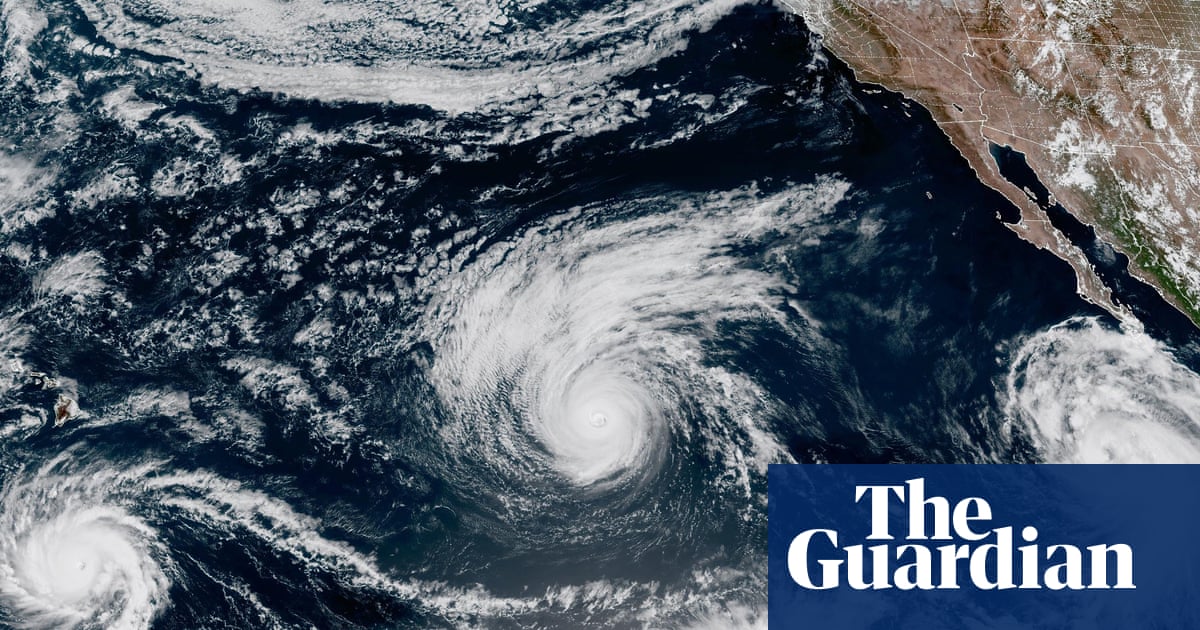
- The Pacific Ocean is currently experiencing its first simultaneous triple-hurricane event in ten years, with three named storms active at once.
- Meteorologists warn that an intensifying El Niño pattern is likely driving this unusual frequency and severity of extreme weather events.
Hawaii has officially declared a state of emergency as Hurricane Lowell advances toward the archipelago, bringing with it the threat of heavy rainfall, high surf, and dangerous coastal conditions. The storm system is expected to make its first impact on the islands as early as Monday, adding to the strain on local resources that have been stretched thin by recent weather events. Governor Josh Green announced the emergency status to ensure that state agencies are prepared to respond quickly should infrastructure damage or public safety issues arise.
Lowell remains a powerful Category 3 hurricane, with sustained winds reaching 125 miles per hour as it moves northwest at six miles per hour. Forecasts indicate that the storm will likely weaken to a Category 2 hurricane by the time it reaches Hawaii. The center of the storm is projected to pass approximately 130 miles west of Ni’ihau or 170 miles west of Kauai between Monday evening and Tuesday morning. While this offshore trajectory may spare the islands from the storm’s most violent winds, tropical storm warnings remain in effect for Kauai and Ni’ihau, with wind gusts exceeding 39 miles per hour expected over the next two days.
This latest threat arrives during an exceptionally active period for the central Pacific. Lowell is the third system to endanger Hawaii in just over three weeks, following closely on the heels of Tropical Storm Moke and Hurricane Lala. The rapid succession of storms has caused significant disruption and damage across the region. Governor Green noted that Hurricane Lala alone resulted in at least $43 million in infrastructure damage on the Big Island, along with an additional $4.6 million in residential property damage. These figures highlight the cumulative toll that frequent weather events take on local communities and government budgets.
The current atmospheric conditions in the Pacific are historically unusual. As of Saturday, Hurricanes Karina, Lowell, and Marie were all active simultaneously, marking the first time in a decade that three hurricanes have churned in the region at once. The National Hurricane Center is also tracking a fourth potential system off the coast of Mexico. Given that the Pacific averages only eight hurricanes per year, the presence of three simultaneous storms represents a significant deviation from normal patterns and underscores the volatility of the current season.
Climate scientists point to El Niño as a key driver behind this surge in extreme weather. The United Nations has warned that the current El Niño event is intensifying rapidly, describing it as becoming 'supersized before our eyes.' Recent data suggests a near 100% likelihood that this climate phenomenon will persist through February 2027. The National Oceanic and Atmospheric Administration previously estimated a 69% chance that this El Niño would be the strongest in seventy years, potentially making it the most powerful on record in four decades.
The strengthening of El Niño is expected to significantly alter global rainfall and temperature patterns, creating conditions that fuel more frequent and intense storms. The UN statement emphasized that the world is entering a 'danger zone of extreme weather,' with the escalating power of El Niño increasing the probability of severe climate impacts. This broader climatic context helps explain why Hawaii is facing such an aggressive sequence of threats in a short timeframe, as warmer ocean temperatures provide more energy for storm development.
Local authorities are urging residents to prepare for hazardous conditions despite the storm’s projected offshore path. Heavy rain and high surf pose serious risks to coastal areas, even if direct wind impacts are mitigated by distance. The state’s emergency declaration allows for faster deployment of resources and coordination between federal and local agencies. As Lowell continues its approach, officials remain focused on minimizing damage and ensuring public safety in the wake of previous storms that have already strained the region’s resilience.
The coming days will be critical in determining the extent of Lowell’s impact on Hawaii. While forecasts suggest the worst of the winds may miss the islands directly, the cumulative effects of recent storms cannot be ignored. The combination of infrastructure repairs from Lala and Moke with the new threat of Lowell places a heavy burden on emergency management teams. Monitoring will continue as the storm evolves, with updates expected regarding its intensity and precise path as it nears the Hawaiian archipelago.
Sources behind this briefing
Go to the original reporting
- The Guardian US↗Hawaii declares state of emergency as Hurricane Lowell approaches islands

