The short version
- Greek leadership insists that returning the Parthenon marbles requires full reunification in Athens rather than a temporary loan arrangement.
- The British Museum director previously suggested the Bayeux tapestry exchange as a potential model, a comparison Greece explicitly rejects.
- Legal barriers under the 1963 British Museum Act remain a central obstacle to any permanent transfer of the antiquities.
The long-standing dispute over the Parthenon marbles has entered a new phase of public clarity, with Greek Prime Minister Kyriakos Mitsotakis firmly rejecting proposals that would treat the ancient sculptures as loaned items. In a recent commentary, Mitsotakis emphasized that while a diplomatic resolution remains possible through political courage, Greece will not accept any framework that validates the British Museum’s legal ownership of the artifacts. This stance directly counters suggestions from museum leadership that temporary exchanges could serve as a viable compromise.
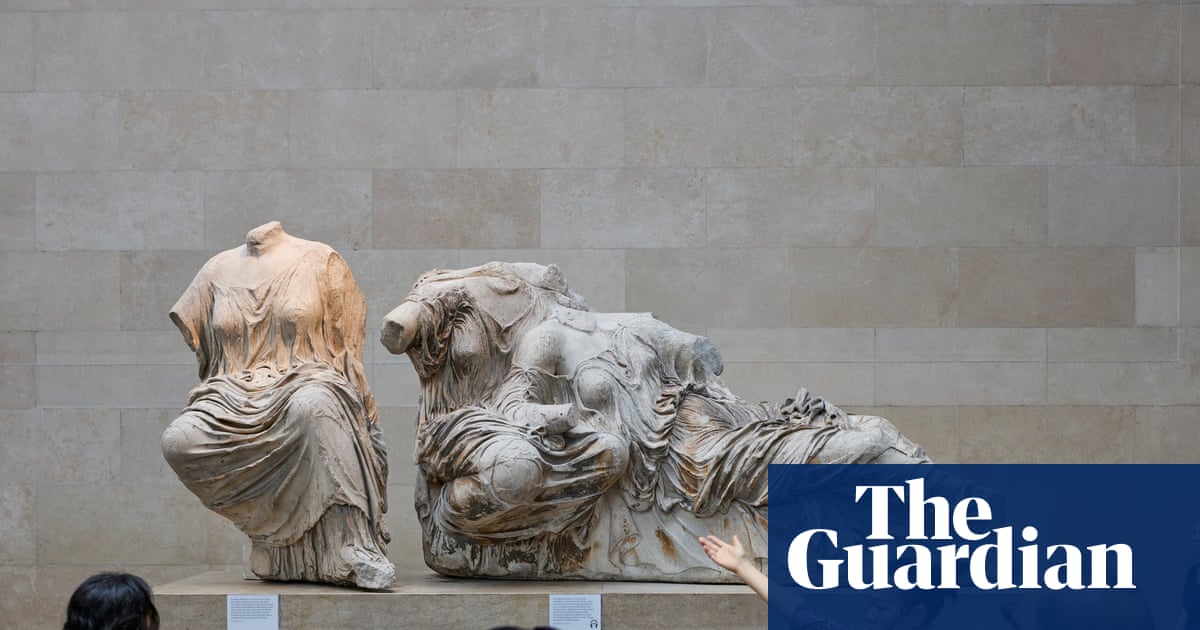
The tension centers on a specific analogy drawn by Nicholas Cullinan, director of the British Museum, who pointed to France’s recent ten-month loan of the Bayeux tapestry to London as a model for international cultural partnership. Mitsotakis argued that this comparison is fundamentally flawed because the Parthenon sculptures are currently divided between Athens and London. He noted that no one would propose cutting the Bayeux tapestry in half, highlighting the unique nature of the Greek antiquities which form a single monumental frieze carved by Phidias approximately 2,500 years ago.
For Athens, the issue is not merely about access but about historical integrity and legal recognition. Mitsotakis stated that Greece cannot agree to any arrangement that requires it to acknowledge British ownership or to 'borrow' parts of its own national monument. The goal remains the complete reunification of the marbles in Athens, which Greek officials view as a prerequisite for establishing a broader, enduring cultural partnership between the two nations. This partnership would ideally include new opportunities for exhibitions, scholarly exchange, and conservation efforts.
The British Museum’s position remains constrained by domestic legislation. The British Museum Act of 1963 prohibits the institution from permanently removing objects from its collection, a legal barrier that has defined the stalemate for decades. George Osborne, the museum’s chair, confirmed in 2023 that talks were ongoing but clarified that he was not seeking to change this law. Previous proposals involved rotating the sculptures between London and Athens or exchanging them for other Greek treasures, but these ideas have yet to bridge the significant gap between the two governments.
Speculation about the status of negotiations has intensified recently, with some reports suggesting talks were on the brink of collapse. However, sources close to the discussions disputed this characterization, acknowledging instead that substantial differences remain. The core disagreement persists over whether the marbles should be viewed as plundered artifacts requiring restitution or as part of a global heritage collection managed by the British Museum. This distinction drives the diplomatic friction and complicates any potential agreement.
The historical context of the dispute dates back more than two centuries to when Lord Elgin, then Britain’s ambassador to the Ottoman Empire, removed the sculptures from the Parthenon in Athens. Elgin later sold the collection to the British government in 1816 after facing financial ruin. The circumstances of their removal have been contentious since the beginning, with Greece maintaining that the objects were taken without proper authorization and should be returned to their place of origin.
Political dynamics in the UK also play a role in the impasse. Andy Burnham, who previously supported returning the marbles, has recently stated that the matter is primarily for the British Museum to handle. This shift reflects the broader complexity of navigating cultural heritage issues within the framework of national laws and institutional mandates. The British Museum maintains that its openness to dialogue remains unchanged, but the path forward requires reconciling legal restrictions with diplomatic expectations.
As negotiations continue, the focus remains on finding a solution that respects both Greek sovereignty and British legal constraints. Mitsotakis’s recent intervention underscores the urgency of addressing the issue with political will rather than relying on temporary fixes. The outcome of these talks could set a precedent for how other nations handle disputes over cultural artifacts held in foreign institutions. Until a mutually acceptable framework is established, the marbles will remain divided, symbolizing the unresolved tensions between historical justice and institutional preservation.
The next steps likely involve further private discussions aimed at narrowing the gap between the two positions. Both sides have expressed a desire for cooperation, but the fundamental disagreement over ownership and legal status remains a significant hurdle. The international community watches closely, as the resolution of this dispute could influence broader conversations about repatriation and cultural heritage management worldwide. For now, the marbles stay in their respective locations, awaiting a political breakthrough that neither side has yet achieved.
Sources behind this briefing
Go to the original reporting
- The Guardian World↗Greek PM: deal to return Parthenon marbles could still be reached with ‘political will and courage’

