The short version
- The UK government maintains that the recent nationwide wildfire alert was justified by severe resource strain and direct requests from emergency services.
- Charities warn that the sudden notification compromised the safety of domestic abuse survivors who rely on hidden secondary phones to seek help.
- Fire chiefs report a reduction in new incidents following the alert, though major fires continue in several regions.
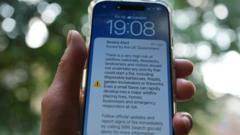
The British government has firmly defended its decision to issue an unprecedented emergency mobile phone alert regarding wildfire risks across England and Wales. Officials described the notification as entirely appropriate given the severe conditions faced by emergency responders. The alert, which triggered notifications on millions of devices last Friday, marked the largest deployment of the national emergency warning system to date. Prime Minister Andy Burnham urged citizens to treat the message with seriousness, emphasizing that the primary obligation of the state is to ensure public safety during crises.
The decision to activate the system came after a direct request from fire and rescue services operating on the front lines. At the time the alert was issued, authorities were managing forty-three separate fires and eleven major incidents. These events stretched emergency resources to their absolute limits, necessitating support from military personnel. A Cabinet Office press release posted late Friday afternoon outlined the severity of the situation, though many media outlets missed the initial announcement, resulting in little advance warning for the general public before the alerts began sounding around 7:00 p.m. BST.
The notification advised residents to avoid using disposable barbecues, naked flames, or fireworks due to the very high national risk of wildfires. While the government highlights the operational necessity of the alert, the execution has drawn criticism from various groups. Charities and survivors of domestic abuse have raised significant concerns about the lack of prior notice. They argue that the sudden activation of emergency alerts on all connected devices poses a specific danger to individuals who are hiding their location or identity from abusers.
Women’s Aid, a national charity dedicated to ending domestic abuse, has called for greater forewarning regarding such alerts whenever possible. Veronica Oakeshott, the organization’s head of external affairs, explained that survivors often use secondary phones to access lifesaving support or plan escapes. Keeping these devices hidden is critical for their safety. The sudden sound of an emergency alert on a concealed phone could reveal its presence to an abuser, potentially jeopardizing the survivor’s ability to seek help or flee danger. Oakeshott urged the government to consider protocols that allow for advance notice to mitigate this risk.
The government has stated it is working closely with domestic abuse charities to test and refine the emergency alert system. However, reports indicate that senior officials debated whether to send the alert hours before it was finally issued on Friday morning. The delay in decision-making contributed to the lack of public preparation. While the administration emphasizes the immediate threat posed by the fires, critics point out that the timing and method of delivery failed to account for vulnerable populations who rely on digital secrecy for their physical security.
Phil Garrigan, chair of the National Fire Chiefs Council, expressed gratitude for the public’s response to the emergency notification. He noted that emergency services have observed a decrease in the number of wildfires they needed to respond to over the seventy-two hours following the alert. Despite this positive trend, significant challenges remain. Four major incidents are still declared active in Hampshire, Cambridgeshire, South Wales, and the West Midlands, indicating that the threat has not fully subsided.
Additional controversy emerged regarding the language of the alert. Politicians from Reform UK and the Conservative Party questioned why the notification was sent in Welsh before it arrived in English. The UK government did not directly address the timing discrepancy but clarified its legal obligations under the Welsh Language Act. This legislation requires that alerts be sent in the Welsh language first, with bilingual distribution used where possible. This procedural requirement has sparked debate about the prioritization of linguistic compliance versus uniform public information delivery during emergencies.
As the situation evolves, the incident highlights the complex balance between rapid emergency communication and the nuanced needs of vulnerable communities. The government’s stance remains that the alert was a necessary measure to protect lives and property during an extreme weather event. However, the criticism from advocacy groups suggests that future protocols may need adjustment to better safeguard individuals who depend on hidden communication channels for their survival. The effectiveness of the alert in reducing fire incidents is acknowledged by emergency chiefs, but the social implications of its deployment continue to be scrutinized.
Sources behind this briefing
Go to the original reporting
- BBC News↗Wildfire phone alert was 'entirely appropriate', government says

