The short version
- Republicans are centering campaigns on public safety and border control to offset negative perceptions regarding inflation and the conflict in Iran.
- Democratic opponents are countering by highlighting their own support for law enforcement funding and recruiting candidates with legal or policing backgrounds.
- Polling indicates that while border security remains a relative strength for the Republican party, approval ratings on the issue have declined over the past year.
Republican campaigns across the United States are increasingly centering their messaging on law and order, public disorder, and border security as the midterm elections draw near. This strategic pivot comes at a time when voters express growing dissatisfaction with the party’s handling of rising living costs and the ongoing war in Iran. By focusing on these issues, Republican officials hope to reenergize a disillusioned base and appeal to moderate voters who have drifted away due to economic concerns.
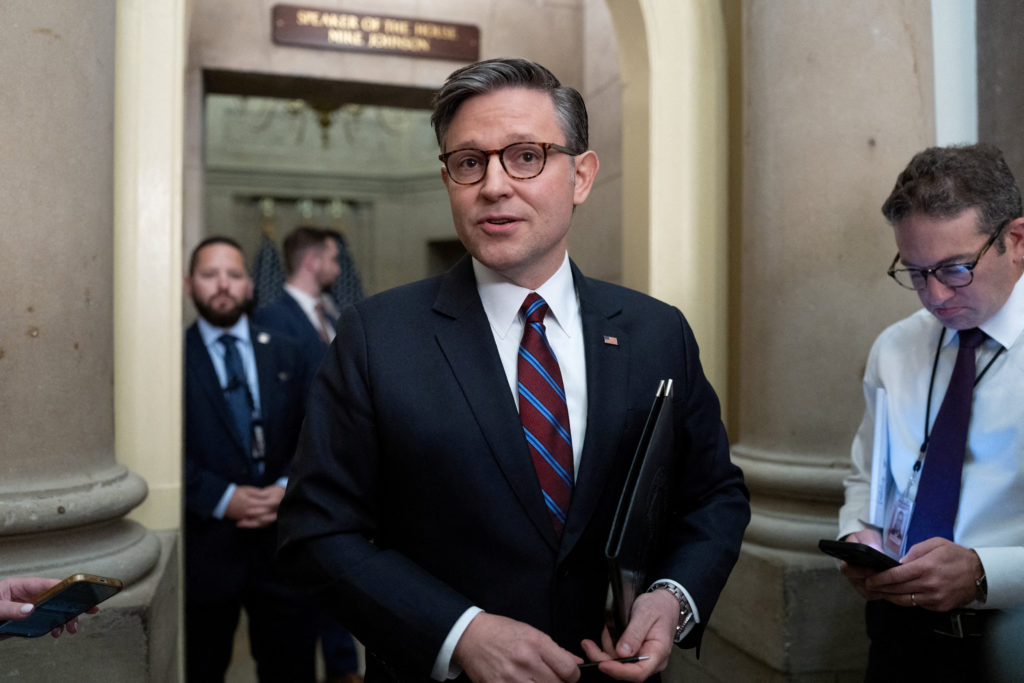
Political advertising has become a primary vehicle for this narrative, with many ads warning of Democratic efforts to defund police departments. Campaign events frequently feature law enforcement unions and rhetoric emphasizing strict adherence to the rule of law. Stump speeches often highlight record-low levels of violent crime as evidence of successful governance. House Speaker Mike Johnson recently told an audience at Louisiana State University that the nation currently enjoys its lowest violent crime rate in 126 years, attributing this achievement to a strong emphasis on legal order.
President Donald Trump has also returned to these themes, warning audiences about the state of the country prior to his return to the White House. Speaking in Nebraska, he described a previous era characterized by an uncontrolled border and unprecedented levels of crime. This framing seeks to contrast current conditions with past instability, reinforcing the party’s narrative that their policies have restored security and order to American communities.
The strategy is evident in several key gubernatorial and congressional races. In Texas, Governor Greg Abbott has criticized Democratic nominee Gina Hinojosa for opposing legislation that would require judges to deny bail to illegal immigrants charged with violent crimes. Hinojosa, a civil rights lawyer, has countered by arguing that Abbott’s policies violate civil liberties. Similarly, in Georgia, billionaire Rick Jackson has attacked his opponent, former Atlanta Mayor Keisha Lance Bottoms, claiming she abandoned her neighborhood and supported defunding the police.
Bottoms has responded by emphasizing her record of providing pay raises to police and firefighters during her tenure as mayor. She also noted that she advocated for increased federal funding for public safety. In Virginia’s first congressional district, Representative Rob Wittman has challenged prosecutor Shannon Taylor on what he describes as a soft-on-crime record. Meanwhile, in Michigan’s 10th district, Republican Michael Bouchard is leveraging his military service and family ties to law enforcement to portray his Democratic opponent, former prosecutor Christina Hines, as supportive of socialist policies.
Democratic candidates are attempting to neutralize these attacks by highlighting their own commitments to public safety. Shannon Taylor has aired advertisements featuring endorsements from local sheriffs. In Colorado’s eighth district, Democratic challenger Manny Rutinel has rolled out a safety plan that includes greater police funding and drug prevention programs, while also airing ads with local law enforcement officials. Christina Hines has stated she will continue to prioritize public safety and prosecute corruption in Washington.
In Wisconsin’s third district, Representative Derrick Van Orden is seeking a third term against Rebecca Cooke, accusing her of wanting to defund the police. Cooke has vowed to fully fund police departments if elected. These responses suggest that Democrats are recognizing the potency of the law-and-order message and are adjusting their platforms to demonstrate support for law enforcement rather than opposing it.
The effectiveness of this Republican strategy remains uncertain. While border security is often linked to crime in party messaging, polling data shows mixed results. An AP-NORC poll conducted in September found that 48% of U.S. adults approved of the president’s performance on border security. This figure represents a decline from a year earlier, when approval stood at 55%. Senator Eric Schmitt of Missouri noted that the party may be victims of its own success, as improved border conditions have moved off the headlines.
As the election cycle intensifies, both parties are likely to continue refining their messages around public safety. Republicans aim to capitalize on perceived Democratic weaknesses in this area, while Democrats seek to prove their commitment to community security without alienating progressive voters. The outcome of these races may hinge on whether voters prioritize economic concerns or feel that law and order issues pose a more immediate threat to their daily lives.
Sources behind this briefing
Go to the original reporting
- PBS NewsHour↗Republicans focus on tough-on-crime message before difficult midterm elections