The short version
- Google has released orders for the Pixel 11 smartphone series, Pixel Watch 5, and its first standalone location tracker, the Pixel Tag.
- The new devices feature enhanced AI capabilities, including a visual notification system for voice interactions and expanded automation tools within Android 17.
- Battery capacities have decreased across the phone lineup, with Google attributing sustained performance to improved power efficiency in the Tensor G6 processor.
Google has officially unveiled its hardware roadmap for late 2026, introducing the Pixel 11 smartphone series, an updated wearable device, and a new entry into the item-tracking market. The company is shifting focus away from raw specification increases toward artificial intelligence integration and curated user experiences. Preorders for the smartphones and smartwatch are open immediately, with shipments scheduled to begin next week. The standalone tracker, however, will not arrive until November 11.
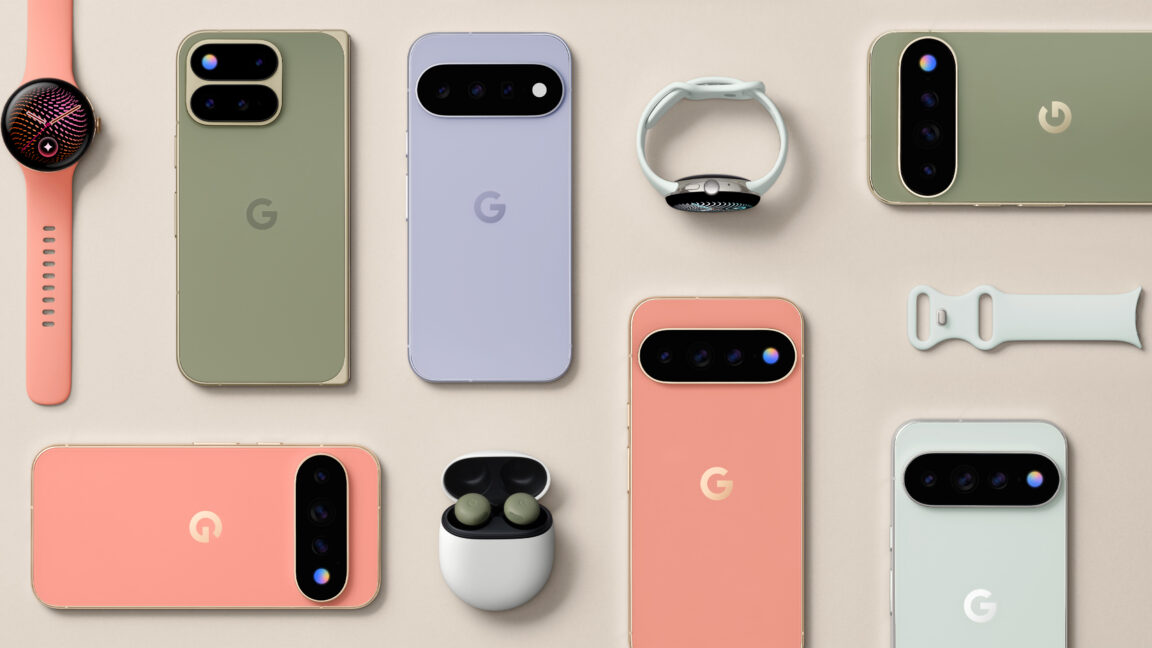
The Pixel 11 series retains the design language established by previous generations but introduces subtle physical changes. The most notable addition is a feature called HiLight, available exclusively on Pro models. This system uses a ring of multicolored LEDs within the rear flash assembly to provide visual feedback during voice interactions with Gemini. The lights indicate when the AI is listening or processing requests, allowing users to monitor status without viewing the screen. The feature also identifies incoming calls from specific contacts in standard telephony and WhatsApp applications, though it does not support notifications for other apps.
Physical adjustments include a reduced camera bar profile on the base model, which now sits closer to the phone’s surface to improve pocketability. All models feature edge-to-edge glass on the camera module, replacing the previous metal inlay that housed environmental sensors. The external thermometer has been removed entirely. Display brightness has increased across the board, with Pro models reaching 3,600 nits and base models maintaining 3,000 nits. Google also claims the new glass is twice as resistant to scratching as previous iterations.
Battery capacity has decreased for all devices in the Pixel 11 lineup. The flat phones see reductions of under 100 milliamp-hours each, while the Pro Fold model drops by 200 milliamp-hours to a total of 4,806 milliamp-hours. Despite these smaller batteries, Google maintains that the devices will still deliver more than 24 hours of usage. The company attributes this consistency to the new Tensor G6 chip, which reportedly offers a 20 percent improvement in power efficiency. Official specifications for the processor are limited, but leaks suggest it is a custom seven-core Arm design with one fewer CPU core than its predecessor.
To manage thermal output during charging, Google has introduced an Extreme Charging Mode. This feature maintains higher wattage for longer periods but relies on the chipset to throttle performance if temperatures rise too high. The software experience centers on Android 17, which includes seven years of guaranteed updates. Gemini integration is deeper than in previous versions, with expanded automation capabilities that allow the AI to order rides, shop, and place calls to businesses on behalf of the user. Transcripts of these automated conversations are provided for review.
The Pixel Tag represents Google’s first dedicated hardware tracker, entering a market dominated by competitors like Apple’s AirTag. Priced at $29 individually or $99 for a four-pack, the device matches the pricing structure of rival products. It is a slim, oblong unit weighing approximately 12 grams and available in a single gray color referred to as Fog. The tracker lacks built-in attachment mechanisms, requiring users to purchase separate accessories. It features an IP67 rating for dust and water resistance and uses a standard CR2032 coin cell battery that Google estimates will last over a year.
Tracking functionality relies on two distinct technologies: ultra-wideband (UWB) and Bluetooth 6.0 Channel Sounding. UWB provides directional guidance and distance measurement when the user is near the tag, but this feature requires a compatible phone with a UWB chip. Base model Pixel phones do not include this radio, limiting precise finding to Pro models and newer devices. Channel Sounding offers exact distance measurements without directional data and works with any device supporting Bluetooth 6.0, including older Pixels and Moto tags.
The tracker integrates with Google’s Find Hub network, which uses the Bluetooth signals of nearby Android devices to locate lost items. While this network has improved since its initial launch, independent testing suggests it remains less precise than Apple’s equivalent system. Users can also use a Pixel Watch to track the tag, with support varying by model generation. Voice commands through Gemini can trigger the tag’s speaker to emit sound, aiding in manual location efforts when digital tracking is insufficient.
The release underscores Google’s strategy of bundling hardware with software services to drive AI adoption. By limiting advanced features like HiLight and UWB to higher-tier devices, the company creates a clear distinction between base and Pro offerings. The reduction in battery size highlights a reliance on chip efficiency rather than raw capacity to maintain user satisfaction. As the Pixel Tag prepares for its November launch, it will face scrutiny regarding the maturity of Google’s tracking network compared to established competitors.
Future updates may expand the functionality of features like HiLight through incremental software drops. The current limitations on notification types and app support suggest that Google is testing these capabilities before broader implementation. With the Tensor G6 chip powering the new lineup, performance benchmarks for browsing and app loading are claimed to be significantly faster. However, without detailed public specifications, independent verification of these efficiency gains will depend on real-world usage data following the widespread availability of the devices.
Sources behind this briefing
Go to the original reporting
- Ars Technica↗Google reveals 2026 hardware lineup: Pixel 11, Pixel Watch 5, and Pixel Tag
- The Verge↗The Pixel Tag is Google’s answer to the AirTag

