The short version
- Demis Hassabis is relinquishing his day-to-day executive duties at Google DeepMind to become chair and chief scientist at Alphabet.
- The leadership change coincides with reports of internal employee unrest regarding military partnerships and delays in releasing new AI models.
- Industry observers interpret the move as a transition from science-driven independence to centralized commercial oversight under parent company control.
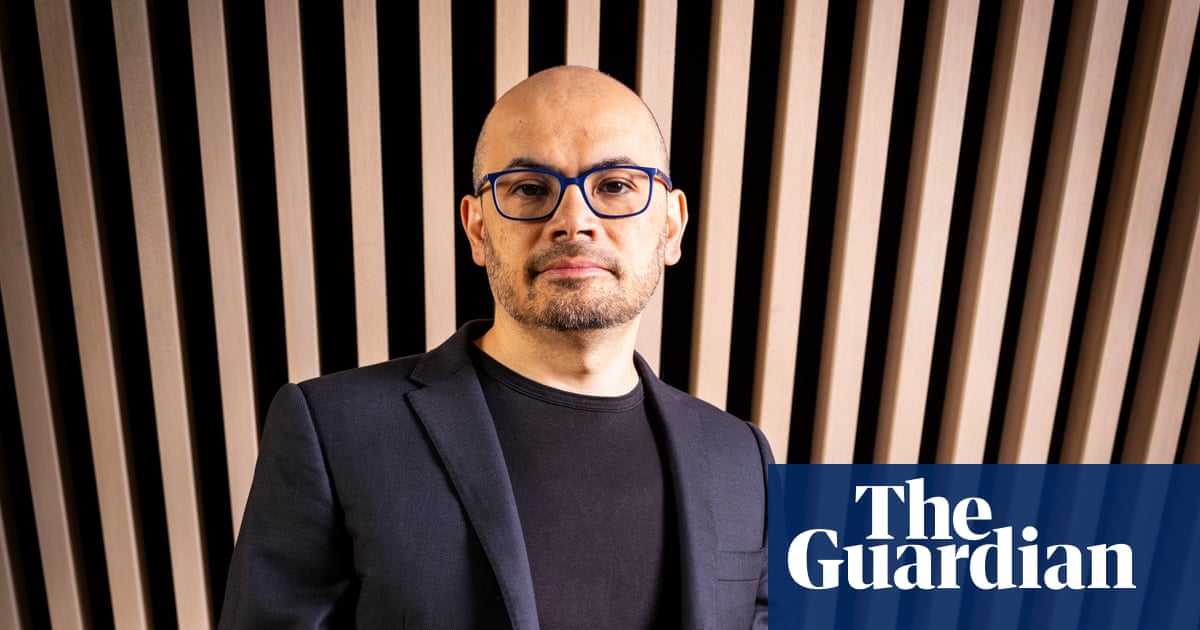
Sir Demis Hassabis, the Nobel Prize-winning co-founder of Google DeepMind, has announced a significant restructuring of his responsibilities within the artificial intelligence unit. He is stepping down from his role as chief executive, a position he has held since the merger of DeepMind and Google Brain three years ago. In its place, Hassabis will assume the title of chair at DeepMind while simultaneously taking on the role of chief scientist for Alphabet, the parent company. This transition marks a distinct shift in how one of the world’s most prominent AI research organizations is managed.
Operational leadership of DeepMind will pass to Koray Kavukcuoglu, a long-time colleague of Hassabis who has been based in the United States. Kavukcuoglu will serve as senior vice president rather than chief executive, a structural change that industry insiders view as symbolic of broader corporate realignment. Former Google executives have noted that this arrangement signals the end of DeepMind’s era as an independent actor with its own distinct leadership identity. The move appears to consolidate control back toward Mountain View, California, where Google’s co-founder Sergey Brin is reportedly increasing his involvement in AI development decisions.
The timing of this leadership overhaul occurs against a backdrop of intense competition in the generative AI market. Google’s flagship model series, Gemini, has reportedly lost ground to rival systems developed by Anthropic and OpenAI. Compounding these competitive pressures, the release of a new cutting-edge model, Gemini 3.5 Pro, has been delayed. Reports indicate that engineers are working to improve the model’s code-writing capabilities, a feature that has become central to the appeal of competitors’ products. The delay underscores the difficulty of balancing rapid innovation with the high standards required for commercial deployment.
Internally, the atmosphere at DeepMind has been marked by political and ethical tensions. Employees have expressed disquiet over the company’s partnerships with government agencies, including the Pentagon and the US Department of Homeland Security. These concerns were highlighted earlier this year when a former employee launched a legal challenge against Google, alleging unfair dismissal due to their views on Gaza. That individual had been involved in unionization efforts at DeepMind, which gained traction amid fears that AI technologies could be used to assist militaries, including the Israel Defense Forces.
Further reflecting these internal fractures, another employee resigned in mid-July, explicitly citing Google’s work with defense and security agencies as the reason for leaving. Staff members have described Hassabis’s departure as the end of an era, expressing concern that the leadership figure they trusted to prioritize ethical outcomes for humanity is stepping away from daily operations. One employee characterized the current state of DeepMind as merely another subdivision of Google, suggesting a loss of the unique identity and mission-driven culture that defined the organization in its earlier years.
Advocacy groups have echoed these concerns about the implications of the leadership change. Rosa Curling, executive director of Foxglove, which supported the legal challenge brought by the former employee, stated that the departure of a co-founder known for ethical credentials is likely to deepen anxiety among frontier AI staff. Workers are increasingly worried about how their research will be applied in real-world scenarios, particularly in contexts involving surveillance or warfare. Google has maintained its commitment to consensus standards regarding AI use, stating it opposes domestic mass surveillance and autonomous weaponry without appropriate human oversight.
Despite these assurances, the company has declined a voluntary union recognition agreement in London. Google officials have emphasized their value of constructive dialogue with employees to build a positive workplace, but the rejection of formal unionization efforts remains a point of contention. The contrast between public commitments to ethical AI and internal resistance to labor organizing highlights the complex dynamics facing tech companies as they navigate both social responsibility and operational efficiency.
Industry analysts view this leadership shift as part of a broader trend in the AI ecosystem. The departures of other prominent researchers, such as Yann LeCun from Meta and Geoffrey Hinton from Google, are seen as indicators that the science-driven agenda of early AI labs is giving way to commercial realities. Companies have invested hundreds of billions of dollars in AI development and are now focused on securing returns on those investments. This transition suggests a move away from charismatic, founder-led visions toward more structured, commercially oriented management.
Looking ahead, the integration of DeepMind into Google’s broader corporate structure may streamline decision-making but could also dilute the innovative independence that characterized its early breakthroughs. Advances such as AlphaGo and AlphaFold were achieved under Hassabis’s direct leadership, leveraging resources provided by Google after the 2014 acquisition. As operational control shifts to Kavukcuoglu and strategic oversight moves to Alphabet, the challenge will be maintaining the scientific rigor and ethical standards that defined DeepMind’s reputation while meeting the demands of a highly competitive market.
The implications of this restructuring extend beyond internal management. For the wider AI community, the shift represents a maturation of the industry from experimental research to scaled commercial application. While Google retains the advantage of integrating its AI models with existing products like Search and Cloud Platform, the loss of perceived independence may affect talent retention and public trust. The coming months will likely reveal whether this new structure can sustain innovation while addressing the ethical and labor concerns that have surfaced in recent years.
Sources behind this briefing
Go to the original reporting
- The Guardian World↗Google DeepMind enters a new era as co-founder Demis Hassabis shifts AI role