The short version
- The death toll exceeds 750 with more than 3,000 people missing across Nepal and Tibet following a glacial collapse that triggered devastating floods.
- Rescue teams are racing to free over 100 workers trapped in hydroelectric tunnels while managing the threat of secondary flooding from newly formed lakes.
- Nepal’s foreign minister highlighted the disproportionate impact of climate change on the region, calling for global action as reconstruction costs mount.
A catastrophic glacial collapse along the Himalayan border between Nepal and Tibet has unleashed a devastating flood that has killed more than 750 people and left thousands missing. The disaster, which began on Wednesday morning, sent a massive wall of water and debris downstream, engulfing entire villages in both countries. As of Sunday, the combined death toll stood at 768 confirmed fatalities, with the number of missing persons rising to 3,048. Among those unaccounted for are hundreds of foreign nationals, including citizens from Nepal, India, Latvia, the United States, and the United Kingdom.
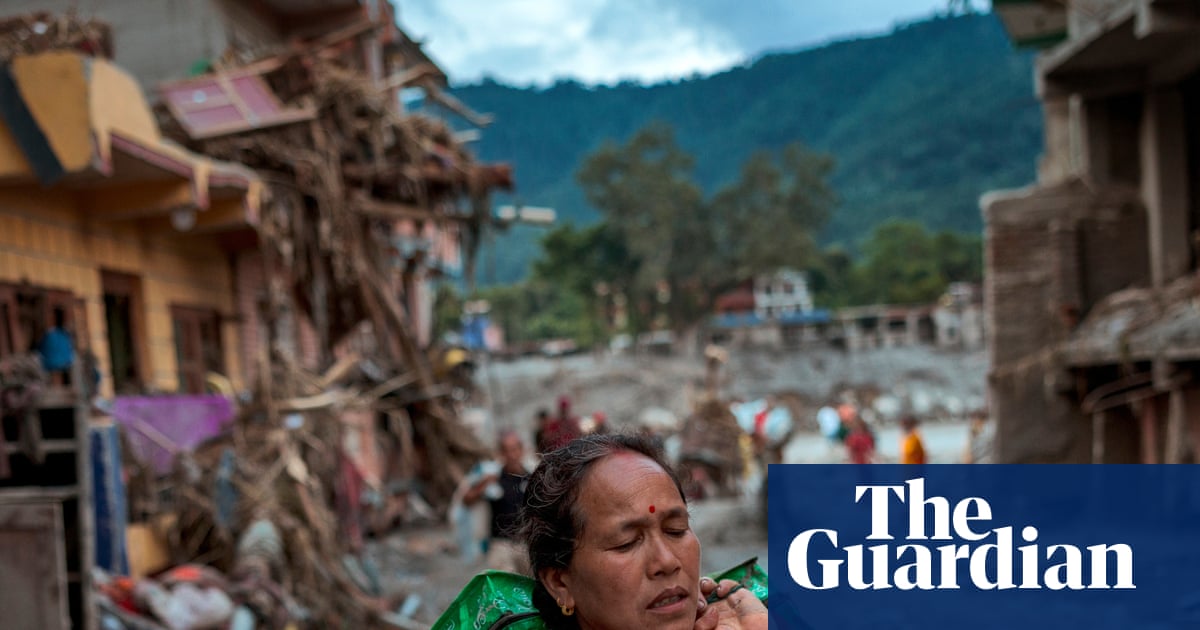
Rescue operations have been severely hampered by difficult terrain and the persistent threat of fresh flooding. In Nepal, emergency crews have battled through deep, leg-sucking mud to search for survivors in areas where entire settlements have vanished. More than 3,700 people have been rescued so far in Nepal, but the situation remains volatile. Authorities have issued flood warnings via mobile phones and urged caution as water levels continue to rise in key river systems, including the Bhotekoshi River in Rasuwa district.
In Tibet, Chinese authorities reported 16 deaths and 546 missing persons, with 261 of those being foreign nationals. Rescue efforts in the hardest-hit area of Gyirong were temporarily paused due to the risk of additional flooding from a newly formed lake. Approximately 2,141 rescuers have been deployed near the site, with more than 500 operating in the most severely affected zones. Information from Tibet remains limited, as Chinese officials are the sole source of updates on the situation there.
A critical focus of the rescue mission is the Trishuli 3A and 3B hydroelectric sites, where more than 100 workers are believed to be trapped in tunnels. Nepal’s army achieved a breakthrough by inserting a pipe into one of the tunnels to supply air to the trapped individuals. Home Minister Sudan Gurung confirmed that excavation work has begun to allow rescue teams to enter the site. Of the total missing persons, 933 are hydropower workers, making their recovery a top priority for disaster management authorities.
The human toll of the disaster is evident in Kathmandu, where relatives and friends have gathered outside government hospitals in desperate search of missing loved ones. Many have spent days shuffling between help desks and notice boards, clutching photographs and scanning lists of injured patients. Dil Maya Lama, who traveled from Ramechhap, expressed her despair while searching for her brother, a driver for a hydropower company. The emotional strain on families is compounded by the lack of clear information regarding the fate of those swept away.
Nepal has begun the grim process of handling recovered bodies, taking DNA samples to facilitate identification and allow families to perform traditional funeral rites later. Officials have requested forensic testing kits and freezer units to preserve remains, noting that bodies exposed to water may decompose rapidly. The government estimates that reconstruction costs could reach billions of dollars, placing a significant burden on the nation’s resources.
Nepal’s foreign minister, Shisir Khanal, called for a global response to the climate crisis, emphasizing that the small Himalayan nation is bearing a disproportionate share of its impacts despite contributing only 0.1% to global emissions. He described the people of Nepal as major victims of climate change, highlighting the vulnerability of mountainous regions to extreme weather events.
Survivors in hard-hit areas like Dhading and Nuwakot are beginning to return to ruined homes to salvage what they can. Residents report struggling with near-constant flood alarms that force them to repeatedly seek higher ground, even at night. Govind Shreshta, a resident of Dhading, described the exhaustion of caring for elderly parents while facing repeated evacuations. The community faces an agonizing wait for news of missing relatives and the daunting task of rebuilding lives from scratch.
As rescue efforts continue, authorities warn that the situation remains fluid with rising flood waters posing ongoing risks. The race against time to reach trapped workers and locate missing persons continues under challenging conditions. International attention is focused on the region as the full extent of the disaster becomes clearer and the long-term implications for climate resilience in the Himalayas come into sharp relief.
Sources behind this briefing
Go to the original reporting
- The Guardian US↗Nepal-Tibet death toll rises amid new flood fears and race to free group trapped in tunnel

