The short version
- German authorities are investigating a 105-year-old man for alleged complicity in murders at the Stalag 326 VI K prisoner of war camp.
- The probe reflects a broader judicial strategy to prosecute former low-level perpetrators before they die, following legal precedents that lowered the burden of proof for accessory charges.
- Prosecutors face significant challenges as many suspects have died recently, including another former guard from the same camp who passed away at age 99.
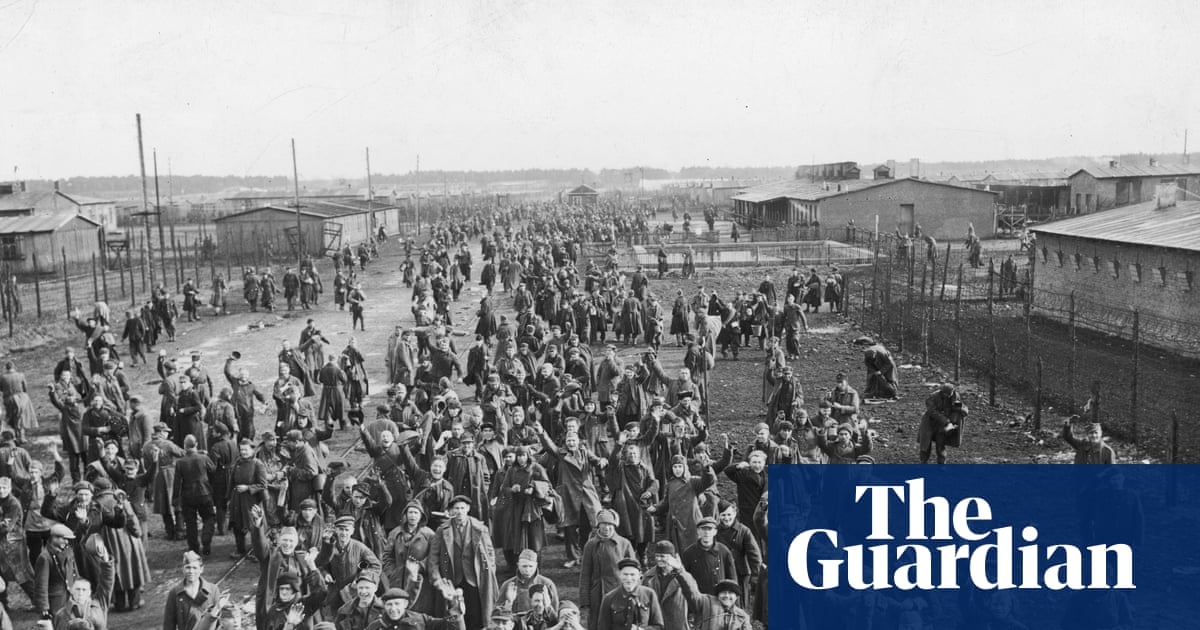
German prosecutors have opened an investigation into a 105-year-old man suspected of serving as a guard at a Nazi prisoner of war camp during World War II. The case, handled by the public prosecutor’s office in Dortmund, accuses the elderly suspect of being an accessory to multiple murders committed at Stalag 326 VI K. This facility, located in the Senne region of North Rhine-Westphalia, operated between 1941 and April 1945, when American forces liberated the site.
The investigation underscores a persistent effort by German judicial authorities to pursue accountability for Nazi-era atrocities before the last living witnesses and perpetrators pass away. Prosecutors argue that individuals who previously escaped justice due to their perceived minor roles were actually integral to the functioning of the regime’s killing apparatus. This legal philosophy has gained traction in recent decades, shifting the focus from direct acts of violence to complicity within the camp system.
Stalag 326 VI K was one of the largest prisoner of war complexes in Nazi Germany. Historical records indicate that between 180,000 and 200,000 Soviet prisoners were held at the site. The conditions were notoriously brutal, with widespread malnutrition and mistreatment contributing to high mortality rates. Approximately one in three Soviet soldiers captured by German forces passed through Senne, many of whom were subsequently forced into labor in the surrounding region.
The scale of suffering at Senne was immense. Of the hundreds of thousands registered at the camp, more than half did not survive their captivity. Tens of thousands are buried in mass graves on the site. While Soviet prisoners comprised the majority of detainees, individuals from France, Poland, Serbia, and Belgium were also held there. At the time of liberation in 1945, only about 9,000 Russian prisoners remained alive at the facility.
The current probe is part of a wider initiative coordinated by the Central Office for the Investigation of National Socialist Crimes in Ludwigsburg. This office conducts preliminary investigations before passing cases to regional prosecutors. In this instance, authorities also investigated another former guard from Senne, but that suspect died recently at the age of 99. A separate case involving a 100-year-old former guard at a different camp in Hemer is also ongoing, highlighting the race against time inherent in these prosecutions.
Legal precedents established in previous cases have facilitated these late-stage investigations. The conviction of John Demjanjuk, a former guard at the Sobibór death camp, set a significant benchmark by proving that working as a guard constituted complicity in murder, even without evidence of direct killing. Although Demjanjuk died before serving his sentence, his case lowered the threshold for prosecution. Similarly, Irmgard Furchner, a secretary at Stutthof concentration camp, received a suspended sentence for accessory to murder, illustrating how bureaucratic roles are now scrutinized.
Recent years have seen several high-profile convictions of elderly defendants. Josef Schütz, a former guard at Sachsenhausen concentration camp, was sentenced to five years in prison in 2022 for complicity in murder. He died the following year at age 102 while appealing his sentence. Another former guard from Sachsenhausen died before standing trial last year. These outcomes demonstrate the fragility of the judicial timeline and the increasing difficulty of securing convictions as suspects reach extreme old age.
Germany abolished the statute of limitations for murder and accessory to murder in 1979, ensuring that Nazi-era crimes could be prosecuted indefinitely. However, practical challenges remain substantial. The advanced age of suspects often leads to health-related complications, delayed proceedings, or death before verdicts are finalized. If the current investigation against the 105-year-old proceeds to trial, it will likely involve testimony from historians and survivors, offering further insight into the operations of the Stalag system.
The broader historical context reveals that more than 5.3 million Soviet Red Army soldiers were held in German captivity during the war. Many survivors faced suspicion or persecution upon returning home, complicating efforts to document their experiences. Today, the focus remains on establishing individual responsibility within the camp hierarchy. As the number of living suspects dwindles, each new investigation carries significant symbolic weight for victims’ families and historical record-keeping.
Prosecutors in Dortmund continue to assess evidence related to the 105-year-old suspect’s activities at Senne. No further details regarding his specific duties or alleged actions have been released. The outcome of this case will depend on whether sufficient proof can be gathered to demonstrate his role as an accessory to murder. Regardless of the result, the investigation serves as a reminder of the ongoing struggle to address historical injustices in the face of time and mortality.
Sources behind this briefing
Go to the original reporting
- The Guardian World↗Germany investigates 105-year-old suspected former Nazi prison camp guard
- BBC World↗105-year-old investigated for crimes at Nazi PoW camp in Germany

