The short version
- German Foreign Minister Johann Wadephul and Russian counterpart Sergey Lavrov met briefly at the United Nations, marking the first such encounter since 2022.
- Wadephul urged Russia to cease escalation tactics, citing recent drone incidents in Germany, while Lavrov dismissed the meeting as yielding no new outcomes.
- The talks occurred against a backdrop of intensifying aerial warfare in Ukraine and broader geopolitical shifts regarding NATO influence and multipolar world orders.
German Foreign Minister Johann Wadephul and Russian Foreign Minister Sergey Lavrov engaged in a brief, private meeting on the sidelines of the United Nations General Assembly in New York. The encounter, which lasted approximately twenty minutes, is widely regarded as the first direct dialogue between the two nations' top diplomats since Russia launched its full-scale invasion of Ukraine in 2022. The meeting took place in a room provided by the Russian delegation and concluded with a handshake, signaling a minimal but notable re-engagement despite deepening hostilities.
Wadephul used the opportunity to press Moscow to abandon what he described as a dangerous trajectory of escalation against Germany, Europe, and the North Atlantic Treaty Organization. His remarks came in response to heightened tensions between Berlin and Moscow following an attempted drone attack on Leipzig airport last month, which German authorities have attributed to Russian involvement. While Wadephul expressed openness to improved relations, he emphasized that any such progress would require a genuine commitment from Russian leadership to end the conflict in Ukraine.
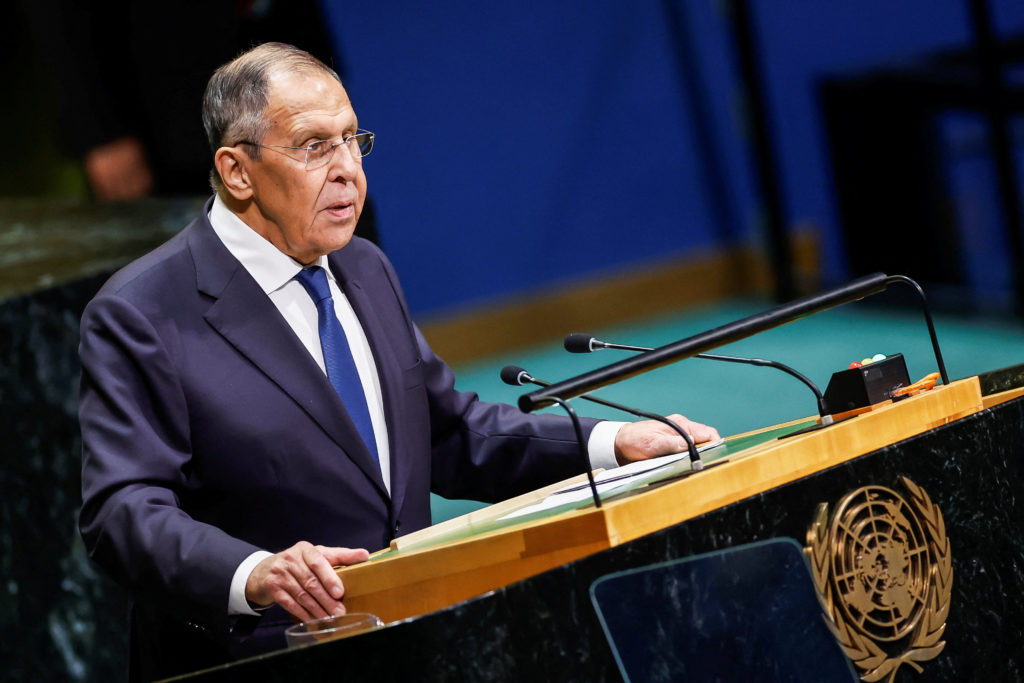
Lavrov offered a starkly different assessment of the interaction. In a subsequent news conference, he stated that nothing new emerged from the conversation. Later, addressing the General Assembly, Lavrov defended Russia’s military campaign in Ukraine and criticized Western nations for attempting to impose their rules on a shifting geopolitical landscape. He argued that a fairer, multipolar world order is emerging, positioning Russia within groups like BRICS as more constructive participants in global affairs compared to what he characterized as outdated Western privileges.
The diplomatic exchange occurred amid an intensifying aerial war in Ukraine. Front-line positions have remained largely static since last year, but both sides have escalated long-range strikes. Russian forces have deployed cruise missiles, ballistic missiles, glide bombs, and jet-powered drones against Ukrainian targets. In response, Ukrainian forces have targeted Russian oil refineries and industrial facilities with long-range drones. Casualty figures remain disputed and opaque; Western analysts estimate over 500,000 Russian troops killed and more than 500,000 Ukrainian military casualties, though neither government discloses official totals.
Ukrainian President Volodymyr Zelenskyy addressed the assembly earlier in the week, urging international partners to maintain economic pressure on Moscow by choking off revenue streams that fund the war effort. On Saturday, he reiterated this message via social media, warning that Russia is escalating its actions daily and calling for stronger global responses to prevent further spread of the conflict. His appeals underscore the urgency felt in Kyiv as the war enters its fourth year with no clear end in sight.
The broader geopolitical context includes significant divisions within the international community. While an overwhelming majority of General Assembly members have condemned Russia’s invasion, Lavrov highlighted support from various diplomats who thanked him for his country’s stance. This reflects Moscow’s strategy to portray itself as a resilient global power despite isolation from Western institutions. The United States has long advocated for permanent Security Council seats for Germany, Japan, and India, a proposal Lavrov explicitly criticized during his address.
In Washington, legislative efforts to tighten sanctions on Russia have progressed, with lawmakers passing a comprehensive bill last month. President Donald Trump signed the legislation into law but has not yet enacted the specific measures. Meanwhile, reports indicate that the U.S. is pushing for technical-level talks involving delegations from the United States, Ukraine, and other stakeholders, though top leaders are not currently participating in these discussions.
The meeting between Wadephul and Lavrov illustrates the complex dynamics of modern diplomacy during prolonged conflict. While direct communication channels remain open at the ministerial level, substantive disagreements persist regarding security guarantees, territorial integrity, and the future structure of international relations. The outcome suggests that while dialogue continues, fundamental rifts between Berlin and Moscow remain unresolved, mirroring the broader stalemate in the war itself.
Sources behind this briefing
Go to the original reporting
- PBS NewsHour↗German and Russian foreign ministers have rare meeting at United Nations General Assembly

